Client quote: “The trip itself was excellent….Chris was a brilliant tour leader…Kagu at last what a crippler!” A & E.S. June 2011
Updated 9/6/11
Relatively unexplored by keen sea watchers until now, WildWings conceived and designed this ‘world first’ voyage, sailing northwards from New Zealand through the Pacific Ocean to Japan, with the inaugural departure being in spring 2007 followed by the equally successful departures in the five years since. The voyage includes many days at sea, travelling through waters where some of the least known seabirds on the planet can be found. The itinerary also includes a number of planned landings to rarely visited islands, rich in bird endemics. The unique Kagu of New Caledonia being an example of one of the many special species we will seek ashore. There will also be some optional snorkelling and general island exploration opportunities for the not so keen birder. The main purpose of the voyage, however, will be the seabirds and cetaceans, and we will use chum and fish oil during the voyage to target specific seabirds. We will have radios for constant communication onboard, to help maximise everyone’s sightings. Photographic opportunities are generally good to excellent. 2011 and 2012 will be the last departures of this unique voyage!!
We start by sailing through New Zealand’s famed Hauraki Gulf for the recently rediscovered New Zealand Storm-Petrel and other southern tubenoses before venturing north, crossing both tropics and the Equator on our way to the Japanese breeding home of another of the worlds rarest, but much larger seabirds, the Short-tailed Albatross. A whole host of other seabirds will be seen along the way as we expect to cruise through generally tranquil tropical seas. We anticipate almost mythical species such as Heinroth’s Shearwater (seen all years), Polynesian Storm-Petrel (seen 2007, 2008 and 2010) and the recently re-discovered Beck’s Petrel (seen all years) plus the possibility of the ‘Fiji’-type Petrels (seen 2007 and 2008) off the coast of New Ireland. Vanuatu Petrel has finally just been discovered in the wild and already has been added to our ever-growing seabird list with at least one fine example photographed during the 2007 voyage and other past passengers studying their photographs too. The 2010 voyage has also reported the second sighting of a mystery Storm-Petrel just south of Noumea, a similar bird having been seen in 2008. A good supporting cast of cetaceans is also expected such as beaked whales and various dolphins. Other marine life we expect to see include flying fish, sharks and turtles. Seasonal weather at this time of year is normally good and the previous expeditions enjoyed a generally calm passage in warm to hot conditions. Explore remote tropical islands such as the almost untouched Rennell in the Solomons. Enjoy Pacific dawns and sunsets, rainbows and long sunny days.
An extra avian bonus may be the spring migration, especially during the latter half of the voyage. The 2007 trip encountered a number of migrating ‘landbirds’ including Little Whimbrel, Terek Sandpiper, a male Siberian Rubythroat and both Blue-and-white and Narcissus Flycatchers flying around us in the middle of the ocean! 2009 also encountered some landbird migrants at sea, including Red-flanked Bluetail. 2010 yielded a Bristle-thighed Curlew flying past the ship! Towards the end of the voyage, we now plan some landings and cruising at selected islands south of Japan, and added Japanese Murrelet to an already incredible bird list since 2008.
Our vessel will be the comfortable expedition ship, the Spirit of Enderby, operated by Heritage Expeditions carrying a maximum of just 48 passengers. All cabins have portholes or windows and plenty of storage space. The ship has a bar/library lounge and a dedicated lecture room with informal but excellent dining in two dining rooms. We will use her Zodiacs for landings and cruises. Chris Collins, the main WildWings leader, greatly assisted in putting this trip together and 2011 will be his sixth, 2012 his seventh such voyage. Other seabird ‘luminaries’ will also be onboard to help you maximise your experience.
Itinerary
Day 1: (Optional excursion from Auckland via Miranda by bus for Wrybill and other NZ specialities.) Embark late afternoon in Tauranga, NZ and sail 1800.
Day 2: We will sail north through the Hauraki Gulf in the morning, looking for the recently rediscovered New Zealand Storm-Petrel as well as Grey Ternlets, Black Petrels and other seabirds.
Days 3 & 4: At sea. Expected species include White-necked, Black-winged and Grey-faced Petrels plus Buller’s, Wedge-tailed and Flesh-footed Shearwaters.
Day 5: Norfolk Island (Australia). We plan to seek the three endemics, Norfolk Island
Parakeet, Norfolk Gerygone and Slender-billed White-eye at the Botanical Gardens, plus the recently split Pacific Robin. In the afternoon, we intend to visit a tropical seabird colony where White Terns, Black Noddies and Red-tailed Tropicbirds breed.
Days 6 & 7: At sea. New tubenoses on this sector could include Kermadec and Providence Petrels plus Sooty Terns, frigatebirds and possibly Polynesian Storm-Petrel. We will also keep an eye out for our mystery Storm-Petrel, seen in 2008, 2010 & 2011. Arrive Noumea late afternoon, rest of day at leisure.
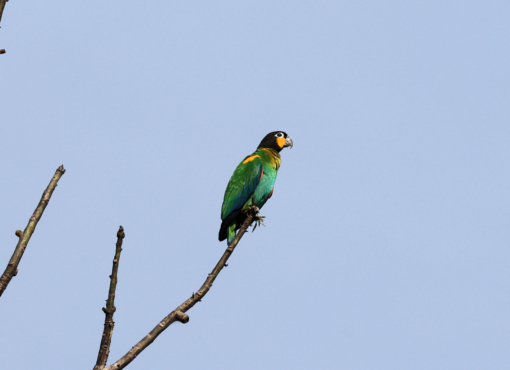
Day8: Noumea (New Caledonia). We will explore the Parc de la Riviere Bleue for the unique Kagu and other endemics such New Caledonian Imperial Pigeon, N.C. (White-bellied) Goshawk, N.C.(Horned) Parakeet, N.C. Myzomela, N.C. Whistler, N.C. Crow, N.C. Cuckoo-Shrike, N.C. Friarbird, Crow and Barred Honeyeaters, Yellow-bellied Robin, Cloven-feathered Dove, Green-backed White-eye, Red-throated Parrotfinch and Striated Starling.
Days 9-11: At sea. Potential new tubenoses on this sector include Collared, Gould’s,Tahiti and possibly Vanuatu Petrels, Polynesian Storm-Petrel and Tropical Shearwater.
Day 12: Rennell (Solomon Islands). We shall seek a number of Solomon endemicsincluding the five species restricted to Rennell, Rennell Shrikebill, Fantail, White-eyeand Starling plus Bare-eyed White-eye on this unspoilt tropical haven.
Day 13: Mikira (Solomon Islands). We will search for more endemics on this rarely visited island including White-headed Fruit Dove, Mottled Flowerpecker, White-collared Monarch, Sooty Myzomela, San Cristobal Melidectes and more.
Day 14: Honiara (Guadalcanal, Solomon Islands). Morning birding excursion to nearby Mount Austin. Solomon Island group endemics found here include Midget Flowerpecker, Ultramarine Kingfisher, S.I. Cuckoo-Shrike, Ducorp’s Cockatoo, Blyth’s Hornbill and many others.
Day 15: Kolombangara (Solomon Islands) in the afternoon. We hope to see Roviana Rails (the species was only described in 1991), Solomon Sea-Eagle, White-capped Monarch and other endemics.
Days 16-20: At sea. We plan to spend some time exploring the waters off Bougainville and New Ireland, which are rich in cetaceans and the now known range of Beck’s Petrel and Heinroth’s Shearwater, both seen during all previous voyages, before heading north again. Arrive Chuuk afternoon of Day 20.
Day 21: Chuuk (‘Truk’, Federated States of Micronesia). Ashore in this diver’s paradise we will look for Caroline Islands White-eye, Reed Warbler, Swiftlet, Ground Dove and Oceanic Flycatcher. An optional trip to Tol South may be offered for more land endemics but note a steep, slippery walk is involved.
Days 22 - 26 At sea. New seabirds should include Matsudaira’s Storm-Petrel, Bannerman’s Shearwater and Bonin Petrel.
Day 27: We will sail past the Bonin Islands, looking for Laysan Albatross, Tristram’s Storm-Petrel plus Humpback Whales and dolphins.
Day 28: At sea. New seabirds should include Black-footed Albatross and Streaked Shearwater.
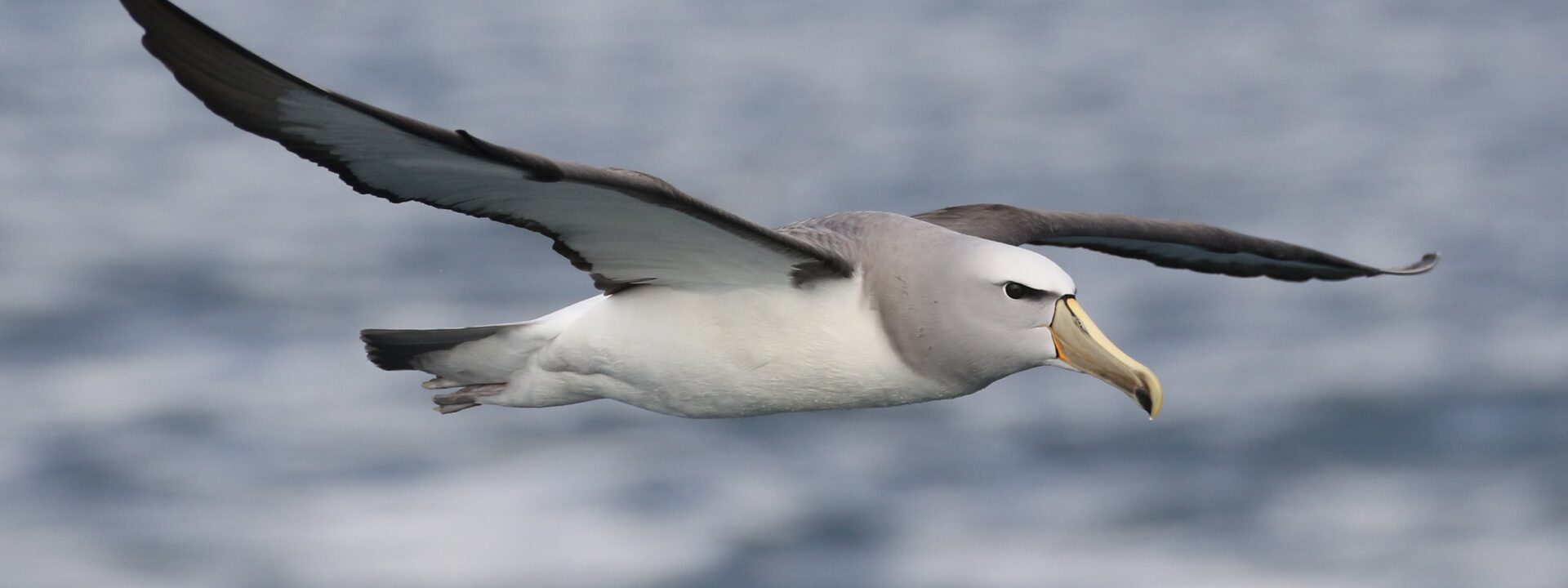
Day 29: We plan to sail close to Torishima (Japan, landing not allowed) and will search for surely one of the major seabird highlights, Short-tailed Albatross, which we expect to see at close quarters.
Day 30: Miyake-jima Island (Izu Islands). We will cruise this breeding site for Japanese Murrelet at an offshore islet.
Day 31: Disembark Yokohama, Japan, after breakfast.
NB: As applies to all expedition cruises, the exact itinerary will be subject to weather and local conditions. All landings are subject to government permissions.
Potential Seabirds (selected species only)
Little Penguin*, Antipodean*, Gibson’s*, Northern Royal*, Snowy*, Campbell*, White-capped*, Short-tailed*, Laysan* and Black-footed* Albatrosses, Southern* & Northern* Giant Petrels, Grey-faced Petrel*, Tahiti Petrel*, Mottled Petrel, Providence Petrel*, Kermadec Petrel*, Beck’s Petrel*, ‘Fiji’-type Petrel*, White-necked Petrel*, Vanuatu Petrel*, Cook’s Petrel*, Gould’s Petrel*, Bonin Petrel*, Black-winged Petrel*, Pycroft’s Petrel*, Fairy Prion*, Bulwer’s Petrel*, White-chinned Petrel*, Black Petrel*, Westland Black Petrel*, Streaked Shearwater*, Flesh-footed Shearwater*, Wedge-tailed Shearwater*, Buller’s Shearwater*, Short-tailed Shearwater*, Heinroth’s Shearwater*, Christmas Shearwater, Fluttering Shearwater*, Little Shearwater*, Tropical*, Atoll* and Bannerman’s* Shearwaters (former subspecies of Audubon’s Shearwater), New Zealand Storm-Petrel*, Wilson’s Storm-Petrel*, Black and White-bellied Storm-Petrels*, White-faced Storm-Petrel* , Polynesian Storm-Petrel*, Band-rumped Storm-Petrel*, Storm-Petrel sp, Tristram’s Storm-Petrel*, Matsudaira’s Storm-Petrel*, Common Diving-Petrel*, Red-tailed Tropicbird*, White-tailed Tropicbird*, Australasian Gannet*, Tasman & Masked Booby*, Red-footed Booby*, Brown Booby*, Japanese Cormorant*, Great* and Lesser* Frigatebirds, South Polar Skua*, Black-tailed Gull*, Kelp Gull*, Slaty-backed Gull*, Red-billed Gull*, Black-billed Gull*, Silver Gull*, White-fronted Tern*, Black-naped Tern*, Aleutian Tern, Grey-backed Tern*, Bridled Tern*, Sooty Tern*, Fairy Tern, Crested* and Lesser-crested Terns, Grey Ternlet*, Brown* and Black Noddies*, White Tern*, Ancient* & Japanese* Murrelets and Rhinoceros Auklet.
* Seen on the previous expeditions and/or the 2005 recce voyage.
The following cetaceans have been seen on one or more of the previous expeditions or 2005 recce voyage: Bryde’s/Omaru’s and Sperm Whales, Blue Whale, Dwarf and Pygmy Sperm Whales, Gray’s, Cuvier’s, Longman’s, Hubb’s , Ginko-toothed and Blainville’s Beaked-Whales, Short-finned and Long-finned Pilot Whales, Orca, False Killer Whale, Pygmy Killer Whale, Striped, Pantropical Spotted, Eastern Spinner, Bottlenose, Risso’s, Rough-toothed and Fraser’s Dolphins.
Selected ‘Island’ Birds
Pacific Baza, Solomon Islands Sea-Eagle, New Caledonia Goshawk, Roviana Rail, Kagu, Grey-tailed and Wandering Tattlers, Little Whimbrel, Wrybill, Emerald Dove, Caroline Islands Ground Dove, Crimson-crowned, White-headed and Claret-breasted Fruit-Doves, Cloven-feathered Dove, various Imperial-Pigeons, Ducorp’s Cockatoo, Cardinal Lory, Yellow-bibbed Lory, Finsch’s Pygmy-Parrot, a number of other lorikeets, parakeets and other parrots, Buff-headed Coucal, Moustached Treeswift, Ultramarine and other Kingfishers, various Cuckoo-Shrikes, Island Thrush, Caroline Reed Warbler, various Fantails, Rennell Shrikebill, various Monarchs, Oceanic Flycatcher, Pacific and Yellow-bellied Robins, various Whistlers, Gerygones and White-Eyes, Midget and Mottled Flowerpeckers, San Cristobal Melidectes, various Myzomelas, other Honeyeaters including New Caledonia Friarbird and Crow Honeyeater, various Starlings and Mynas plus two species of Parrotfinch, Bonin Honeyeater, Izu Thrush and Ijima’s Leaf-warbler.
All seen during the previous voyages and/or the 2005/6 & 7 air recces.
Voyage information
| Dates: | New Zealand Japan 29th March 28th April 2012 |
| Leader/s: | Chris Collins, Rodney Russ & expedition team |
| Cost: | |
| Sharing a triple basic (upper & lower berths) | £6129 |
| Sharing a twin basic (lower berths) | £6775 |
| Sharing a twin with facilities (upper & lower berth) | £7549 |
| Sharing a superior twin with facs.(lower berths) | £8065 |
| Sharing a mini suite with facilities (beds) | £8579 |
| Sharing a suite with facilities (beds) | £9289 |
Landing Fees (which includes donations to conservation projects and villages we will land at) £325pp.
NB There is very limited availability for cabins due to a private part charter on this voyage.
Non-UK residents can pay in US Dollars if they prefer.
Deposit 25%
Single occupancy 1.8 times twin share price (x2 for suites)
Payment schedule: Second 25% deposit due 180 days prior. Final balance of 50% due 100 days prior to sailing. Cancellation charges will be the same.
Prices include: Voyage with accommodation as booked, including all meals aboard vessel, tea and coffee, guided shore excursions as described, lectures and services of WildWings and ship’s expedition team, day by day bird and mammal checklist, use of group radios and evening log-call (at sea).
Excludes: Flights (from UK - New Zealand, Japan - UK from approx £845), transfers in Auckland and Japan, pre-voyage hotel in Auckland (from £50pp twin share, bed and breakfast) travel insurance, drinks, crew tips (suggest US$7 per day), visas and other items of a personal nature.
An optional pre-cruise voyage from Lyttelton to Tauranga will be available, 25th 29th March. Triple share £429, Twin share with washbasin £500. The 2010 pre-cruise voyage enjoyed 9 species of albatross (Northern and Southern Royals, Gibson’s and Antipodean Wandering, White-capped, Salvin’s, Buller’s, Black-browed and Campbell), both Giant, Cape, Cook’s, Grey-faced, White-chinned, Westland and Black Petrels plus Short-tailed, Hutton’s, Fluttering, Buller’s and Flesh-footed Shearwaters. Add Fairy Prion, White-faced and Wilson’s Storm-Petrels, Common Diving-Petrel, Australian Gannet, Kelp and Red-billed Gulls and White-fronted Tern and you have a great few days at sea! Marine mammals included New Zealand Fur Seal, Sperm Whales and hundreds of Common Dolphins.
An optional pre-cruise pelagic will also be on offer from Sandspit, in search of NZ Storm-Petrel. An optional birding excursion to the Miranda Shorebird Centre on the day of embarkation of the main voyage will also be offered (£65pp excluding lunch).
This is the last currently planned departure. Subject to demand it may run again in 2014 or later. Please contact us if you are seriously interested in a future departure.
The previous trip reports and systematic lists are available on our website or from the WildWings office.

OPTIONAL EXCURSIONS
2011: An optional pre-cruise 1 night/2 day pelagic from New Zealand for seabirds, (in search of NZ Storm-Petrel and Pycroft’s Petrel) may be available 17th/18th April (approx £269pp twin share including return transfers from Auckland, B & B accommodation, full day pelagic with lunch and guiding services). An optional birding excursion to the Miranda Shorebird Centre on the day of embarkation of the main voyage will also be offered (approx £60pp excluding lunch).
2012: An optional pre-cruise voyage from Lyttelton to Tauranga will be available, 25th 29th March. Triple share £429, Twin share with washbasin £500. The 2010 pre-cruise voyage enjoyed 9 species of albatross (Northern and Southern Royals, Gibson’s and Antipodean Wandering, White-capped, Salvin’s, Buller’s, Black-browed and Campbell), both Giant, Cape, Cook’s, Grey-faced, White-chinned, Westland and Black Petrels plus Short-tailed, Hutton’s, Fluttering, Buller’s and Flesh-footed Shearwaters. Add Fairy Prion, White-faced and Wilson’s Storm-Petrels, Common Diving-Petrel, Australian Gannet, Kelp and Red-billed Gulls and White-fronted Tern and you have a great few days at sea! Marine mammals included New Zealand Fur Seal, Sperm Whales and hundreds of Common Dolphins.
An optional pre-cruise pelagic will also be on offer from Sandspit, in search of NZ Storm-Petrel. An optional birding excursion to the Miranda Shorebird Centre on the day of embarkation of the main voyage will also be offered (approx £70pp excluding lunch).