
WildWings, 577 Fishponds Road, Fishponds, Bristol. BS16 3AF.UK
| Tel: 0117 9658 333 | Fax: 0117 9375 681 | Email: wildinfo@wildwings.co.uk |

Most birders will have done a double-take when they saw their first plate or photograph of a Spoon-billed Sandpiper. This enigmatic little shorebird is one of most highly desired species for many people because of its unique spatulate shaped bill.  That it breeds in the far east of Siberia only adds to its mystique.  Access to this remote region is very limited and expensive. It has been long known to winter in various locations in SE Asia but always in low numbers, thinly spread and with no easily accessible hotspots. The best chance for many years was to see one on spring migration in Hong Kong, but even there sightings were very hit and miss and have become more so in recent times. Then a few years ago small numbers were discovered wintering within a few hours drive of Bangkok, in a vast area of coastal salt workings. Birdlife International are now surveying these birds, and in 2007 up to 14 birds were then present in the area. Sadly, there are now thought to be less than 200-300 pairs left in the world, and numbers are still declining.  In February 2007, WildWings conducted a recce crewed by Mark Andrews, John Brodie-Good and Angus Wilson. We enjoyed prolonged close views of up to seven different Spoon-billed Sands in superb (if not intense) light over two days, although not at the main ‘published’ site in the area. The birds offered excellent photographic opportunities, but note D-SLR users should plan on using a tripod.  The first proper tour in 2008 enjoyed daily multiple close views of up to eight individuals, along with a large supporting cast of other Asian waders totaling 43 species, which is approximately 25% of the world’s total! Our group also saw the putative new wader species, currently being called “White-faced” Plover. We have good chances of seeing the also declining Nordmann’s Greenshank and the regionally endemic Malaysian Plover, plus Grey-tailed Tattler and Great Knot. Other waders seen in 2008 included Marsh, Terek and Broad-billed Sandpipers, Red-necked, Long-toed and Temminck’s Stints, Pacific Golden Plover and both Greater and Lesser Sandplovers plus Painted, Pintail and Swinhoe’s Snipes to name a few.  The supporting cast included Pallas’s, Brown-headed  and Heuglin’s Gulls, terns, assorted birds of prey, cormorants, herons and egrets including wintering  rarities (Chinese Egret in 2007, Black-faced Spoonbill in 2008), Ruddy-breasted Crake, plus bee-eaters, kingfishers and various  passerines.


Our small group tour will travel in an air-conditioned minibus and explore the network of salt pools and marshy areas along this pancake flat coastline. Expect temperatures of about 90 degrees F and baking sun, but we will retire to local cafes during the worst heat of the day. One evening we will enjoy a leisurely cruise through some mangroves out to a sandy spit, an excellent site for gulls and waders with kingfishers, and unusually, a Mangrove Pitta seen in 2007 too. We will stay in the nearby resort of Cha-Am in rooms with private facilities and air-conditioning and will use our visit to enjoy the superb cuisine Thailand is famous for.


Join Mark for one of these unique short birding trips for two and more of Thailand’s best birds, he will go out ahead of the groups, to recce the area again, fresh before your arrival. 


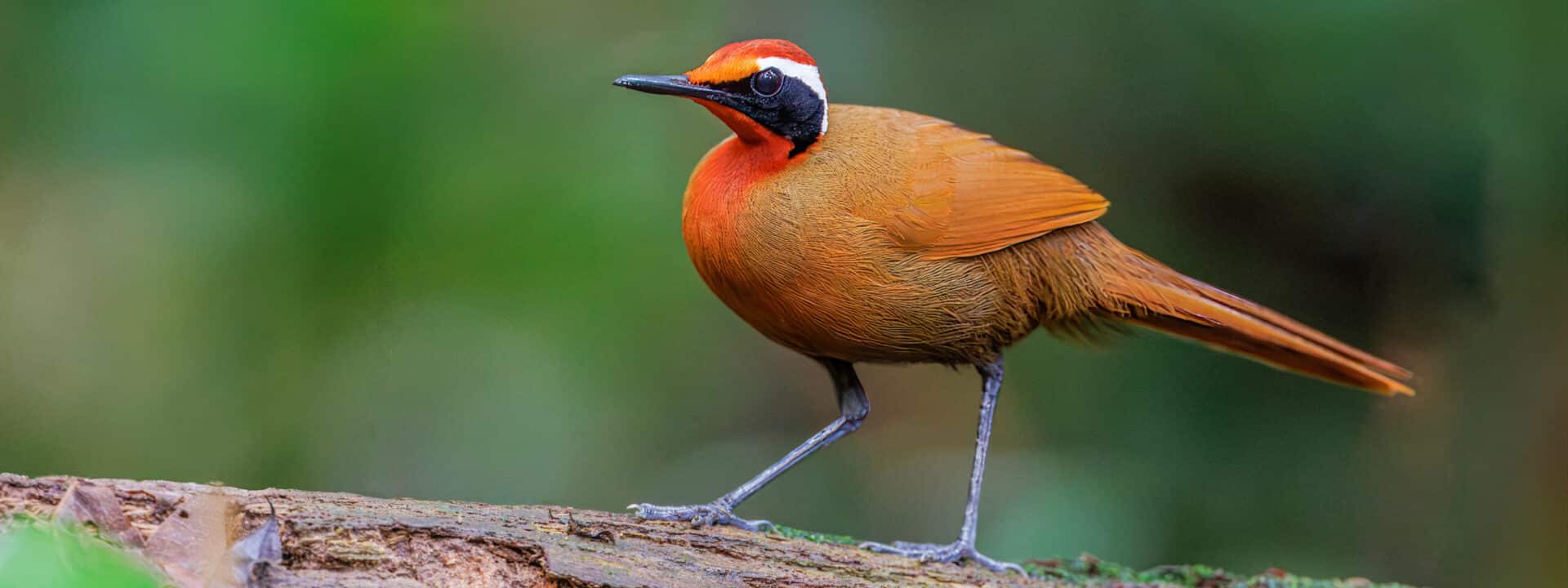
There will also be an optional opportunity for you to  fly south to Krabi after our main tour, and spend three full days birding Khao Nor Chu Chi (KNC) with the top local birding guide in search of that ultimate forest gem, Gurney’s Pitta. We enjoyed 25 minutes close viewing of a pair from one of Yotin’s portable hides deep in the forest in 2007, as the first tour did also in 2008, a memory none of us are likely to forget! Banded Pitta are not far behind in looks it must be said, again seen superbly well in 2007 and 2008.  This unique dry lowland rainforest supports a host of other superb birds and Yotin and his assistant’s abilities to find and show you them is astonishing.  Some of our other major highlights included Javan Frogmouth (2007 & 2008) and Gould’s Frogmouth (2008)  by  torchlight and a roosting male Red-bearded Bee-eater just feet above our heads (2007). With the addition of swifts including needletails,  kingfishers, broadbills,  leafbirds, drongos,  flycatchers, Orange-headed Thrush,  Siberian Blue Robin (with the pittas), starlings, mynas and bulbuls, tailorbirds, phylloscs, babblers, flowerpeckers and spiderhunters, the variety at KNC can be stunning.  You will stay in a local inn near the park entrance in air-conditioned cabins with private facilities where simple cheap Thai meals are available to purchase. You will travel around in Yotin’s 4 x 4, and on the return journey to Krabi airport, we plan a short  boat ride into the fishing nets off the town for roosting waders,  especially the regular wintering Nordmann’s Greenshanks, and we have a chance of Mangrove Pitta.


Itinerary

Day 1: Depart UK for Bangkok.

Day 2: Arrive Bangkok early morning. Drive to Cha-Am and check-in to hotel (Unless you can’t wait to look for Spooner) , Afternoon in the field.

Days 3-4: Two full days birding in the saltpans area including one evening boat cruise. Overnights Cha-Am.

Day 5: Last morning in the field. Afternoon drive back to Bangkok airport for flights home or south to Krabi.

Day 6: Arrive UK


Or

Day 5: Evening flight down to Krabi. Guide to pick up on arrival and transfer by road to accommodation (approx 1 hour). Overnight KNC.

Days 6-8: Three full days to explore KNC with your guide concentrating on pitta’s and other forest specialities. At least one evening spotlighting session for owls and frogmouths.

Day 9: Depending on tide times, either early morning visit to the forest, or drive to Krabi for short local boat trip in search of roosting waders and other mangrove species. Return to Krabi airport for afternoon flight to Bangkok. Depart Bangkok

Day 10: Arrive UK.


Holiday Information

Dates:  1st – 6th February (26th January – 6th February with Krabi pre-extension) and 7th – 12th February (7th – 16th February with Krabi extension) 2009
Leader:    Mark Andrews (Yotin Meekaeo in Krabi).
Cost:    The basic cost is £1479 per person based on sharing a twin room
Single supplement: £59 per person
Deposit:    £300 per person
Group size: Maximum 6  plus the leader and local guides.
Krabi Extension  c£375pp twin share (Jan) c£325pp twin share (Feb).

Price includes: Return economy class flights London to Bangkok including pre-paid taxes, ground transport by a/c minibus, accommodation in a/c rooms with private facilities with breakfast and lunches, water and soft drinks in the field, bird checklist and services of leader/s.


Price excludes: Insurance, dinners, drinks and other items of a personal nature.


Currently no visas or compulsory vaccinations are required for UK passport holders.


Birds: Expected number of species 125+ (main tour) 170+ (extension).


The 2008 species list is on our website or available from us on request.


Thailand 2008 Species list

WILDWINGS LINKS

Welcome
Travel Agency
BirdWatching Introduction
BirdWatching Calendar
WildOceans Introduction
Trinidad & Tobago Introduction
Mammal tours
Wildlife Cruises
Wild Insights
DeepOcean Expeditions
Space Adventures