|
WildWings, 577 Fishponds Road, Fishponds, Bristol. BS16 3AF.UK
|
|
For birdwatchers, botanists and island enthusiasts, Rodney Russ has been running Wildlife Cruises to this area for some years now aboard the ice-strengthened Spirit of Enderby (48 passengers), equipped with metal-hulled Zodiacs called Naiads.
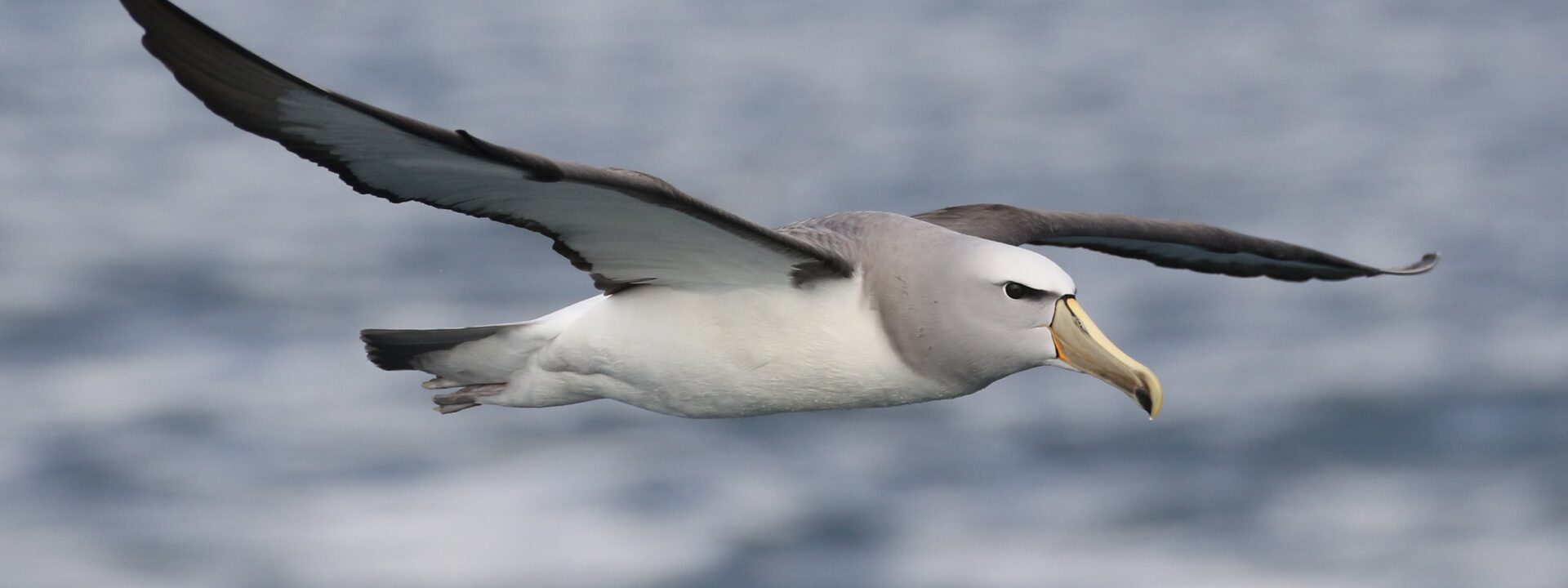
The itinerary shown here is the ‘Birding Downunder’ trip, which visits all the islands of avian interest, and can be deemed to be another essential pelagic. The 2001 trip yielded 41 species of tubenose alone, over a third of the world’s total, and all the voyages since have come home with a similar list (full reports on our website). There is not a moment at sea without at least a Cape Petrel, prions and a few albatrosses present. The list of seabirds is staggering and large numbers will be encountered both at sea, and on land breeding in the islands. Albatrosses (up to 15 species), shearwaters, petrels, penguins (eight species) including endemics and shags (up to ten species) head an awesome list. The almost mythical Magenta Petrel has been seen twice in the last few years and was again seen in 2007. A number of other island bird endemics can be expected, Sub-Antarctic Snipe, Auckland Island Flightless Teal and the stunning Shore Plover to name a few. Explore uninhabited wilderness islands. Great photographic opportunities abound. This trip is an ideal choice for those of you who have already been to Antarctica from South America. Seals, sea lions, whales and dolphins will be encountered too. The Volume 6 issue, 3/2000, of the Finnish magazine ‘Alula’ is dedicated to this trip, well worth obtaining a back copy for the stunning photographs alone. WildWings will be pleased to assist with your other travel plans in connection with this expedition, Fjordland Crested and White-flippered Blue Penguin can be found on South Island. Visit Kaikoura for more seabirds, Sperm Whales and Dusky Dolphins and Akaroa for the endemic Hector’s Dolphin. Demand is always high for this voyage, please book early!
Day 1: Arrive Invercargill, New Zealand's southern most city, overnight hotel with dinner.
Day 2: After breakfast, a museum visit including a video presentation, followed by lunch. Transfer by coach to the Port of Bluff (27 km south of Invercargill) to board the Spirit of Enderby and sail.
Day 3: The Snares is the first of the Sub-Antarctic Islands that we will be visiting. It is an amazing island - more birds nest on this small island than there are seabirds around the entire British Isles! We will arrive early morning, and Zodiac cruise the sheltered eastern side. In the sheltered bays we should see the endemic Snares Crested Penguins, Tomtit and Fernbird, Cape Petrel, Antarctic and White-fronted Terns and Red-billed Gulls. An estimated six million Sooty Shearwaters nest on the Snares Islands.
Day 4: Arrive at Enderby Island, a great island to bird in the Auckland Island group. We make a landing at Sandy Bay, the main breeding ground for the Hookers Sea Lion with observations of the following species: nesting Southern Royal Albatross, Northern Giant Petrel, nesting Auckland Island Shag, Auckland Island Teal, Auckland Island Banded Dotterel, Auckland Island Tomtit, Bellbird, Pipit, Red-crowned Parakeet, Yellow- eyed Penguin and nesting Light-mantled Sooty Albatross. We will spend some time searching for the Sub-Antarctic Snipe.
Day 5: This morning we will cruise to Carnley Harbour in the south of the main Auckland Islands. There will be an opportunity for the energetic participants to climb to the south west Cape White-capped Albatross colony. Gibson’s Wandering Albatross nest above this colony amongst the tussock too, we should get good views. Those remaining on board will explore the coastal forest with a chance to see New Zealand Falcon and enjoy close encounters with other bush birds.
Day 6: We will be at sea all day, another opportunity to see many pelagic species, including Wandering, Royal, White-capped, Light-mantled Sooty, Grey-headed and Black-browed Albatrosses, White- chinned, Mottled, White-headed and Cape Petrel, diving petrels, Grey-backed and Black-bellied Storm Petrel. In 2001 as the ship left for the journey south, 22 species of seabird were in the air at once.
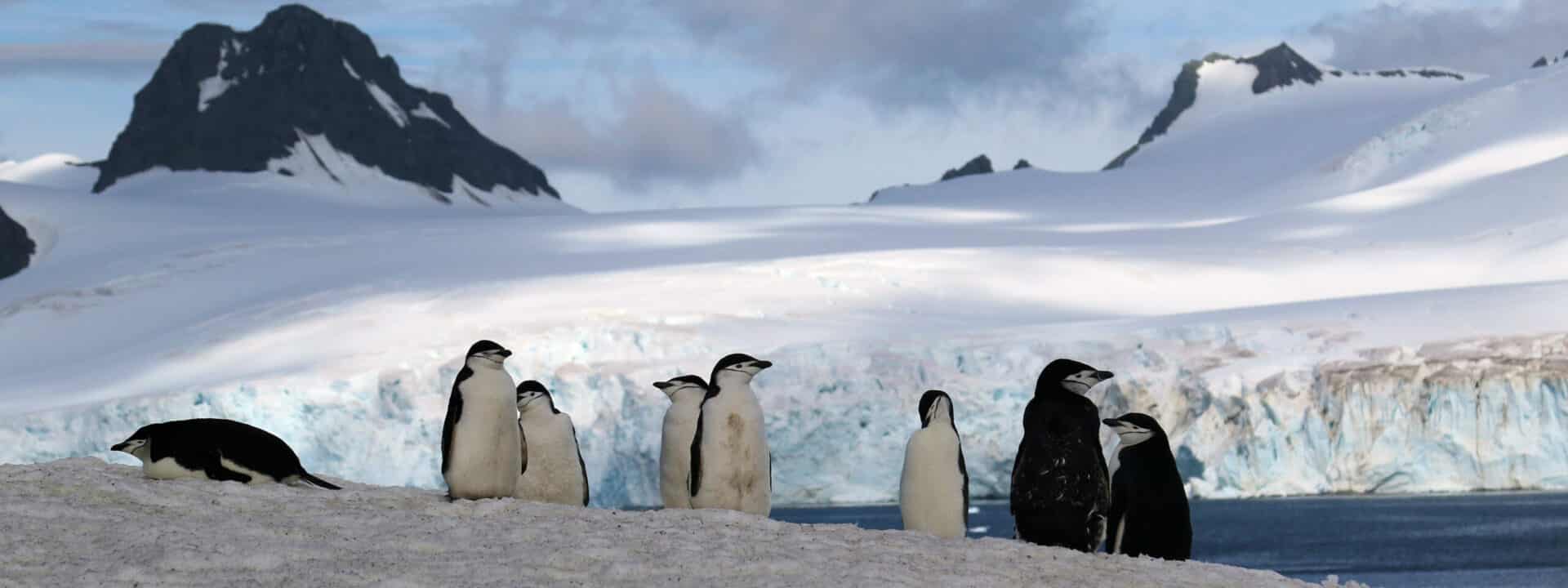
Day 7: Arrive at Macquarie Island which is, of course the only place to see the Royal Penguin and there is an abundance of these. King penguins are also found in large numbers. Two other penguin species breed; Gentoo and Rockhopper. Along the coast we will see the Imperial (Macquarie) Shag. We plan to land at ANARE base and at Sandy Bay. We will also Zodiac cruise Lusitania Bay, where there is a huge King Penguin colony. Pods of Orcas may be seen hunting for ‘weaners’. We continue our exploration of Macquarie Island and then depart for Campbell Island on the afternoon of our second day.
Day 9: At sea en route to Campbell Island, we will see a similar range of species as we saw en route to Macquarie Island from the Auckland Islands, hopefully with a few Hourglass Dolphins too.
Day 10: We will spend the day ashore to see the wonderful nesting Southern Royal Albatross, Campbell Albatross, Light-mantled Sooty Albatross, Northern Giant Petrel, Campbell Island Shag, Rockhopper Penguin, Southern Skua, Red-billed Gull, Black-backed Gull, Antarctic Tern, and the New Zealand Pipit.
Day 11: At sea en route to the Antipodes, another day for pelagic species. Wandering, Royal, Black-browed, Light-mantled Sooty, Salvins and Grey-headed Albatrosses, Northern and Southern Giant Petrel, Sooty and Little Shearwaters. We will endeavour to sort out Fairy, Fulmar and Antarctic Prions which are not always easy but we should get some great views. Other species to be on the look out for include Soft-plumaged, Mottled, White-headed, Grey-faced and White-chinned Petrels, Grey-backed, Wilson’s and Black-bellied Storm Petrels and Common Diving Petrel.
Day 12: Antipodes Island is one of the most isolated and least known of the New Zealand's Sub-Antarctic Islands. We will Zodiac cruise the coastline where we should see the Antipodes Island Parakeet and also the Red-crowned, which is a strong subspecies. We will also see the Antipodes subspecies of the NZ Pipit. Both Rockhopper and Erect-crested Penguins frequent the coastline, Antipodean Wandering Albatross nest on high. Magenta Petrels have been seen in this area in 2001 and 2004.
Day 13: En route to the Bounty Islands, inhospitable granite knobs lashed by the Southern Ocean we should see Wandering, Bullers, White-capped and Salvins Albatross, Northern Giant Petrel, Cape Petrel, Antarctic Fulmar, Mottled Petrel, Soft-plumaged Petrel, Broad billed Prion, Fulmar Prion, White-chinned Petrel, White-faced Storm Petrel to name a few. There is a very good chance that we should see the Chatham Island Petrel and we will be keeping a close watch for the Magenta Petrel. Arrive at the Bounty Islands early morning to Zodiac cruise. Erect-crested Penguin and the Bounty Island Shag will feature on our bird lists.
Day 14: En route to the Chatham Archipelago will be more time for pelagic watching - we will be especially interested in looking out for the Chatham Island Petrel (it has been seen on this leg of the voyage before) and also the legendary Chatham Island Taiko (Magenta Petrel). Whales and dolphins should be encountered too.
Day 15-16: We will arrive at the Chathams travelling past Pyramid Rock - which is the breeding place of the entire world population of the exquisite Chatham Island Albatross. At South East Island (Rangatira) we will Zodiac cruise (landings are not permitted) and should obtain good views of the very rare Shore Plover and the Chatham Island Oystercatcher. Our landing on the main Chatham Island will let us see the endemic Chatham Island Cormorant. This archipelago has been isolated for thousands of years and both the birds and plants show a high degree of endemism. During our birding excursion we should see Chatham Island and Pitt Island Shags, along with Chatham Island Warbler and Pigeon.
Day 17-18: En route we will cross what is known as the Chatham Rise. It is a relatively shallow area of water, compared with the rest of the surrounding ocean. It is also one of the best places for pelagic watching with an overlap of both northern or more temperate species and those birds from southern latitudes. We can expect to add Broad-billed Prion, Westland Black Petrel, Flesh footed Shearwater, Bullers Shearwater, Cooks and Great-winged Petrel to our huge seabird list, along with a variety of cetaceans.
Day 19: We will arrive in Dunedin and after completing formalities passengers will be able to disembark. There will be a central city and airport drop off.
Note: other voyages are available on this vessel led by Rodney and his team including: The Ross Sea region of Antarctica and the Kermadec Islands. Please ask for the colour brochure.
Dates: 9th 27th November 2008
Leader/s: Rodney Russ and expedition team.| Cost: | |
| Sharing a triple basic | £3879 |
| Sharing a twin basic | £4499 |
| Sharing a twin with facilities | £5255 |
| Sharing a superior twin with facs. | £5735 |
| Sharing a suite with facilities from | £5985 |
Dates: 14th November 2nd December 2009
Leader/s: Rodney Russ and expedition team.| Cost: | |
| Sharing a triple basic | £4059 |
| Sharing a twin basic | £4659 |
| Sharing a twin with facilities | £5399 |
| Sharing a superior twin with facs. | £5859 |
| Sharing a suite with facilities from | £6099 |
Deposit: 25%
Advance register for 2010 for only £50 per person
Price includes: Voyage with accommodation as booked, including all meals, shore excursions, lectures and services of expedition team, day by day bird checklist, overnight hotel pre-cruise with dinner and breakfast, group transfers hotel/ship, ship/airport, landing fees and port taxes.
Price excludes: Flights (available from £925), insurance, onboard gratuities (suggest US$10 per day), drinks, and items of a personal nature.