
“Kamchatka”
12th 25th June 2011
SYSTEMATIC LIST
The taxonomy and English names used in this checklist generally follow The Clements Checklist of the Birds of the World by James Clements with revisions made where an alternative name/taxonomy is considered more appropriate.
This systematic list was compiled by Chris Collins (based on the figures agreed at the nightly logs) and includes all species recorded between arriving at Yuzhno-Sakhalinsk (12 June) and arriving at Petropavlovsk-Kamchatskiy on (25 June).
Accurately counting seabirds at sea is extremely difficult (eg as one can never be sure which birds are following or revisiting the ship), so the system outlined below was adopted, with this also used for the more numerous landbirds:
1-10 = actual number seen
11-100 = A
101-1,000 = B
1,001-10,000 = C
10,001-100,000 = D
____________________________________
BIRDS
Red-throated Diver Gavia stellata
Seen on five dates with the highest count being whilst cruising on the Zhupanova River, Kamchatka on 21 June where five birds were recorded.
Pacific Diver Gavia pacifica
It requires a reasonably good view to tell this species from Black-throated Diver, however, two birds were seen off Kunashir Island (14 June) and five off Iturup Island (15 June) which were considered to be Pacific Divers.
White-billed Diver Gavia adamsii
A summer plumage bird on 17 June was the only record of the voyage.
Red-necked Grebe Podiceps grisegena
Only seen off Kunashir Island (14 June: 5 birds) and Toporkovy and Shiashkotan Islands (18 June: 2 birds.)
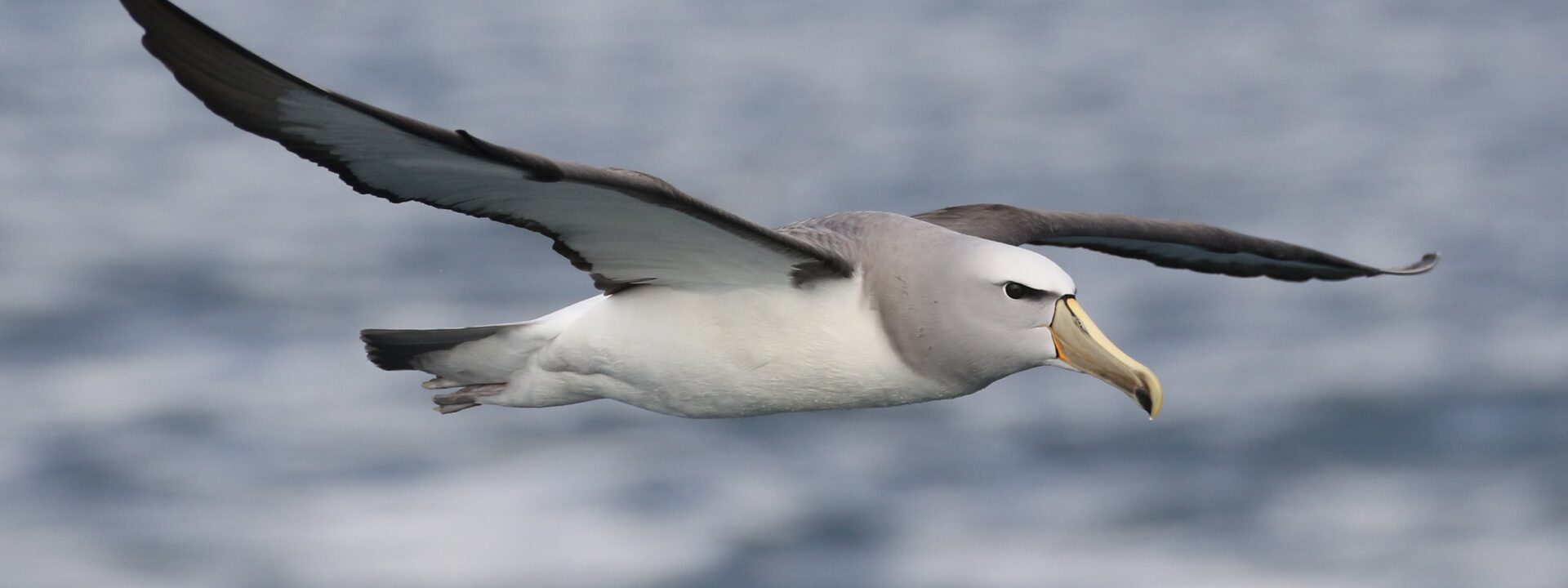
Short-tailed Albatross Phoebastria albatrus
One of the major surprises of the voyage was the three Short-tailed Albatrosses which were seen on 17 June. The first two were found floating on the sea with Northern Fulmars prior to breakfast and gave exceptional views. Later in the day, a sub-adult flew passed the bows of the Spirit of Enderby (at a range of less than 20m), however, conditions were rather foggy at the time so the bird was visible for less than a minute.
Laysan Albatross Phoebastria immutabilis
Seen in reasonable numbers on a daily basis from Urup Island (16 June) northwards with A logged on each date.
Black-footed Albatross Phoebastria nigripes
This species is generally the least frequently encountered of the North Pacific albatrosses in this part of the Russian Far East and we were, therefore, fortunate to see three individuals on 18 June during a ‘mega chumming session’ when it was estimated that somewhere between 50-100,000 Northern Fulmars were following the ship.
Northern Fulmar Fulmarus glacialis
An extremely common bird throughout the voyage with sightings on a daily basis except on 15 June when most of the day was spent ashore on Iturup Island. The minimum number recorded on all other dates was B (ie 100-1,000 individuals) with C noted on four occasions and D twice.
Almost all the birds seen were “Blue fulmars” with the percentage of pale birds (ie similar to those encountered in UK waters) being well below 1%.
Mottled Petrel Pterodroma inexpectata
Only seen during the deep water crossings between Kamchatka and the Commander Islands (21 and 24 June) and offshore from these islands (22-23 June). The maximum number recorded on any one day was approximately twenty individuals which was in the late afternoon of 21 June after the morning at the Zhupanova River.
Sooty Shearwater Puffinus griseus
Separating this species from Short-tailed Shearwater is never particularly easy, however, birds which were considered to be Sooty Shearwaters were seen on six dates between 17-24 June. On two occasions A was logged, however, all other counts were in low single figures.
Short-tailed Shearwater Puffinus tenuirostris
This species was seen on eight dates with the highest counts being in the Sea of Okhotsk (where this species moults in large numbers) with C logged on both 13 and 14 June.
Leach's Storm-Petrel Oceanodroma leucorhoa
Seen on three dates during the voyage, with the highest count being at least 500 individuals which were recorded between Toporkovy and Shiashkotan Islands on 18 June.
Fork-tailed Storm-Petrel Oceanodroma furcata
This species was seen in variable numbers on most days of the trip with hundreds of birds encountered on a couple of occasions.
Japanese Cormorant Phalacrocorax capillatus
Seen in small numbers on the first four days of the voyage (13-16 June) with a low A logged (ie c.10-20 individuals) on the first three days and two birds on 16 June.
Pelagic Cormorant Phalacrocorax pelagicus
The commonest of the three species of cormorants with sightings on all bar two days of the expedition. The typical count was a low A, although B was logged on both days in the Commander Islands (22-23 June).
Red-faced Cormorant Phalacrocorax urile
The most range-restricted of the cormorants seen on the voyage. This species was, however, seen in good numbers on five days with the highest concentration being around the Commander Islands (22-23 June) where B was logged on both dates.
Eurasian Wigeon Anas penelope
Seven birds on Iturup Island on 14 June and two at the Zhupanova River on 21 June were the only records during the voyage.
Eurasian Teal Anas crecca
Seen on three dates during the latter stages of the voyage with two on Medney Island (Commander Islands) on 23 June and single individuals at Bukhta Russkaya (20 June) and during the zodiac cruise up the Zhupanova River (21 June).
Mallard Anas platyrhynchos
The highest numbers were during the zodiac cruise on the Zhupanova River, Kamchatka (21 June) when a low A was logged with single figure counts on two earlier dates.
Northern Pintail Anas acuta
Another duck where the highest count was at the Zhupanova River, Kamchatka with a low A recorded. Two birds were also seen at Iturup (15 June) and on Onekotan (19 June).
Northern Shoveler Anas clypeata
Two at the Zhupanova River (21 June) and the same number at Medney Island (23 June) were the only sightings of the voyage.
Tufted Duck Aythya fuligula
Seen in small numbers (ie 8 or less individuals) on five dates with sightings on Kunashir (14 June), Iturup (15 June), Bukhta Russkaya (20 June), at the Zhupanova River (21 June) and on Medney Island (23 June).
Greater Scaup Aythya marila
The highest count was on Kunashir Island (14 June) where there were estimated to be approaching 100 individuals (ie a high A). Smaller numbers were seen on four subsequent occasions.
Common Eider Somateria mollissima
This species was only seen around Medney Island (23 June) with A logged. The birds here are of the highly distinctive subspecies v-nigra and have bright orange feet and bills.
Harlequin Duck Histrionicus histrionicus
This handsome duck was seen in good numbers (ie A or B) on six dates with single figure counts on two further days. The highest counts were off Kunashir (14 June) and at Bukhta Russkaya (20 June) when B was logged (ie at least one hundred individuals).
Long-tailed Duck Clangula hyemalis
The only sightings were two birds close to the Port of Korsakov on Sakhalin (13 June).
Black Scoter Melanitta nigra
Nine birds were seen from the ship at Korsakov Port, Sakhalin (13 June) with the same number logged the following day at Kunashir (14 June).
White-winged Scoter Melanitta (fusca) stejnegeri
This species was only recorded on two dates, with three individuals at Korsakov Port on Sakhalin (13 June) and a low A logged at Urup (16 June).
There is an increasing debate as to the species limits within the Velvet/White-winged/Stejneger’s Scoter complex and if the birds in Eastern Russia are treated as different from Europe and North America, those seen on the trip would become known as Stejneger’s Scoters.
Common Goldeneye Bucephala clangula
Four individuals were recorded during the zodiac cruise on the Zhupanova River, Kamchatka on 21 June with a single bird at Medney Island on 23 June.
Red-breasted Merganser Mergus serrator
This species was recorded on both days whilst in the Commander Islands (22-23 June) with a total of three individuals noted.
Goosander Mergus merganser
Seen in small numbers on four dates with the highest count being a low A at the Zhupanova River, Kamchatka on 21 June.
Black-eared Kite Milvus (migrans) lineatus
The only sightings were lone birds at Korsakov Port (13 June) and on Kunashir Island (14 June).
White-tailed Eagle Haliaeetus albicilla
Seen on four dates in the early stages of the expedition with the highest counts being on Kunashir Island (14 June) and on Urup/Chirpoy (16 June ) where A was logged.
Steller's Sea-Eagle Haliaeetus pelagicus
One of the undoubted highlights of the expedition were the multiple excellent sightings of this stunning raptor. The first individuals were recorded on Urup (16 June: 3 birds), with six around Bukhta Russkaya (20 June) and at least ten the following day at the Zhupanova River.
Eurasian Buzzard Buteo buteo
Lone birds were seen on Kunashir and Iturup (14-15 June).
Peregrine Falcon Falco peregrinus
Recorded in very small numbers (ie one or two individuals) on five dates between 17-23 June inclusive.
Rock Ptarmigan Lagopus muta
Two birds were seen on Medney Island (23 June).
Mongolian Plover (Lesser Sandplover) Charadrius mongolus
This species breeds at Nikol’skoye on Bering Island in the Commander Islands and six birds were seen there on 22 June.
Latham's Snipe Gallinago hardwickii
This species was seen in small numbers on the first three days of the trip, ie on Kunashir, Iturup and Urup Islands.
Common Snipe Gallinago gallinago
A lone bird at the Zhupanova River (21 June) was the only sighting of the expedition.
Far Eastern Curlew Numenius madagascariensis
Five birds were seen at the Zhupanova River (21 June).
Common Greenshank Tringa nebularia
Small numbers were seen during the zodiac cruise on the Zhupanova River, Kamchatka on 21 June.
Wood Sandpiper Tringa glareola
Three birds were seen during the zodiac cruise on the Zhupanova River on 21 June.
Long-toed Stint Calidris subminuta
The only sightings were in some wet grasslands near the mouth of the Zhupanova River on 21 June.
Dunlin Calidris alpina
Good numbers of summer plumage birds were seen during the shore excursion on Bering Island (22 June) with at least a couple of hundred individuals logged at Nikol’skoye.
Rock Sandpiper Calidris ptilocnemis
One of the speciality waders of the voyage, with some nice views along the shoreline in front of the village of Nikol'skoye on Bering Island on 22 June with A logged.
Red-necked Phalarope Phalaropus lobatus
Only recorded during the early stages of the expedition with five individuals not long after leaving Korsakov Port (13 June) and two the following the day.
Grey [Red] Phalarope Phalaropus fulicarius
A single bird noted at Bukhta Russkaya, Kamchatka (20 June) was the only sighting of the voyage.
Pomarine Skua Stercorarius pomarinus
Three birds were logged during the voyage with the first off Kunashir Island (14 June). Singles were then seen near Bukhta Russkaya, Kamchatka (20 June) and off Medney Island (23 June).
Arctic Skua Stercorarius parasiticus
The only sightings were two birds shortly after leaving Korsakov Port (13 June), a lone bird on 21 June after leaving the Zhupanova river, Kamchatka and a singleton off Bering Island (22 June).
Long-tailed Skua Stercorarius longicaudus
The sole record was between Urup and Chirpoy Islands on 16 June.
Black-tailed Gull Larus crassirostris
This species was only found during the early stages of the trip with small numbers on 13, 15 and 16 June (ie around Korsakov and Iturup and Urup Islands).
Kamchatka Gull (Common/Mew Gull) Larus (canus) kamtschatschensis
The only sightings of this putative split from Common/Mew Gull were several individuals on the Zhupanova River, Kamchatka (21 June).
Glaucous-winged Gull Larus glaucescens
This species was commonest during the northern part of the voyage with the highest counts being around the Commander Islands where several hundred (ie B) were logged each day (22-23 June).
Glaucous Gull Larus hyperboreus
Single individuals near the landing site on Iturup (15 June) and at the mouth of the Zhupanova River (21 June) were the only sightings of the voyage.
Vega Gull Larus vegae
One bird at the Zhupanova River (21 June) was the only record.
Slaty-backed Gull Larus schistisagus
By far the commonest gull which was recorded on almost every day of the voyage with A or B logged on all bar three dates. The lowest counts were around the Commander Islands (22-23 June) where this species was largely replaced by Glaucous-winged Gull.
Black-headed Gull Larus ridibundus
Only seen on two dates, with four birds around Iturup Island on 15 June and A logged during the zodiac cruise up the Zhupanova River, Kamchatka Peninsula on 21 June.
Red-legged Kittiwake Rissa brevirostris
This North Pacific endemic was only seen during the latter stages of the voyage with the first sighting being a somewhat unexpected lone individual shortly after leaving Bukhta Russkaya (20 June). This species is, however, reasonably common around the Commander Islands with A logged on both days (22-23 June).
Similar numbers were also recorded on 24 June, as the ship cruised back to Petropavlovsk-Kamchatskiy, with several birds perched on the stern of the ship for several hours allowing everyone some great views and photographic opportunities.
Black-legged Kittiwake Rissa tridactyla
This species was seen on every day of the expedition. The numbers logged varied markedly (but were always A or higher) with the largest concentrations being around Chirpoy Island (16 June) and Ariy Karmen, Commander Islands (22 June) when C was recorded.
Aleutian Tern Sterna aleutica
The only sighting was a single bird which was seen at sea a short while after leaving the Zhupanova River, Kamchatka (21 June) for the Commander Islands.
Common Tern Sterna hirundo
Only seen during the zodiac cruise on the Zhupanova River, Kamchatka (21 June) where A was logged. All the birds in this part of Eastern Russia are of the black-billed subspecies longipennis.
Common Guillemot Uria aalge
Generally this species was less frequently encountered than Brunnich’s Guillemot, although still recorded on eight dates during the voyage. On most days there were only single figure counts but on both days around the Commander Islands (22-23 June), C was logged.
Brunnich’s Guillemot Uria lomvia
This species was seen on a daily basis from 16 June (Urup Island) onwards, albeit in variable numbers. The largest numbers were around Chirpoy Island (16 June) and between Shimushir and Yankicho in the Central Kuril Islands (27 June) when a high B was logged (ie close to 1,000 individuals).
Pigeon Guillemot Cepphus columba
This species was seen on eight dates with the largest count (with B logged) being around Toporkovy Island on 18 June.
Of the three subspecies which were seen during the voyage, probably the most interesting was snowi which is only found in the Kuril Islands. This generally lacks the prominent white wing panel of the other subspecies and also seems to have a browner background colour than the other subspecies. It is interesting to note that in Birds of East Asia, Mark Brazil suggests there is an argument for splitting snowi and our experiences of this rarely seen taxa certainly confirmed that it seems more distinct from other Pigeon Guillemots than, for example, Pigeon Guillemot is from Black Guillemot.
Spectacled Guillemot Cepphus carbo
This localised species was seen offshore from Sakhalin, Kunashir, Iturup and Urup Islands (13-16 June) although a total of only ten individuals was recorded.
Long-billed Murrelet Brachyramphus perdix
Another alcid which was only seen occasionally, with three birds found shortly after departing Korsakov (13 June). A lone individual was then seen the following day off Kunashir, with the only other sightings being in Bukhta Russkaya (20 June) where seven birds were logged and everyone was able to enjoy good scope views of this species.
Ancient Murrelet Synthliboramphus antiquus
This species was recorded on a daily basis for the first eight days of the voyage, although it was only ever seen in comparatively small numbers (single figure counts or A). The final records were off Medney Island on 23 June when two birds were seen.
Parakeet Auklet Aethia psittacula
This comparatively scarce alcid was seen on five dates with daily single figure counts between 17-19 June. Higher numbers were, however, recorded in the Commander Islands with the largest count being at Ariy Karmen Island (just offshore from Nikol’skoye/Bering Island) where A was logged. The following day smaller numbers were seen off Medney Island.
Crested Auklet Aethia cristatella
This species was recorded on ten dates during the voyage with the first individuals seen shortly after leaving Korsakov on 13 June. The largest numbers were, however, at Yankicho Island (17 June) where the swarms of birds coming in at dusk were truly breathtaking and undoubtedly one of the major highlights of the voyage. In practice, it was impossible to accurately estimate the numbers, although E was logged (ie up to 100,000 individuals).
Whiskered Auklet Aethia pygmaea
This species was the most localised of the more expected alcids and was only seen on four dates. The largest concentrations were around Yankicho Island (17 June) where they joined the Crested Auklets in flying inshore in the early evening creating what is surely one of the most impressive avian spectacles on the planet. The following day, we also saw good numbers (C logged again) between Toporkovy and Shiashkotan Islands, however, by 19 June the counts had dropped to a low A.
The only other records were off the NW tip of Medney Island where a high B was recorded on 23 June.
Least Auklet Aethia pusilla
This species is the toughest of all the alcids which breed along the route of the voyage to see and is only ever encountered in very small numbers. The only birds which were seen by more than two individuals (and were thus recorded in the official log) were four birds off Medney Island on 23 June.
Rhinoceros Auklet Cerorhinca monocerata
This species was only recorded during the early stages of the voyage with the highest count being B which was logged offshore from Kunashir, Southern Kurils (14 June). Smaller numbers were seen the previous and subsequent days (13 June: 2 birds; 15 June: a low A; 16 June: 2 birds; 18 June: 2 birds).
Horned Puffin Fratercula corniculata
This species was first seen on 16 June and then a daily basis between 19-23 June. On most days only a single figure count was recorded, however, good numbers were seen off Medney Island (23 June) where a high A was logged, with slightly lower numbers off Chirpoy Island (16 June).
Tufted Puffin Fratercula cirrhata
Undoubtedly one of the ‘classic’ alcids of the Russian Far East and seen in good numbers on most days. Birds were recorded on ten dates during the voyage with B or higher logged on nine occasions.
Oriental Turtle-Dove Streptopelia orientalis
Only encountered during the early stages of the trip, with the first sighting being in Gagarin Park, Sakhalin Island on 13 June. Later in the day, a lone bird made repeated passes of the ship as we cruised across the Sea of Okhotsk to Kunashir Island. Birds were then seen on each of the subsequent four days (Kunashir, Iturup, Urup and Shimushir Islands) with six, eight, two and one individuals being recorded.
Common (Eurasian) Cuckoo Cuculus canorus
This migrant was heard far more frequently than it was seen, although a total of seven birds was recorded on Kunashir and Iturup Islands (14-15 June).
Oriental Cuckoo Cuculus (saturatus) optatus
This species closely resembles Common Cuckoo but the song is quite different and Oriental Cuckoos were heard on both Iturup and Urup Islands, although there were no definite sightings.
Pacific (Fork-tailed) Swift Apus pacificus
This species was seen in reasonable numbers (ie A or B) on the first three landings of the expedition (Kunashir, Iturup and Urup). There were then low single figure counts on three subsequent occasions with the final record being at the Zhupanova River on 21 June.
Common Kingfisher Alcedo atthis
A single bird on Kunashir (14 June) was the only record of the voyage.
Crested Kingfisher Megaceryle lugubris
This spectacular bird is only occasionally recorded on Kunashir Island and a lucky few saw one there on the afternoon of 14 June.
Pygmy Woodpecker Dendrocopos kizuki
Three individuals were seen on Kunashir Island on 14 June with small numbers also in Gagarin Park on Sakhalin.
White-backed Woodpecker Dendrocopos leucotos
A single bird was recorded on Kunashir Island (14 June).
Great Spotted Woodpecker Dendrocopos major
A total of four individuals were logged across four dates with sightings on Kunashir, Iturup and Shimushir Islands (14, 15 and 17 June).
Sky Lark Alauda arvensis
This species was recorded in small to moderate numbers on five dates during the voyage with the first sightings on Iturup Island, Southern Kurils (15 June) and the final records at the Zhupanova River (21 June).
Sand Martin Riparia riparia
Only recorded on three dates with a low A logged on Iturup (15 June), a lone individual the following day on Urup, with the final sightings being two birds on Onekotan (19 June).
Barn Swallow Hirundo rustica
The only sightings of the entire trip were three birds on Onekotan Island on 19 June.
Asian House Martin Delichon dasypus
A group of approximately twenty birds were seen in Gagarin Park, Yuzhno-Sakhalinsk (12 June) and single individuals were also recorded on Urup and Onekotan Islands (16 and 19 June).
Pechora Pipit Anthus gustavi
Only seen at the Zhupanova River (21 June) and in the Commander Islands (22-23 June) with the highest numbers being on Medney Island (23 June) where a low A was logged.
Buff-bellied [American] Pipit Anthus rubescens
This species was seen on a daily basis from 16-20 June although always in small numbers. The highest numbers were on Onekotan Island (19 June) where a low A was recorded.
Japanese Accentor Prunella rubida
This species was heard singing in the mountains on Iturup (15 June) but was not seen.
White Wagtail Motacilla alba
The taxonomy of some of the black-and-white wagtails which occur in this part of Eastern Asia continues to be controversial with “Black-backed Wagtail Motacilla [alba] lugens” treated as a full species by some authorities but lumped as a subspecies of the more widely distributed White Wagtail Motacilla alba by others.
Black-backed Wagtails were seen on the majority of islands with records on ten dates, although on most occasions counts were in single figures.
Other black-and-white wagtails which showed the features of the subspecies leucopsis were seen on Kunashir, Iturup and Urup Islands (14-16 June).
Eastern Yellow Wagtail Motacilla [flava] tschutschensis
Like the Black-backed and White Wagtails, the taxonomy of the Yellow Wagtail group also remains controversial, although many authorities now split the complex into two, with the birds in this part of Eastern Russia all being Eastern Yellow Wagtails, Motacilla tschutschensis.
A low A was recorded at both Bukhta Russkaya and at the Zhupanova River (20-21 June).
Grey Wagtail Motacilla cinerea
Two birds were seen on Kunashir Island (14 June) with the only other sighting being a lone bird at Bukhta Russkaya (20 June).
Goldcrest Regulus regulus
The only record of this species was birds heard on Kunashir Island (14 June).
[Winter] Wren Troglodytes troglodytes
This species was heard on the majority of islands during the trip (8 days) although the birds were always difficult to see.
Eye-browed Thrush Turdus obscurus
A single bird at Bukhta Russkaya (20 June) was the only record of the voyage.
Brown-headed Thrush Turdus chrysolaus
This species was recorded on four dates with sightings on Kunashir, Urup, Shimushir and Onekotan Islands (14, 16, 17 and 19 June) with the highest count being on Shimushir where eight birds were seen.
Japanese Bush-Warbler Cettia diphone
Single individuals were seen on Kunashir and Urup (14 and 16 June), however, this species is a lot commoner by voice with ‘lots’, for example, heard on Kunashir.
Lanceolated Warbler Locustella lanceolata
Practically the first bird of the trip was a Lanceolated Warbler in vegetation by the airport car park at Yuzhno-Sakhalinsk on 12 June. The only other record was a lone, presumably lost, individual on Medney Island on 23 June.
Middendorff's Warbler Locustella ochotensis
This species was seen on a daily basis between 16-21 June although only ever in comparatively small numbers with the maximum day count being a low A which was recorded on Shimushir Island (17 June).
Sakhalin [Gray's Grasshopper] Warbler Locustella [fasciolata] amnicola
The taxonomy of some of the Locustella warblers which occur in Eastern Asia is not fully resolved with the birds on Sakhalin, Hokkaido and the South Kuril Islands variously treated as a race of Gray’s Grasshopper Warbler Locustella fasciolata amnicola, or as a separate species, Sakhalin warbler, Locustella amnicola.
Although this bird can be difficult to see well, those who joined the early morning walk to the town park in Yuzhno-Sakhalinsk (13 June) enjoyed some good views of a lone bird.
Black-browed Reed-Warbler Acrocephalus bistrigiceps
This species was heard singing on Kunashir Island (14 June) but could not be located.
Pallas’ Leaf Warbler Phylloscopus proregulus
A single individual in Gagarin Park on Sakhalin Island (13 June) was the only record of the expedition.
Kamchatka Leaf-warbler/Arctic Warbler Phylloscopus examinandus/borealis
A recently published paper in the British Ornithologists’ Union’s journal Ibis has proposed splitting Arctic Warbler into three species. If these recommendations are followed, the vast majority of birds recorded on the expedition would be Kamchatka Leaf-warblers although it is certainly possible that there could also have been some migrant Arctic Warblers (since these breed to the north of Kamchatka Leaf-warbler and the passage of some species was still ongoing).
Birds were recorded on seven dates during the voyage with the first birds recorded at Gagarin Park (13 June) and the last at the Zhupanova River (21 June). The highest counts were on Shimushir Island (17 June) where a high A was logged.
Eastern Crowned Warbler Phylloscopus coronatus
The only record was a lone bird on Kunashir on 14 June.
Dark-sided [Siberian] Flycatcher Muscicapa sibirica
This species was only seen at Gagarin Park on Sakhalin on 12 and 13 June.
Asian Brown Flycatcher Muscicapa dauurica
Reasonable numbers of Brown Flycatchers were seen on Sakhalin (12-13 June), however, this species was also recorded on Kunashir (14 June: low A) and Shimushir (17 June: 1 bird).
Narcissus Flycatcher Ficedula narcissina
Certainly one of the most colourful birds of the trip and well seen during the birding excursions to Gagarin Park on Sakhalin with four individuals also recorded on Kunashir Island on 14 June.
Taiga Flycatcher Ficedula albicilla
One individual at the Zhupanova River was the only record during the voyage (21 June), however, this species was also recorded at Gagarin Park in Yuzhno-Sakhalinsk.
Japanese Robin Erithacus akahige
Unlike its British counterpart, this species can be extremely difficult to locate even when singing, however, many of the Wildwings group had some excellent looks at a male in the mountains on Iturup on 15 June. The following day, several birds were heard singing on Urup but none were seen.
Rufous-tailed Robin Luscinia sibilans
One of the target birds on Sakhalin with one individual seen in the town park in Yuzhno-Sakhalinsk (13 June). Although this species is common by voice at this locality, like the Japanese Robin, it can be very elusive but when a song perch is located, it is often possible to watch the bird for several minutes.
Siberian Rubythroat Luscinia calliope
This species was seen on seven dates with the first sightings on Iturup (15 June) and the last record at the Zhupanova River, Kamchatka (21 June). The highest numbers were on Urup and Shimushir where A was logged, although on most other dates only a few individuals (ie less than 5) were recorded.
Red-flanked Bluetail Tarsiger cyanurus
The only record was a single male singing on Iturup on 15 June.
Siberian Stonechat Saxicola maura
Only observed on Kunashir (14 June) with four birds logged.
Long-tailed Tit Aegithalos caudatus
At least ten individuals (ie a low A) were recorded on Kunashir (14 June).
Willow Tit Poecile montana
According to ‘Birds of East Asia’ (M.Brazil 2009), Marsh and Willow Tits are far closer in appearance in Eastern Russia than in Europe with calls and colouration not considered entirely reliable ways of separating them. Indeed, to complicate matters even further, whilst some birds in this region resemble the birds in Europe (eg on Sakhalin Island), those at the Zhupanova River in Kamchatka seem quite different having generally frostier plumage, darker wings and a short, but nevertheless noticeable, shaggy crest.
Several birds which were considered to be Willow Tits were, however, seen on Sakhalin prior to the start of the voyage with others at the Zhupanova River on 21 June.
Coal Tit Periparus ater
The subspecies which occurs in the Kuril Islands is a lot greyer in tone than the birds found in the UK and was seen on Kunashir (14 June: 2 birds) and Iturup (15 June: 3 birds).
Great Tit Parus major
Another species which was only recorded on Kunashir (14 June) with a low A logged.
Eurasian Nuthatch Sitta europaea
Recorded on Kunashir and Iturup (14-15 June) and in Gagarin Park on Sakhalin, although only single figure counts were logged.
Like the Coal tits, the nuthatches in Eastern Russia were a much “colder” colour than their Western European counterparts and also appear to have a different call. Indeed, some authorities (including the IOC) now treat these birds as a different species with the proposed name being Siberian Nuthatch, Sitta arctica.
Eurasian Magpie Pica pica
The only sighting was of a lone bird at the Zhupanova River, Kamchatka on 21 June.
Eurasian Nutcracker Nucifraga caryocatactes
A total of six birds were recorded on Urup and Shimushir (16-17 June).
Carrion Crow Corvus corone
This species was recorded on three dates with sightings on Iturup (15 June) and at Bukhta Russkaya and the Zhupanova River (20-21 June) with A logged on each occasion.
Large-billed Crow Corvus macrorhynchos
This species was the common corvid during the first three days of the trip with A recorded on a daily basis from 13-15 June inclusive (Sakhalin-Iturup).
Common Raven Corvus corax
There were single figure counts of this species on six dates between Urup Island (16 June) and Medney Island, Commander Islands (23 June).
Chestnut-cheeked Starling Sturnia philippensis
Eight birds were seen around the village of Kurilsk on Iturup (15 June).
Eurasian Tree Sparrow Passer montanus
This species was only encountered on three islands during the trip with records on Sakhalin, Iturup and Bering Islands with A logged on each occasion.
Grey-crowned Rosy Finch Leucosticta tephrocotis
One of the specialities on Medney Island with four birds recorded on 23 June.
Pine Grosbeak Pinicola enucleator
Two birds were seen on Shimushir on 17 June with four individuals recorded two days later on Onekotan.
Common Rosefinch Carpodacus erthrincus
This species was common by voice around Bukhta Russkaya and the Zhupanova River (20-21 June) although birds were only actually seen at the latter locality.
Eurasian Siskin Carduelis spinus
Seen on the first four days of the expedition with records on Sakhalin (13 June) and then Kunashir, Iturup and Urup. The only day when there was not a low single figure count was on Kunashir where A was recorded.
Oriental Greenfinch Carduelis sinica
A reasonably widespread species with records on Sakhalin, most islands in the Kurils and on Kamchatka.
Red Crossbill Loxia curvirostra
A flock of crossbills were heard on Kunashir but were not seen (14 June).
Eurasian (Grey-bellied) Bullfinch Pyrrhula pyrrhula
The subspecies which occurs in the Kuril Islands is very different from the birds in Western Europe as the males only have a pink throat, rather than this colour also extending down onto the breast.
There were single figure counts on Kunashir, Iturup, Urup and Shimushir (14-17 June).
Long-tailed Rosefinch Uragus sibiricus
This handsome species was only recorded on two dates, with at least eight birds on Kunashir (14 June) and four then noted on Urup (16 June).
Rustic Bunting Emberiza rustica
This species was only recorded on Kamchatka with at least one individual heard on 20 June at Bukhta Russkaya and one seen the following day during the zodiac cruise on the Zhupanova River.
Yellow-breasted Bunting Emberiza aureola
Two birds were seen at the Zhupanova River (21 June).
Black-faced Bunting Emberiza spodocephala
Seen on a daily basis from Kunashir to Urup (14-16 June) with Kunashir being the only place where more than a single figure count was recorded.
Japanese Grey Bunting Emberiza variabilis
This species is usually only seen in small numbers but two birds were well seen on Chirpoy Island (16 June) with four the following day on Shimushir.
Reed Bunting Emberiza schoeniclus
Seen in small numbers on Kunashir (14 June), Urup (16 June), Shiashkotan (18 June) and at the Zhupanova River (21 June).
Lapland Bunting Calcarius lapponicus
A reasonably common species in the Commander Islands with a low A recorded at Nikol’skoye (the main settlement in the Commander Islands) on 22 June with similar numbers the following day on Medney Island.
Snow Bunting Plectrophenax nivalis
Another species which was only recorded in the Commander Islands with one bird at Nikol’skoye on 22 June and two individuals the next day on Medney Island.
SYSTEMATIC LIST - MAMMALS
Tundra Vole Microtus oeconomus
Good numbers were seen on Shimushir (17 June) with A logged. The only other sighting was on 19 June (Onekotan) where a lone vole was recorded.
Grey-sided Vole Myodes rufocanu
One was seen on Onekotan on 19 June.
Muskrat Ondatra zibethicus
A single individual at the Zhupanova River (21 June) was the only record of the expedition.
Red Fox Vulpus vulpus
Six were logged on Onekotan (19 June) with the only other sighting being on Kunashir (14 June).
Blue [Arctic] Fox Alopex lagopus
Arctic Foxes were seen on Yankicho (17 June: 2 animals), Bering (22 June: 1) and Medney Islands (23 June: 3), although the population on Yankicho is introduced.
By the early 1990s, the population on Medney Island which is as an endemic subspecies, Alopex lagopus semenovi, had fallen to less than one hundred individuals as a result of an introduced mite which caused mange amongst the foxes. In 1994 a programme of inoculating cubs with anti-parasitic drugs was introduced and since then the population has increased considerably.
Brown Bear Ursus arctos
The only sighting of the voyage was a single animal close to the landing site on Kunashir (14 June).
Sea Otter Enhydra lutris
Sea Otters were seen on six dates with the highest count being off the eastern side of Paramushir Island (19 June) when at least sixty animals were recorded. Good numbers were also seen at Bukhta Russkaya (20 June) and at Medney Island (23 June) with A logged on both dates.
Common [Harbour] Seal Phoca vitulina
This species was seen on ten days, although there were only two days (18 and 23 June) when the count was into double figures.
Largha [Spotted] Seal Phoca larga
This North-West Pacific endemic species was first seen on 18 June when a lone animal was recorded. Good numbers were, however, seen at Bukhta Russkaya and at the Zhupanova River (20-21 June) with A logged at both locations.
Although there can be instances when it can be challenging to separate Largha seal from the more widely distributed Common Seal, the former species is usually silver-grey in colour with lots of black spots and when the animals are hauled out (eg as at the Zhupanova River), there are no real difficulties in telling the two apart.
Steller’s [Northern] Sea-lion Eumetopias jubatus
Steller’s Sea-lions were seen on six dates with the first sighting being a lone animal off Iturup on 15 June. There were then records on five days over the next week with B logged on both 16 (from the ship whilst passing Little Chirpoy Island) and 18 June (around Toporkovy Island).
Northern Fur Seal Callorhinus ursinus
Less common than the Steller’s Sea-lion with single figure counts on four dates (including both days in the Commander Islands) with the highest numbers being around Shiashkotan Island (17 June) where A was logged.
Baird’s Beaked Whale Berardius bairdii
This species was seen shortly after leaving Bukhta Russkaya on 20 June with A logged.
Orca [Killer Whale] Orcinus orca
Orcas were recorded on five dates with A logged on three occasions. The best sightings were undoubtedly whilst zodiac cruising a few miles from Bukhta Russkaya (20 June) when several animals were seen a matter of metres from the zodiacs.
Dall’s Porpoise Phocoenoides dalli
This species was by far the most frequently recorded cetacean with sightings on eight dates and A logged on six occasions. The first sightings were before the Spirit of Enderby had even left the wharf at Korsakov (13 June) and the final records were on the sea day after leaving the Commander Islands (24 June).
Sperm Whale Physeter macrocephalus
During the cruise between Urup and Chirpoy Islands (16 June), the ship passed through a region where Sperm Whales are seen on a regular basis. Over the course of a couple of hours or so, at least twenty animals were recorded with some giving close views.
This species was also seen around the Commander Islands with at least four individuals as the ship approached Bering Island (22 June) and two the following day as we departed the archipelago for Petropavlovsk-Kamchatskiy.
Sei Whale Balaenoptera borealis
The only record was a single animal off the Commander Islands on 23 June.
Northern Minke Whale Balaenoptera acutorostrata
There was only one record with a single animal off the Commander Islands (23 June).
Humpback Whale Megaptera novaengliae
The waters south of Bering Island are reliable for this species and at least ten individuals were seen on 23 June with one seen breaching.

|
| home | introduction | news | tour list | trip reports | media resources | brochure request | booking form & conditions | contact us |
|