![]() |
The Galapagos Islands Trip report 2009 Voyage Summary by Elaine Cook |
||
|
4th July While five our our party were already on the Galapagos, the rest of the Wildwings group had assembled at the Hotel Akros in Quito the previous day. With an early start we were at the airport, with immaculate paperwork already completed for us by the excellent ground agent, and buying ourselves coffees in the departure lounge. We were also quietly pleased to see that the requirement we’d been told about before leaving that we had to wear a surgical mask due to swine flu was not being enforced. A gentle flight down to Guayaquil was broken by the sighting of a snow covered volcano. Thirty minutes on the ground for refuelling and then much of the Ecuadorean Air Force joined us for the flight to Baltra. The air force maintains the airport at Baltra and TAME, the airline we were using, was started by the air force. Paperwork on the Galapagos was quick and we each handed over our USD 100 National park fee. After the paperwork, we were met by Paul McFarling. Paul is a registered Galapagos Nature Tour Leader. Although these posts are now restricted to Galapagos natives, he came out from the UK over 20 years ago and never went home. He’s now settled with a wife and two children. As we waited for our luggage, we saw our first Galapagos Dove a very, very nice Zenaida and while we saw them nearly every day, they never palled. While our luggage was taken away, a quick bus ride took us to the harbour in Baltra. Here we had our first Marine Iguanas and Elliot’s Storm-petrels. Then the “panga” came to ferry us to our vessel. Pangas look for all the world like Niaids in New Zealand Zodiacs with hard decks. Ours was enhanced by a carpet. We got on board the yacht Reina Silvia, our home for the next seven nights and met the other participants we were a total of 14 passengers. Fourteen was a good group size as we all fit in the panga (with an occasional cry of “bunch up”) but it wasn’t too crowded. Shoe management was a feature of the trip. The crew were very keen to keep sand out of the panga and to keep the yacht clean. So after getting out of the panga, you took your shoes off and left them in boxes at the back of the vessel. We all went barefoot onboard. We were eight keen seabirders, one with his wife who while not a keen birder, was an avid traveller. One way and another we had either travelled together on ships before or knew someone who had. We were John, David, Steve, Ken, Tony and Janet, Nicola and Matt and Elaine. The other participants who were already on the Galapagos were - a family of a mother and her two teenagers came from England and all were avid snorkellers (Kyra, Hamish and Milly). Finally, there was a couple from California Karen and Richard -- well travelled and he was a keen photographer. We’d lost an hour of time between Guayaquil and the Galapagos so there was time to stow our luggage in the cabins, get a quick briefing on the trip, a review of the rules and regulations, safety at sea, and for the chef to come and double-check all the food allergies and dietary requirements. We had: two vegetarians, two “no fish”, one “no mushrooms”; several of us exchanged glances of the “I am so glad I don’t have to plan these menus” variety. A great lunch followed. And then we weighed anchor and headed off for South Plaza. They call the transfers between anchorages “navigations”. The seabirders got off to a great start here with about three hours at sea in relatively deep water. Fairly quickly we saw our first Galapagos or Dark-rumped Petrel. By the end of the navigation, we’d had about 30 petrels, many of them very close to the boat and also Galapagos Shearwaters, Elliot’s Storm-petrels, Wedge-rumped Storm-petrels, and Red-billed Tropicbirds. South Plaza’s highlights were Land Iguanas (the only place we saw these), our first Small Ground Finches, Cactus Finches and Yellow Warblers. Also Swallow-tailed Gulls, Lava Gulls, thousands of Galapagos Shearwaters off-shore and around the cliffs, frigatebirds and a single Kelp Gull that has been present for about ten years. In the afternoon light, a slope of black lava covered with Sisuvium vegetation that was turning red was delightful. Dinner was fish and overnight we navigated to Genovesa Island. 5th July Paul had arranged with the captain for us to arrive at Genovesa slightly later than would have been usual so that there was a chance to see storm-petrels on the way in. This was successful with a 10-15 minute slot just after light yielding several Madeiran Storm-petrels in addition to the other two species. Our first stop of two was a wet landing in the morning on a sandy beach with a walk along the beach and over lava seeing Large Ground Finches, Warbler Finches, Galapagos Mockingbirds, Nazca Boobies, Red-footed Boobies, nesting frigatebirds (with one or two still displaying with their red pouch most though had eggs or nestlings) plus lots of juvenile Yellow-crowned Night-herons skulking in the dark of the lava. The Warbler Finches were great in that they seem to have done their best to converge on the white-eyes. In the late morning some of the group went snorkelling and came back raving about the brightly coloured fish. Lunch was a great buffet with fabulous steaks. More snorkelling after lunch and then a navigation round the island to a dry landing site. Here we went up a flight of rock stairs and across a flat trail to a colony of Wedge-rumped Storm-Petrels one of the few breeding diurnal storm-petrels. Thousands of them were flying over the cliff a fabulous sight. We also spotted two Short-eared Owls who feed on the storm-petrels and showed them to some of the parties from other boats. Immediately after getting back on the boat, we started off for Isabella our longest navigation at 15 hours and the roughest. About half the passengers took to their cabins and didn’t emerge for dinner. Several of those who came for dinner spaghetti with tomato sauce only had a bit to eat. The motion eased during the night as we turned down to Isabela and everyone turned out for breakfast -- although perhaps not very well rested. 6th July Breakfast on board was a buffet with cereals, toast, American pancakes, bacon/sausages, cheeses, fresh pineapple, watermelon, papaya and melon, yogurt. A different fruit juice was available every morning. And the kitchen took your order for eggs as you liked to have them. Our tour of Isabela started with a panga ride round the cliffs. We had our first Galapagos Penguins and then a few minutes later had two penguins fishing in very close proximity to a pelican. The pelican was being successful. A few minutes later there were nearly a dozen penguins and a couple of Blue-footed Boobies. They were all successful with their fishing and then the birds just streamed in the high count was nearly 30 penguins and over 100 boobies. They were all diving into what must have been a shoal of fish being herded by the penguins from below. The diving boobies were forming a bubble net keeping the fish by the cliffs. At one point, it seemed as though all 100 boobies fell together in a funnel formation onto the same spot. This continued for about 20 minutes until presumably most of the fish had been caught a fabulous experience. We then landed and took a walk up to the edge of a volcano (there were lots of edges of volcanoes by the end of the trip). From the top we could see in the distance, the patch of mangroves that hold the last few Mangrove Finches. Along the way we had our first White-cheeked Pintails at quite a distance in the lake at the bottom of the crater. We also saw Medium Ground Finches. Lunch was followed by a quick navigation to Fernandina Island where we had a landing onto a quite hot lava field. Other groups were already here so we spent some time in the warm and humid mangroves looking at lava formations it does so look like the lava only just stopped flowing yesterday! Then we worked our way out onto the main point with hundreds and hundreds of Marine Iguanas warming and cooling themselves. Many were large but there were also some quite small ones that were only a year old. 7th July For the birders this was a bit of a rest day with no new birds to twitch. In the morning we started at James Bay on Santiago Island with a rock pool walk great views of turtles. On some of the flat rocky areas there also shorebirds (Whimbrels, Semipalmated Plovers) and dozens of Small Ground Finches with Yellow Warblers. We had our first Galapagos Flycatcher here too. A snorkelling session was held from the beach and even raw beginners found it superb you could just go out to where the water was at your knees, sit down, put your mask in the water and see fish! Then you could slowly gain confidence and move into deeper water. Lunch was on the boat and we had a quick reposition to Bartholome Island in the afternoon. A second snorkelling session was run, again from the beach. A few of the more experienced snorkelers managed to catch up with the penguins fishing in the area Matt and Nicola got photos of the penguins underwater. A quick panga ride after snorkelling, and Ken spotted our first Dark-billed Cuckoo very nice views. Later on, there was a walk up several hundred wooden stairs to a superb scenic viewpoint. Our navigation started immediately upon returning to the Reina Silvia and the keen seabirders had half an hour of seabirding. Again, several Madeiran Storm-petrels these were only seen either just before dawn or just at dusk. 8th July This was a big day for the birders with lots to be seen and some superb work was done by Paul to make the logistics work for everyone on the boat. Before breakfast, we all were on board the panga and off to North Seymour Island. Here the nesting Blue-footed Boobies cooperated with virtually the first pair displaying, whistling, sky-pointing, doing their little dance of lifting their blue feet alternately and then copulating. John briefly treated us to his version of Blue-footed Booby dance. We also had a group of about four male frigatebirds displaying with their pouches inflated. Quite quickly we were back on the boat and eating breakfast while we navigated to the northern shore of Santa Cruz Island. Here we boarded a waiting comfortable bus while the crew were to navigate around the island and restock the boat, meeting us at Puerto Ayora. The day was a refreshing change in several ways first we had cloud and rain (our rain jackets and umbrellas were called into action) and we didn’t have any other groups of Galapagos visitors ahead or behind us. Also, we were off the “formal” trails and so David didn’t have to be reminded by Paul to stop straying off into forbidden territory. The first stop yielded Woodpecker Finches unfortunately without tools but acting just like little woodpeckers. We also had Warbler Finch this time looking like a kinglet. We stopped at a Tortoise Ranch and there was a spurt of excitement when there was cry from Kyra of “rail by the toilets”. It was a rail but Paint-billed Crake. Lovely views though. A stop for lunch was voted a success by the men of the group with a very attractive waitress and the women thought the male owner quite charming. The food wasn’t bad either lovely chocolate gateaux with berry coulis for dessert. After lunch Paul had kindly organized for the eight keen birders to go off-piste for a try for Galapagos Rail and Vegetarian Finch. Joad Aguirre a very nice young man with excellent English, mobile phone 093 725 172 met us on his motorcycle with two taxis taking four birders each. We drove up to Media Luna and then walked up the track. As soon as we came to the first bracken, a rail called and after a bit of cajoling we all had excellent views of two rails. We spent the rest of the afternoon looking for Vegetarian Finches which can be sporadic. With about 10 minutes to spare and trying the arid zone as none had been in the transition zone, Joad found one for us. During the afternoon we stumbled across several wild Galapagos Tortoises and also had a Whimbrel perched at the top of a tree. We met up with the group at the dock in Puerto Ayora and went on board for dinner. The crew were busy seeing family and friends so the navigation didn’t start until 2.00 am. 9th July After yesterday’s extravaganza, today was fairly low key. A wet landing on a beach at Floreana led on to a saline lagoon with about 30 flamingos, White-cheeked Pintails and Black-necked Stilts. Afterwards, two pangas were launched one for snorkelers and the other for birders, though at least one birder “crossed over”. The snorkelers had a huge school of Sargent Majors about 50 or so, a turtle diving below them, and White-tipped Reef Shark. Both boats cruised round Champion Islet admiring the cacti which have been exterminated on Floreana and the endemic Charles Mockingbirds. The afternoon started with a dry landing in the harbour and a drive in an open vehicle (the more adventurous choosing to sit on the roof) we were going up into the highlands to find Medium Tree Finch. We visited a reserve for tortoises created so the villagers could have their pets relocated to a good home -- which also doubled as a home for Medium Tree Finches. Paul told us the story of early western settlers on the Island which, while a bit hazy in my memory, seemed to involve German women bearing whips, Neitzsche, rich Americans with yachts and a number of unexplained deaths. Dinner was on the beach at a small hotel/museum where the beer was discovered to be colder and less expensive than on the boat. Hamish spent some time talking to Ken about career opportunities in computing. The walk back to the harbour was under a fabulous inky black sky of stars with the Southern Cross and the Milky Way. 10th July The morning found us on Espanola doing a wet landing with a pristine sandy beach to wander on. We had the beach to ourselves at the start of the day; the sea lions and Hood Mockingbirds were excellent company. Later in the morning, binoculars were deployed as some of the other tour groups visiting the beach had quite exceptional swimsuits! The kayaks were used for the first time by Karen and Richard. The snorkellers had excellent views of sea lions and a huge fish shoal; Janet tried snorkelling for the first time and came back raving about how wonderful it is. A quick word about snorkelling for beginners: although much is made of needing a wet suit and your own mask, you can get on quite well with the mask, snorkel and fins that the boat has on board. The water wasn’t warm but it wasn’t cold either. Take an old T-shirt to protect your back from sunburn ultraviolet does penetrate the top few inches of water. For your first try don’t fuss about with fins, just wear Tevas or old running shoes so you can safely put your feet down and don’t have to worry about stepping on anything spiny. And for more advanced snorkelers: In the course of the trip the snorkelers shared the sea with sea lions, fur seals, green turtles, penguins, Flightless Cormorants, sharks, and hundreds of fish. On the last day there was a huge shoal that parted to let the sea lions and Paul through and then closed up again. Quite extraordinary. After lunch we navigated to our second landing on Espanola and as we approached, the first Waved Albatross came into view. As we waited for the landing, a number could be seen soaring over the island. We landed about 15.00, giving us a good two and a half hours on the island. A circular path of boulders led us past some pairs of albatrosses displaying to each other with bill clacking, clicking and sky pointing. An open area held some twenty plus birds and a nest with a small chick was nearby. The albatrosses cannot take off from their nesting sites but need to walk to the edge of the cliff. It was a windy day and as we arrived at the cliff edge, two albatrosses arrived and took off a fabulous sight as they walked up about three metres away, stretched their wings and then pitched gently forward to catch an updraft. A Galapagos Hawk was nesting nearby with a small chick in the nest. We had a number of Marine Iguanas; the ones on this island are quite red in color, unlike the all black ones on Fernandina. Galapagos Doves, Large Cactus Finches, Warbler Finches, Small Ground Finches and Hood Mockingbirds were present. Swallow-tailed Gulls and Red-billed Tropicbirds were on the cliffs. At the base of the cliffs and out at sea were thousands of Galapagos Shearwaters and storm-petrels. A raft of Waved Albatrosses bobbed gently out at sea. The captain treated us to another cocktail before dinner and we toasted the crew and we thanked them for their efforts. Karen’s excellent Spanish was much appreciated. It was a bit of a late night with Kyra leaving Hamish and Milly to the tender mercies of Steve and David telling stories that were hopefully slightly sanitized for the youngish audience. 11th July Breakfast at 7.00 with bags to be packed. Then the usual slow “hurry up and wait” to the airport and off to the mainland. Again, we had seats on the “volcano side” of the aircraft a nice little touch and with a brilliantly clear day we had great views of Chimborazu and Cotopaxi and Ilinizas. The birders ended up with 60 species with great looks at the seabirds Galapagos Petrel, three storm-petrels, Galapagos Penguin and Waved Albatross. We scratched our heads over Darwin’s Finch identification finding Large Cactus Finches on one island looking very similar to the Large Ground Finches on the previous island. The larger group enjoyed the snorkelling, geology, excellent interpretation by Paul and the fine company of fellow travellers.
Species List July 4 11, 2009
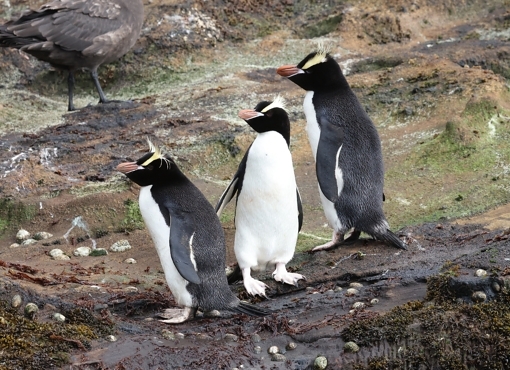
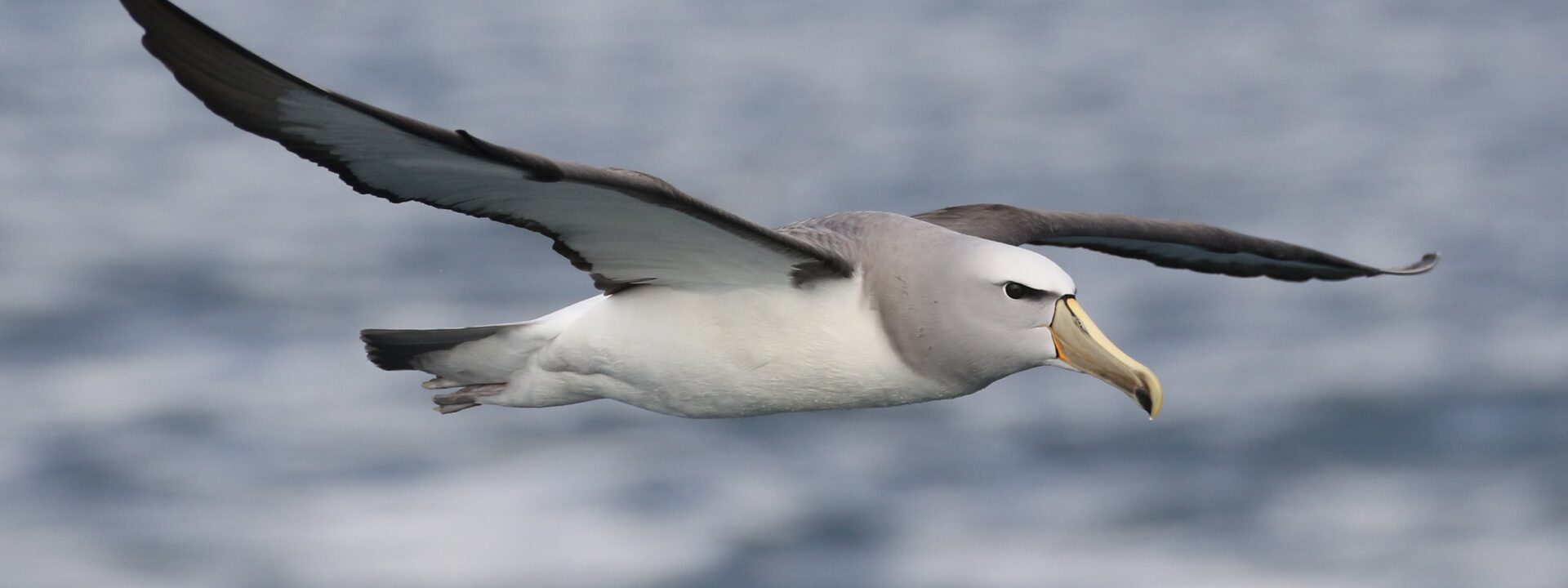
Compiled by John Lobel. GALÁPAGOS PENGUIN Spheniscus mendiculus 30 birds took part in a fantastic feeding flock at Tagus Cove on Isabella with Brown Pellys and Blue-footed Boobies. Really exciting to see the flock in action at close range from the panga! Also 8 birds sitting on the rocks and swimming on Bartolome. Matt got a good photo while snorkeling with one! WAVED ALBATROSS Diomedea irrorata 400 birds at Punta Suarez on Floreana. Birds everywhere: sitting on the path, displaying and bill clacking, circling the colony, flying over the ocean and the island, a raft at sea, some coming in for landings, about 8 chicks with adults, one bird still incubating an egg, and 2 birds launching from the cliff. Now this is the way to see Albatrosses! GALÁPAGOS (Dark-rumped) PETREL Pterodroma phaeopygia About 30 birds seen at sea on several days, most on our first day’s navigation to Genovesa. Only seen in deep waters. AUDUBON’S SHEARWATER Puffinus lherminieri subularis Thousands on our first day, thousands more over the trip, seen 7 out of 8 days. ELLIOT’S STORM-PETREL Oceanites gracilis galapagoensis Common and widespread, seen every day, usually a few hanging around the stern. WEDGE-RUMPED STORM-PETREL Oceanodroma tethys tethys Common and widespread, and the sight of thousands of birds flying around a diurnal colony on Genovesa was great, especially birds landing and instantly disappearing into their burrows in broad daylight. We watched one bird get pulled out of its crevice and get disemboweled by a Short-eared Owl. MADEIRAN STORM-PETREL Oceanodroma castro About a dozen birds total on a few mornings and evenings in the pre-dawn and dusk. RED-BILLED TROPICBIRD Phaethon aethereus Several hundred seen throughout the trip, in flight and on cliffs. Sometimes you could just see the tail sticking out of the cliff! MAGNIFICENT FRIGATEBIRD Fregata magnificens magnificens 500+ seen over the course of the trip, some at very close range. In flight, roosting, perched on ships, and parasitizing gulls & terns. GREAT FRIGATEBIRD Fregata minor ridgwayi Less numerous, 150+ over the trip, also seen very well on land and in the air. BLUE-FOOTED BOOBY Sula nebouxii excisa 1,000+, the most common Booby, seen every day, wonderful observations of behavior & variation in foot color; and most days binoculars were not required.... NAZCA BOOBY Sula granti 500+, seen most days RED-FOOTED BOOBY Sula sula websteri About 200, the least common Booby, only seen on Genovesa & Floreana FLIGHTLESS CORMORANT Nannopterum harrisi About 12 birds seen on Isabela & Fernandina, 2 were at our landing spot at Isabella and reluctantly got out of way so we could get in & out of the panga. At that close range the blue eye was brilliant! BROWN PELICAN Pelecanus occidentalis urinator Many hundreds, seen every day. Most exciting observation was the feeding flock at Tagus Cove interacting with the Blue-footed Boobies & Penguins and diving very close to rock cliffs and to our panga! WHITE-CHEEKED PINTAIL Anas bahamensis galapagensis 7 at Darwin Lake on Isabella, 2 at a small pond in the highlands (with Giant Tortoise) on Santa Cruz, and 7 more at the lagoon on Floreana. GREATER FLAMINGO Phoenicopterus ruber 27 at the lagoon on Floreana; a few came quite close to us. GREAT BLUE HERON Ardea herodias A total of 4 birds on 3 different occasions. GREAT WHITE EGRET Casmerodius albus egretta 1 on South Plaza and 1 on Santa Cruz. CATTLE EGRET Bulbulcus ibis At several locations. STRIATED HERON Butorides striatus Yes. See following species. LAVA HERON Butorides sundevalli Yes. See preceding species. Clearly there were some “classic” looking of each, and there were also some intermediate birds. Paul (local guide) spoke of thousands of photographs being compared and the conclusion drawn that there are no dependable field marks for differentiation of the intermediates, and that the species have been lumped. However, the jury is still out on this one, see the informative yet inconclusive SACC discussion at http://www.museum.lsu.edu/~remsen/SACCprop15.html To me, the dark birds looked fantastic, very different from classic Striated, but we did see others that could have been either. YELLOW-CROWNED NIGHT HERON Nyctanassa violacea pauper About 20 birds seen on Genovesa and 1 on Floreana GALÁPAGOS HAWK Buteo galapagoensis A pair seen flying over Tagus Cove on Isabela, 1 seen on Bartolome, and a pair and a chick seen on Espanola. GALÁPAGOS CRAKE Laterallus spilonotus 2 seen well in the bracken at elevation on Santa Cruz with the help of Joad Aguirre. PAINT-BILLED CRAKE Neocrex erythrops 3 seen well near the restaurant (and restrooms) at the Tortoise Ranch on Santa Cruz. MOORHEN (Common Gallinule) Gallinula chloropus 5 at the Tortoise Ranch on Santa Cruz WHIMBREL Numenius (phaeopus) hudsonicus About 20 total on 5 different days, including 1 sitting atop a tree well inland.
WANDERING TATTLER Heteroscelus incanum A few here and there. RUDDY TURNSTONE Arenaria interpres About 20 total on 4 separate occasions. AMERICAN OYSTERCATCHER Haematopus palliates galapagensis 3 on Santiago eating Sea Urchins. BLACK-NECKED STILT Himantopus himantopus mexicanus 5 at the lagoon on Floreana SEMIPALMATED PLOVER Charadrius semipalmatus 2 on the lava shore on Santiago LAVA GULL Larus fuliginosus About 15 total on 3 occasions at several islands, a lovely gull admired even by Larophobes. KELP GULL Larus dominicanus 1 on South Plaza, a lone bird has been hanging around for over a decade. Probably our rarest bird of the trip…. SWALLOW-TAILED GULL Larus furcatus 500+ in total seen regularly, and they always looked great! Also unusual for a gull, they are primarily nocturnal feeders, so we mostly saw them hanging around rather than feeding. COMMON NODDY Anous stolidus galapagensis Common… and Brown…. 1000+, seen daily GALÁPAGOS DOVE Zenaida galapagoensis 60ish total, saw our first at the airport before we had our luggage, and we saw them most every day. A really lovely little Zenaida! DARK-BILLED CUCKOO Coccyzus melacoryphus About a dozen seen total, on Bartolome, Santa Cruz, and Floreana. SMOOTH-BILLED ANI Crotophaga ani Too many! An introduced species, we saw it on 4 different islands. SHORT-EARED OWL Asio flammeus galapagoensis 2 hunting Wedge-rumped Storm-petrels on the lava on Genovesa, and another on Santa Cruz.
GALÁPAGOS FLYCATCHER Myiarchus magnirostris Several dozen total of these obliging tame birds on Santiago, Santa Cruz, Floreana, and Espanola. GALÁPAGOS MOCKINGBIRD Nesomimus parvulus Common, seen on Genovesa, Isabella, Santiago, and Santa Cruz. CHARLES MOCKINGBIRD Nesomimus trifasciatus About 10 seen on Champion, the small cacti covered island offshore of Floreana (Charles), where it has been extirpated. HOOD MOCKINGBIRD Nesomimus macdonaldi About 25 when we were in (or on) the ‘hood’. BARN SWALLOW Hirundo rustica 1 on Floreana quickened optimistic hearts momentarily as we were by then putting some effort into looking for Galapagos Martins. LARGE GROUND-FINCH Geospiza magnirostris On Genovesa & Santa Cruz. MEDIUM GROUND-FINCH Geospiza fortis On Isabela & Floreana. SMALL GROUND-FINCH Geospiza fulginosa Most plentiful & most widespread. SHARP-BEAKED GROUND-FINCH Geospiza difficilis About 10 on Fernandina. COMMON CACTUS-FINCH Geospiza scandens On South Plaza & Santa Cruz. LARGE CACTUS-FINCH Geospiza conirostris On Genovesa & Espanola. VEGETARIAN FINCH Platyspiza crassirostris 1 at the 11th hour on Santa Cruz in the arid zone at El Mirador (not that it had a view of anything) which is just inland of Puerta Ayora. LARGE TREE-FINCH Camarhynchus psittacula Santa Cruz only
MEDIUM TREE-FINCH Camarhynchus pauper A few only on Floreana, near the Tortoise corral SMALL TREE-FINCH Camarhynchus parvulus Santa Cruz & Floreana WOODPECKER FINCH Cactospiza pallida A few were seen wonderfully in the highlands on Santa Cruz. No tool use observed, sadly. WARBLER FINCH Certhidia olivacea Common, very variable, and very responsive to pishing. Genovesa, Santa Cruz, Espanola. YELLOW WARBLER Dendroica petechia aureolla Common, easily seen on every island. Start pishing and you have to beat them away with a stick. Interesting juvenile plumages. Non-avian delights: GIANT TORTOISE Geochelone elephantopus PACIFIC GREEN TURTLE Chelonia mydas agassisi LAND IGUANA Conolophus subcristatus MARINE IGUANA Amblyrhyncus cristatus GALÁPAGOS LAVA LIZARD Microlophus albemarlensis ESPAÑOLA LAVA LIZARD Microlophus delanonis FLOREANA LAVA LIZARD Microlophus grayi GALÁPAGOS SEA-LION Zalophus californianus wollebacki GALÁPAGOS FUR SEAL Arctocephalus galapagoensis www.wildwings.co.uk
|
||||||||||||||||||||||
|
WildWings, 577 Fishponds Road, Fishponds, Bristol. BS16 3AF.UK
|
|||||||||||||||||||||||