
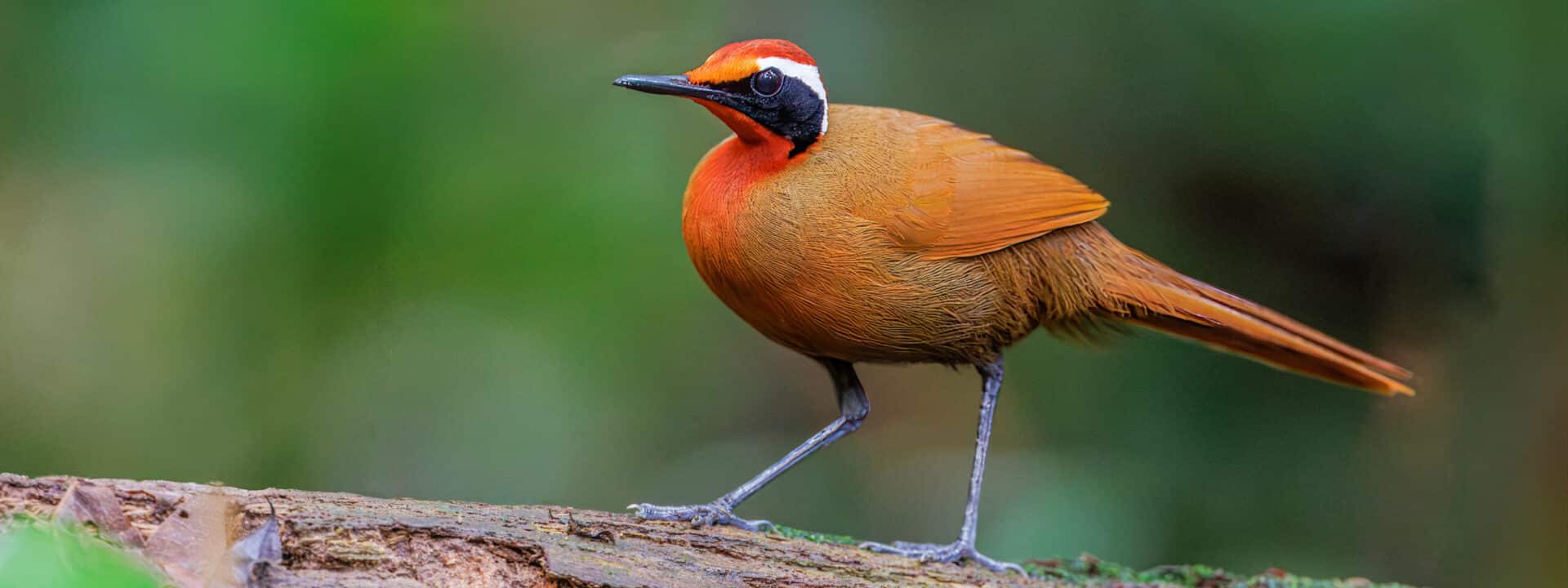
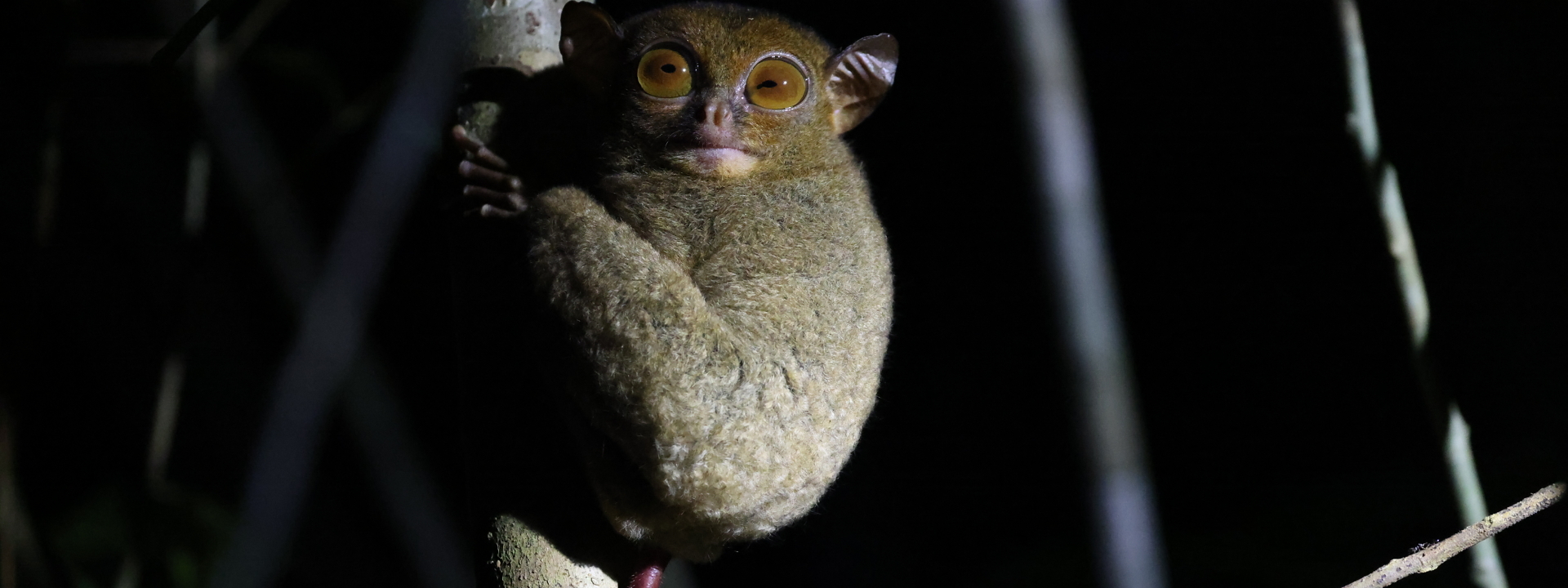
Following the success of our Jaguar and Puma tours in South America we are now pleased to offer an exploratory tour for up to eight people to look for another of South America’s most spectacular mammals, the Spectacled Bear, together with Mountain Tapir, Pygmy Marmoset and up to 20 other species along with some of South America’s most spectacular birds including Andean Cock-of-the-Rock and Sword-billed Hummingbird. The tour will be led by Richard Webb and an Ecuadorian bird guide and we will be accompanied by additional local guides when looking for bears and tapirs.
Richard carried out an initial recce in April 2010 and despite being hampered by electric storms, exceptionally heavy rain and landslides saw 24 species of mammal including two Mountain Tapirs and found lots of fresh evidence of Spectacled Bear. The exploratory tour is timed for a drier time of the year when we believe we have a very good chance of seeing bears.
We will visit a number of different sites for bears and will have some flexibility in the itinerary to maximise our chances of success.
· At Maquipucuna the presence of bears is largely dependent on the Aguacatillo being in fruit. If it is in fruit we will spend at least two nights in the reserve as during 2009 up to 16 different bears were recorded during the fruiting period.
·At Coca-Cayambe we will be looking for bears in open paramo at altitudes up to 4,200 metres. Most of the searching will be done by scanning from the roads that run through the park and we will only undertake a few short gentle walks. For those with more energy there will be the opportunity to hike away from the roads for several hours with local guides to maximise our chances of bears and tapirs. On the recce tapirs were seen both from the road and on the hike, The individual seen from the road was on view for 30 minutes no more than 100 metres from the vehicle! We will spend at least 2 days in Coca-Cayambe and possibly more depending on the state of play at Maquipucuna.
·Cabanas San Isidro also offers opportunities to see bears from the trails but we would be lucky to see them here.
We will start the tour with a day around Quito to get used to the altitude. If the Aguacatillo are in fruit we will visit Maquipucuna for our first attempt to see bears. Other mammals occurring here include Neotropical River Otter, Paca, Central American Agouti and Red-tailed Squirrel. If not we will visit Yanacocha where we be able to scan the paramo for bears. We will also have the opportunity to see our first antpittas, Tawny, and a number of spectacular hummingbirds including the fantastic Sword-billed.
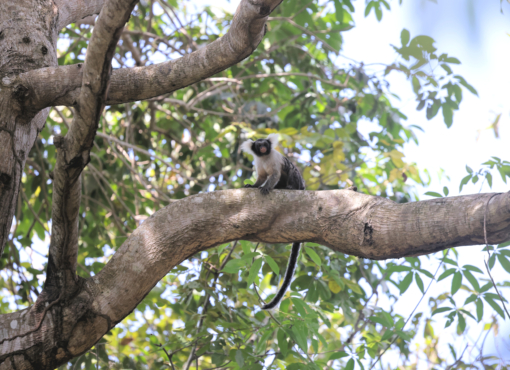
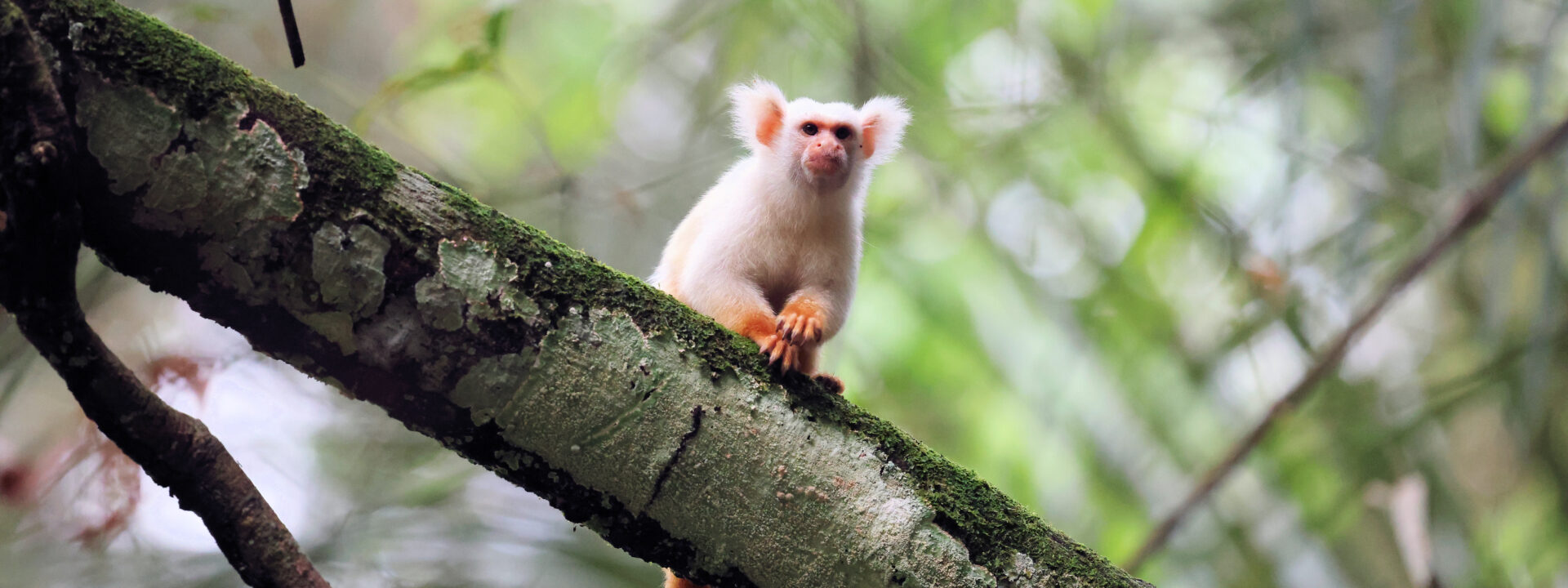
We will then take a morning flight to Coca in the eastern lowlands and a boat trip down the Rio Napo to spend several nights at the excellent Napo Wildlife Center where we should see Giant River Otter, Kinkajou, the diminutive Pygmy Marmoset, Noisy Night Monkey, Golden-mantled Tamarin and up to five more species of primate. On the recce we also saw Brown-throated Three-toed Sloth from one of the lodge’s excellent tower hides and Collared Peccary. We also expect to see some spectacular birds including the enigmatic Zigzag Heron.
From Napo Wildlife Center we will head back to Coca and drive back west stopping at two lodges to allow us to adjust to the increase in altitude on route to Coca-Cayambe National Park, our highest point in the trip.
We will spend one night at the fabulous Wild Sumaco Lodge where we hope to see the exquisite Black-mantled Tamarin and White-eared Opposum. The hummingbird feeders around the lodge will provide hours of entertainment for those happy to look for tamarins and birds from the comfort of the loungers on the lodge balconies. For the more energetic the lodge has a series of fabulous trails offering further opportunities to look for tamarins, Common Woolly Monkey and a superb range of birds.
Continuing our climb we will spend another two nights at Cabanas San Isidro where in addition to having an outside chance of Spectacled Bear we also have our first opportunity to look for Mountain Tapir. We can expect to see Black Agouti and some great birds including Black and Rufous-banded Owl, Andean Cock-of-the-Rock and habituated antpittas along with a wide variety of hummingbirds and tanagers.
Finally we will head up to Papallacta to spend up to four days in Coca-Cayambe National Park. Our main focus here will be Spectacled Bear and Mountain Tapir but we can also expect to see lots of White-tailed Deer and Forest Rabbits and hopefully several other species. If we receive reports that bears are showing at Maquipucuna we will leave Coca-Cayambe after two nights to spend two nights at the excellent Maquipucuna Lodge before spending our final night in Quito.
Itinerary
|
Day 1 |
Depart London Heathrow early morning and fly via Madrid to Quito. Night Quito |
|
Day 2 |
Day trip to Yanacocha or Macquipucuna if the bears favourite trees are fruiting. Decision to be made on arrival based on information available. |
|
Day 3 |
Fly to Coca, transfer to Napo Wildlife Center |
|
Days 4-6 |
Napo Wildlife Center |
|
Day 7 |
Transfer to Wild Sumaco for one night |
|
Day 8 |
Morning Wild Sumaco. Afternoon transfer to San Isidro |
|
Day 9 |
San Isidro |
|
Day 10 |
Morning San Isidro - Transfer to Papallacta area. Nights Hotel Spa Termas de Papallacta |
|
Days 11-13 |
Coca-Cayambe |
|
Day 14 |
Morning Coca-Cayambe. Late afternoon return to Quito, overnight Quito. |
|
Day 15 Day 16 |
Transfer to airport for return flight via Madrid.
Arrive back London Heathrow late afternoon.
Tour Information
Dates: 27th August - 11th September 2011
Leaders Richard Webb plus local guides.
Cost: £3999 per person sharing a twin room.
Single supplement: £399
Deposit: £500
Max. Group size: 6-8
Price includes: International and internal economy class flights including pre-paid taxes, all ground transportation, all accommodation and meals including water, park entry fees, services of WildWings leader and local bird and other guides. Bird and mammal checklist.
Price excludes: Local airport taxes of US$41, travel insurance, laundry bills, all other drinks, other items of a personal nature, gratuities.
Species during the 2010 recce.
|
Brown-throated Three-toed Sloth |
Bradypus variegatus |
|
Forest Rabbit (Tapiti) |
Sylvilagus brasiliensis |
|
Amazon Dwarf Squirrel |
Microsciurus flaviventer |
|
Red-tailed Squirrel |
Sciurus granatensis |
|
Northern Amazon Red Squirrel |
Sciurus igniventris |
|
Central American Agouti |
Dasyprocta punctata |
|
Paca |
Cuniculus paca |
|
Kinkajou |
Potos flavus |
|
Long-tailed Weasel |
Mustela frenata |
|
Neotropical River Otter |
Lutra longicaudis |
|
Proboscis Bat |
Rhynchonycteris naso |
|
Greater Fishing Bat |
Noctilio leporinus |
|
Black Myotis |
Myotis nigricans |
|
Black-mantled Tamarin |
Saguinus nigricollis |
|
Golden-mantled Tamarin |
Saguinus tripartitus |
|
Pygmy Marmoset |
Callithrix pygmaea |
|
Common Squirrel Monkey |
Saimiri sciureus |
|
White-fronted Capuchin |
Cebus albifrons |
|
Noisy Night Monkey |
Aotus vociferans |
|
Double-browed Titi |
Callicebus discolor |
|
Venezuelan Red Howler Monkey |
Alouatta seniculus |
|
Collared Peccary |
Dicotyles tajacu |
|
White-tailed Deer |
Odocoileus virginianus |
|
Mountain Tapir |
Tapirus pinchaque |

|
| home | introduction | news | tour list | trip reports | media resources | brochure request | booking form & conditions | contact us |
|