CHILE PUMA TOUR REPORT - 3-18 MARCH 2007

logo

CHILE PUMA TOUR REPORT – 1st-16th MARCH 2008

WILDWINGS LINKS
Welcome
Travel Agency
BirdWatching Introduction
BirdWatching Calendar
Mammals
WildOceans Introduction
Wild Insights
DeepOcean Expeditions
Space Adventures

Colour version with photographs - NEW! (PDF)

By tour leader Richard Webb


Leaders – Richard Webb and Regina Ribeiro plus local guide Roberto.


Introduction


After the success of our inaugural tour in 2007 it was difficult to imagine that we could do as well again! However amazingly the Puma sightings in 2008 were if anything even better than in 2007 with seven individuals again being seen with prolonged views of a female with cubs on three consecutive days, two of these on a kill!


Chiloe was a bit more of a struggle this year with no Darwin’s Foxes and no Blue Whales in Golfo Corcovado, although we did see good numbers blowing distantly off NW Chiloe. By contrast however we did have good views of Southern River Otter this year.


Although the total number of mammal species was slightly down on 2007 our bird list was higher with some outstanding species such as Magellanic Horned and Rufous-legged Owls plus the stunning Magellanic Woodpecker which we had missed the previous year. All in all it was another fantastic trip.


1st March


The fun began before we had even left home with Mark and Fran’s BA flight (the world’s favourite airline?) from Aberdeen being cancelled due to strong winds and a backlog of flights at Heathrow.


Fortunately I was able to contact John in Bristol and John and Sarah delayed an otter-watching trip to nip in to the WildWings office where they were fortunately able to switch Mark and Fran on to an alternative flight to London and with a bit of creative re-booking on to a later flight to Madrid to connect with the rest of the group there. Thanks guys!


With the winds continuing to cause problems Kenny and Cat’s flight from Manchester was also delayed and in a voicemail message to me Kenny threatened class one action against BA if they failed to get him to Heathrow on time. And to think Terminal 5 had not even opened then. Fortunately the delay was only minor and BA avoided having to face Kenny’s wrath.


Check in itself at Heathrow was remarkably smooth and we were even offered earlier flights to Madrid as Iberia tried to free up seats on later flights for connecting passengers delayed by the weather.


Arriving in Madrid after a noisy flight courtesy of a party of Uruguayan school children, we transferred to the shuttle bus which seemed to take even longer than the international flight before eventually arriving at the terminal for our inter-continental flight. A quick look at the departure board indicated a three hour delay to the flight to Santiago but fortunately this was the other Lan/Iberia codeshare flight operated by Lan, whereas the one operated by Iberia was departing on time. And to think I had wanted to fly Lan!


With most hurdles now overcome we now simply had to wait for Fran and Mark to arrive on the later flight from London which to my relief they duly did with about an hour to spare and we were soon on our way south to southern Patagonia although not before a large tour group on our flight had a 30-minute game of musical chairs prior to departure.


2nd March


Our flight touched down in Santiago on schedule and we quickly cleared customs and immigration before meeting Regina at the Lan check-in desk as we re-checked in for our onward flight to Punta Arenas, the flight having been changed by Lan on our arrival to enable us to reach Punta Arenas earlier by avoiding a stop in Puerto Montt.


Most of the group took the opportunity to look around the airport while Regina and I attempted to contact the ground agents to advise them of our earlier arrival in Punta Arenas and to meet Les and Joan who had flown out a few days earlier. Les and Joan duly arrived and checked in on the earlier flight. With the group together for the first time we had lunch in the Gatsby before heading off to the departure gate for the onward flight.


Arriving in Punta Arenas we met up with Roberto, our terrific local guide. Leaving the airport we were delighted to find T-shirt weather with temperatures in the high teens and no wind at all, an almost unknown phenomenon in Southern Patagonia. The good weather stayed with us for most of our stay in the south although the lack of wind did have some downsides as we were to discover a few days later.


Keen to get in to the field after so many hours travelling we quickly transferred to and checked in to the hotel and were soon back in the minibus heading south out of Punta Arenas as far as Rio Canelo. Peale’s Dolphins proved elusive despite the perfect conditions, the sea was like a millpond, and we were amazed at the total lack of albatrosses in comparison to last year although this was to change dramatically later in the trip.


We did however encounter our first mammals of the trip, a single Chilla and several European Rabbits including a melanistic individual. As expected we encountered a nice selection of birds including White-tufted Grebe, Imperial (King) Cormorants, Upland, Ashy-headed and Kelp Geese, Crested Duck, Flying and Flightless Steamer Ducks, Rufous-chested Dotterel, Magellanic Oystercatcher, Kelp, Dolphin and Brown-hooded Gulls, unidentified giant and diving-petrels plus a nice Short-eared Owl. Returning to the hotel we had a late dinner before retiring for the night looking forward to the excitement ahead.


3rd March


After breakfast we headed north out of Punta Arenas stopping along the seafront in Punta Arenas where one or two people saw one or two distant dolphins plus some nice Two-banded Plovers and Rufous-chested Dotterels and another unidentified Giant-Petrel.


Stopping for supplies at a service station the pools on the opposite side of the road held a good selection of waterbirds including Chiloe Wigeon, Red Shoveler, Speckled Teal, Yellow-billed Pintail and Red-gartered Coots.


Other stops as we headed north failed to produce any dolphins but did produce great views of a very approachable Chilla, large numbers of Darwin’s Rhea, nice views of Rock Cormorant, White-rumped Sandpiper and a large colony of South American Terns plus a distant Magellanic Penguin and our first Chilean Flamingoes plus an unfortunately brief Chilean Hawk for some.


Returning to the coach after one such stop we were quickly back out again as Lisa found and Fran relocated our first Patagonian Skunk close to the road. Two Black-chested Buzzard-Eagles gave us great views slightly further on.


Leaving the main road we headed towards Estancia San Gregoria finding a large group of the hoped-for Tawny-throated Dotterel along the roadside together with two more Chilla, Patagonian and Grey-hooded Sierra-Finch and Austral Canastero. A nearby lake held more Two-banded Plovers, White-rumped and a single Baird’s Sandpiper plus large numbers of geese.


Realising we were well behind schedule we re-traced our steps and headed towards Puerto Natales via the paved route stopping at a hotel for lunch. The grounds of the hotel produced the first Austral Parakeet, Thorn-tailed Rayadito and Chilean Flicker of the trip.


After lunch we headed towards Puerto Natales adding Coscoroba Swan to our lists. On arrival in Puerto Natales most of the group took the opportunity to photograph the large numbers of  Black-necked Swans, Imperial Cormorants (of the ‘Blue-eyed’ form) and other waterbirds including a tree-climbing Plumbeous Rail while Regina Roberto and I stocked up with water, diesel etc.


Continuing towards Torres del Paine we encountered our first Great Grebes before finally arriving at our rather nice hotel in the south of the park, where Roberto, Regina and I checked the group in while some of the group wandered around the hotel and found one of only two Culpeo Foxes seen on the tour.


After an excellent dinner we met up with Jose, our Puma tracker, and split into two minibuses for the first spotlighting session of the trip. We encountered very little other than good numbers of Brown Hares and Spectacled Duck and South American Snipe.


4th March


I decided to spend the first morning in the Lago Grey area given its proximity to the hotel and to return to the hotel for lunch before heading off in to Puma country for the afternoon and evening.


It proved a good strategy with the second (and last) Culpeo Fox of the trip being seen well a few kilometres west of the visitor centre. Shortly afterwards a stop on a bridge over the Rio Grey came up trumps again when shortly after Nick had said ‘this doesn’t look right for Torrent Ducks’ Regina spotted a drake diving close to the bank and everyone was able to enjoy good views. We saw a male in the same area in 2007.


We slowly continued the drive towards Lago Grey and eventually Roberto spotted a female Southern Huemel about 400 metres from the road. After viewing it distantly from the road through scopes we set off across the mire for closer views much to the delight of the local mosquitoes, out in force in the fine conditions. As we walked out towards the huemel an Olivaceous Mouse dashed across in front of me and remained on view on-and-off for several minutes allowing everyone to see it well.


The ungulate appreciation society (Kenny) survived the slight distraction and continued on his quest for close views of the huemel and eventually those prepared to scramble up through the scrub were able to watch the ear-tagged huemel at close range while the less energetic of us watched from slightly further away.


After having prolonged views we headed back to the car and on to the woods around Lago Grey to look for the ever-elusive Magellanic Woodpeckers. The woods were remarkably quiet with only White-crested Elaenia and Thorn-tailed Rayaditos of interest and a number of people walked out to take pictures of the glacier.


After a sandwich lunch back at the hotel we headed off for our first attempt at Pumas stopping several times on route to photograph scenery, a nice family party of Great Grebes, our first close Guanacos and a family party of Chilla at Mirador del Nordenskjold.


We eventually stopped near Laguna Guanaco and while Regina, Nick, Luisa, Les and Joan stayed on a hill near the vehicle, Roberto, Jose, Kenny, Cat, Mark, Fran, Lisa and I headed off across the moors to sit on a hill about a kilometre from the road and at the western edge of the lake where we were able to watch Silvery Grebe and Andean Duck on the lake while we scanned for cats.


Amazingly after half an hour we hit the jackpot as Roberto spotted three spotty Puma cubs crossing an open area at the west end of the lake to join their mother who stood watching us at the edge of a thicket. Everyone in the advance party saw them well but although I immediately radioed Regina, all four cats had unfortunately disappeared into the thicket by the time her group arrived.


After a frustrating half hour I decided to try to relocate the cats. Conscious of the potential risk of approaching a female with cubs with the group I along with Roberto and Jose approached the thicket in a wide arc to try to view the back of the thicket. Fortunately we quickly relocated the cubs at close range and called the rest of the group across. By the time the group arrived Roberto had seen a fourth cub but all four cubs had disappeared. However after a few minutes three of the cubs reappeared and everyone had excellent views on and off as they watched us watching them at ranges down to less than 50 metres.


There was however no sign of the female and after about 30 minutes three of the cubs walked out of the far side of the thicket and started walking up a nearby ridge. We watched them as they ascended the ridge until they disappeared about 250 metres from where we were sitting.


Hoping that we could see the female again we returned to our original viewpoint where we watched for another 15 minutes before reluctantly deciding to return to the minibus. Highly satisfied with our first encounter with Pumas, although somewhat disappointed that some of the group had not seen the adult, we made quick time back to a hosteria for dinner.


After dinner and keen for more we spotlighted the road to Laguna Amarga with poor views of the eyeshine of a Band-winged Nightjar on route, and back to Porteria Sarmiento before the drive back to our hotel eventually arriving at 0050. What a great first full day in the park!


5th March


After a relaxed breakfast and check-out we headed north again stopping at the visitor centre to see the displays on Puma, Chilla, Culpeo Fox and Geoffroy’s Cat research, to view the various waterbirds including Plumbeous Rail from the adjacent hide and to show Cat’s Puma video to the centre staff. They were duly impressed.


Continuing north we were brought to a screeching halt by a superb Austral Pygmy-Owl spotted by Lisa close to the road. Alighting from the minibus we were able to approach it closely and even saw it drop down on to an insect which it then devoured in front of us. Slightly further on a Great Shrike-Tyrant was an unexpected bonus.


A stop at the waterfall at Salto Grande was disappointing with large numbers of people and as a consequence no Torrent Ducks or any of the lizards seen in 2007. It was interesting how much busier it was than last year.


A few kilometres north of Salto Grande we had our first close encounter with Andean Condors before pushing on to the hosteria where we were staying for the next two nights. Having seen Pumas around the hosteria itself last year, we had high expectations again.


After lunch at the hosteria we headed back out to Laguna Guanaco and the whole group headed out to the viewpoint overlooking the west end of the lake. Jose, Roberto, Kenny, Cat, Luisa and I went further on to check the area where the three cubs had disappeared yesterday and took up a position overlooking the area where we had seen a family party in 2007. Amazingly after about an hour Jose radioed Roberto to say he had found a fresh kill and just as Regina’s group reached us radioed Roberto again to say he had re-found the female Puma and three cubs. Following Joses’ instructions Roberto led us to a hill overlooking Lago Sarmiento where to our delight we found the female and cubs plus a freshly killed Guanaco in a clearing close to the shores of the lake.


From our superb viewpoint we were able to enjoy prolonged views of the family at ranges down to c.200 metres. For most of the time the female simply sat there watching us only shifting her position once during the hour we were able to watch the family. By contrast the three cubs were extremely active playing/feeding on the carcass, chasing around after each other and climbing nearby trees.


After an hour or so of pure magic we reluctantly had to leave to avoid returning to the minibus in the dark but given the views we had just had we could not complain.


As we drove back towards Porteria Amarga and the hosteria the day got better still as another Puma crossed the road in front of the minibus and ascended a nearby ridge where we watched it in the spotlight before returning to the hosteria for dinner.


We thought the first day was good, this was even better. Unbeknown to us tomorrow was destined to be better still!


6th March.


Already very happy with what we had already achieved we still craved for more so day six saw us out two hours before dawn for a spotlighting session along the road to Porteria Amarga and then along the road past Cascade Paine a good area for Pumas given the large numbers of Guanaco including calves in the area. The spotlighting itself was disappointing with a single Patagonian Skunk, two Chilla and an as-yet-unidentified mouse the only mammals seen. Once it was light we stopped to take photographs of the towers as the sun hit them and a large group of Guanacos including calves. Forced to turn round to get back in time for breakfast we suddenly screeched to a stop as Nick spotted a large Puma ascending the ridge on the right of the road. We all enjoyed good views as it climbed the ridge and disappeared over the top and for many it was the stereotypic view of a Puma that everyone had initially hoped for.


Attempts to relocate the Puma by climbing another nearby ridge proved unsuccessful although some of the group were more than happy with the Spot-billed Ground-Tyrants seen in the same area. However we were all well satisfied and in hindsight this was just the hors d’oeuvre for what was to follow later in the day.


After breakfast we turned our intention to the trail opposite the hosteria and I quickly located a Magellanic Horned Owl and a Striped Woodpecker (two species missed in 2007) at the start of the trail. Fran spotted a second owl shortly afterwards and both owls gave fabulous views and kept the photographers busy while a nearby Chilean Hawk received constant grief from a battalion of Chimango Caracaras. The remainder of the trail was fairly quiet although a hide overlooking a lake produced a few wildfowl and a South American Snipe was flushed just as Roberto said that this is a good part of the trail for snipe.


Knowing that the Guanaco kill was likely to still be active most of the group decided to return  to the kill during the afternoon although Kenny well-satisfied with the previous days experience chose to go birding with Roberto near Porteria Sarmiento adding Mourning Sierra-Finch and Dark-faced Ground Tyrant to the list and getting frustratingly close to a calling Austral Rail. He also saw another Magellanic Horned-Owl.


Arriving back at the kill we were initially disappointed to find no sign of the adult or cubs and the kill seemed to have dried out rapidly. However we were not disappointed for long and after about 40 minutes the female Puma appeared from the bushes directly below us and totally unaware of our presence called to the cubs who appeared from the thicket at the back of the clearing. Surprisingly four cubs emerged and we can only assume that the fourth cub had remained hidden in the thicket yesterday. Interestingly the fourth cub stayed apart from the other cubs for much of the time.


After calling the cubs out the female circled the kill before proceeding to rip the carcass open. Having dried out the carcass proved difficult to open and the female literally had to pull the carcass apart by pulling at the leg of the Guanaco to open it up. To add to the female’s problems one of the cubs insisted on hanging from her tail as she tried to rip the carcass apart providing entertainment for the watching group The sheer strength of the female was amazing. Judging from her stomach the female was already well fed but she still fed voraciously before allowing her young to play and feed.


After opening the carcass the female retreated to the back of the clearing where she suddenly noticed and started watching us. The young continued to play and feed on the carcass although one of the young (presumably the one missing yesterday) stayed close to the female at the back of the clearing.


After spending some time with the kill the cubs joined their mother and at one stage at least one suckled her as we watched. Eventually after about 90 minutes all five animals disappeared into the thicket although two of the cubs briefly emerged on to the rocks on the other side.


To have seen a female with cubs once was fantastic, to have seen them three days running for prolonged periods in perfect weather was a true privilege and we could not have asked for more. It certainly ranks as one of the most perfect cat encounters imaginable.


We left to return to the minibus in high spirits well satisfied with what we had seen but the day was still not over. A Short-eared Owl was briefly seen as we approached the hosteria but more frustratingly a small cat was glimpsed by Lisa, Regina and me about 200 metres from the hosteria but quickly disappeared and could not be relocated despite attempts before and after dinner in the minibus. I even tried looking for it on foot when everyone else had gone to bed. According to the park staff there are no domestic or feral cats in the area so it may well have been a young Geoffroy’s Cat. Now that would have been the icing on the cake but we will never know. Aaagh!


7th March


After a lie-in and a late breakfast we checked out of the hosteria to head for our new lodge east of Torres del Paine although not before Kenny and Cat had taken another quick look at the Magellanic Horned Owls before we departed.


As we alighted from the minibus to photograph the minibus crossing the by-now very familiar narrow bridge across the Rio Paine, Jose and Roberto noticed a large group of Andean Condors on a distant hillside, we could see them spiralling down as we approached the bridge.


Crossing the bridge we parked up near Porteria Amarga and set out across the hillside towards the condors. As we got closer it was clear, as we expected, that they were feeding on the fresh remains of a Guanaco, possibly another Puma kill. In all there were at least 32 condors on or around the kill along with a few Southern Caracaras which were positively dwarfed by their larger cousins. It was great to be able to watch adults and immatures, males and females at such close range and in such good numbers.


While some of the group attempted unsuccessfully to get closer for photographs others had good views of Mourning Sierra-Finch, the only Scale-throated Earthcreeper of the trip and Dark-faced Ground-Tyrant.


Having donated more blood than we would have liked to the local mosquitoes, making hay due to the continued lack of wind, we headed back to the minibus and said farewell to Jose, eternally grateful for his fantastic discovery of the Puma kill and the hours of pleasure that it had given us.


Leaving the park we headed out on to the Laguna Azul loop stopping at Cascade Paine for photographs and to look for Torrent Duck. Unfortunately we only found Spectacled Ducks but Lisa was much luckier seeing and photographing a Larger Hairy Armadillo before it disappeared eluding the rest of the group. After giving up the hunt we continued on towards Laguna Azul encountering several groups of young Guanacos on route.


On arrival at the ranger station at Laguna Azul Roberto discovered that the rangers frequently encounter Geoffroy’s Cat late in the day in the forests to the north of the lake and with time on our hands and little to lose I decided to have a short walk in the forest on the off chance of success. Unsurprisingly we were unsuccessful despite checking likely holes in trees and finding tracks close to the lake. Roberto did however hear a Magellanic Woodpecker which also eluded us.


Leaving Laguna Azul we re-traced our route stopping several times to check recommended areas for armadillos. Although we failed to find armadillos we did find a number of armadillo burrows and amazing amounts of Puma scat in the area indicating how common Pumas are in this part of the park.


Although armadillo-less we did find plenty of interest with two Chilla, a Patagonian Mockingbird (well outside the range shown in most field guides), Austral Canastero and five Least Seedsnipes which performed well for everyone.


We arrived at our next lodge by mid-evening but any plans for some speculative spotlighting were dashed by the change in the weather as we had dinner and we decided to retire for an early night.


8th March


We woke to cloudy skies and rain, the only wet morning of the trip. As we checked out a Patagonian Skunk having an altercation with a dog provided entertainment for many of the group and we saw another skunk shortly after we left the lodge on our way towards Cerro Castillo.


A stop to look for armadillos near Cerro Guido produced a couple of Least Seedsnipes and Brown Hares but our main quarry continued to elude us.


A short stop in Cerro Castillo provided an opportunity for everyone to buy the odd nick-nack and have a coffee and we also bumped into our driver from the 2007 tour who happened to be there with another group. We also met a guide who recommended another area for armadillos but unfortunately back the way that we had just come. I guess there’s always next year.


Another Austral Pygmy-Owl enlivened the drive back to Puerto Natales where a stop for fuel enabled most of the group to spend some time photographing Chimango Caracaras et al along the shore but in somewhat windier and consequently colder conditions than when we were there a week earlier and most people were very pleased when the coach returned.


After stopping at a hotel for lunch we continued to our pousada on the shores of Seno Skyring and quickly checked in before heading out to look for Chilean Dolphins finding some reasonably close Chilean Flamingoes on a lake near the pousada. Unfortunately the change in the weather had whipped up the sea and although we drove 30 kilometres along the shore there was no sign of the hoped-for dolphins. A group of Chilean Skuas kept pace with us for a few kilometres and it was interesting to see the same groups of skuas and terns struggle into the wind yet still catch us up each time we stopped to scan for dolphins.


As in 2007 we saw a number of Patagonian Skunks while a large group of Flightless Steamer Ducks were the biggest surprise birdwise.


After dinner back at the pousada we decided to try spotlighting back out along the Skyring and did a round trip of 70 kilometres to concentrate on a patch of woodland 35 kilometres south of the pousada. The drive produced another superb Magellanic Horned-Owl, brief views of a Chilla, several Brown Hares (one of which unfortunately succumbed under the wheels of the minibus) and one or two Patagonian Skunks.


9th March.


Waking at 0700 for an 0730 breakfast it was frustrating to find that the generator had not been turned on and by the time that I managed to find someone to switch it on most people had showered by torchlight.


After Lan’s decision to change the flight schedule we had a full day to spend around Punta Arenas and finding that Seno Skyring was still choppy due to the strong winds decided to head back to the Straits of Magellan, more in hope of calm seas, than expectation. It proved to be a good move.


An indication of things to come, a probable Magellanic Diving-Petrel was seen in the channel between Seno Skyring and Seno Otway to be followed by two distant Black-browed Albatrosses in Seno Otway itself. Landbirds were equally prominent with the first good views of Dark-bellied Cinclodes along the shore (with Andean Condor overhead) and the first Dark-faced Ground-Tyrant for most of the group and a superb group of 50+ Austral Parakeets on a roadside fence.


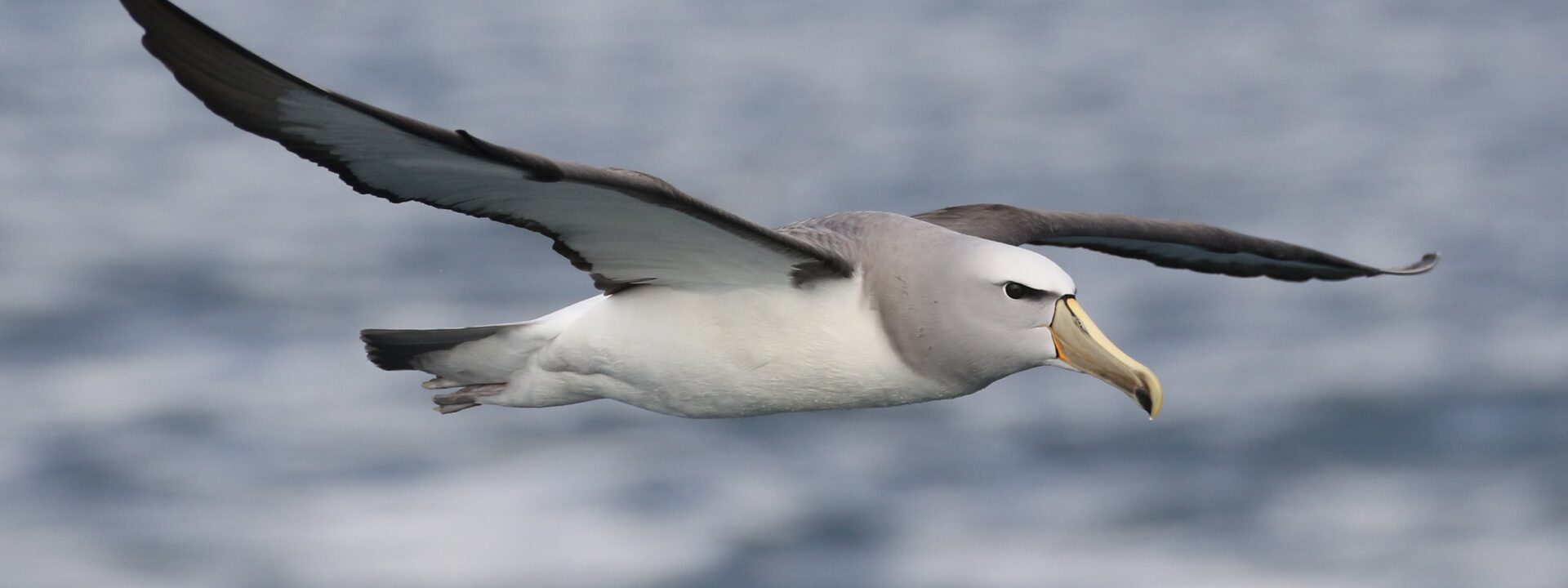
As we reached the straits it was clear that the sea was a millpond again and after a brief comfort stop at the airport we stopped just south of the airport to look for dolphins and found the first of hundreds of Black-browed Albatrosses in the straits, an amazing contrast to the previous week, when there had been none at all. Giant-petrels were also highly visible albeit unfortunately unidentifiable.


After a brief snack stop in Punta Arenas we continued south towards Rio Canelo encountering our first group of relatively inactive Peale’s Dolphins just outside the city. As we continued south we encountered no fewer than four groups of dolphins containing at least 20 animals and had fantastic views of them close inshore, at times seemingly driving fish in to shallow waters, at others simply having fun, rolling, breaching etc. After the struggle to find dolphins a week earlier it was a bit of relief to have found them so easily.


We continued south as far as Rio Canelo seeing many of the species seen the week before and then headed back to Punta Arenas for a late lunch. A short stop at a wetland north of Punta Arenas on route to the airport produced a range of waterbirds including the only Ruddy-headed Goose of the trip. We arrived at the airport in plenty of time and parted company with our excellent driver, Sergio, before our evening flight to Puerto Montt.


On the flight to Puerto Montt Roberto met a Chilean photographer who had actually witnessed an adult Puma plus a full-grown cub kill a Guanaco while we were in Torres del Paine. And we thought we had done well. We clearly must do better next year!


We arrived in Puerto Montt ahead of schedule and quickly transferred to our coach for the three hour journey to Castro. We crossed on to Chiloe via the somewhat choppy Pargua-Chacao ferry and eventually arrived at our hotel in Castro at 0030, everyone quickly retiring for the night.


10th March


Following our late arrival in Castro we decided to ‘delay’ breakfast until 0630 before driving to Quellon for our day at sea. We arrived at Quellon at 0830 seeing our first Hudsonian Godwits fly over as we left the coach.


We headed out to sea with great expectations seeing our first Franklin’s Gulls, Turkey Vultures and Magellanic Penguins in the bay. A few Southern Sealions appeared occasionally but rarely gave good views and a larger group on some rocks were unfortunately only seen distantly. A small group of dolphins seen very briefly were presumably Peale’s.


Unfortunately as we headed out of the bay Joan fell as she ascended the steps to the main cabin but fortunately the life jacket and multiple layers of clothing cushioned the fall although she had a few aches and pains for much of the following week.


As we approached the remarkably calm open sea numbers of seabirds started to increase and we encountered huge numbers of Sooty Shearwater accompanied by smaller numbers of Black-browed Albatross (often close to the boat) and Pink-footed Shearwaters. Petrels however were in surprisingly short supply with only single White-chinned Petrel and Black-bellied Storm-Petrel and small numbers of giant-petrels being seen in contrast to last year when we also saw large numbers of storm- and diving-petrels.


After two to three hours it was apparent that whales were clearly not going to be easy and discussions with other boats in the gulf indicated that they had not seen any whales either. As the boat staff prepared lunch we headed back to the shelter of land and as we ate lunch started passing through huge rafts of superb summer-plumaged Franklin's Gulls.


We arrived back in Quellon at 1530 and after adding Black-chinned Siskin to the trip list decided to check the bay between Triscao and Yaldad a known-locality for Chilean Dolphins. Unfortunately the dolphins continued to elude us and we saw little of note.


After a supermercado stop in Quellon we headed north and were soon making our way up the sometimes tortuous (for the driver at least) track to our next lodge in Parque Tepuhuieco seeing our first Chilean Pigeons on route. Arriving at the lodge an hour or two before dark enabled most people to have a wander around and pick up their first Chiloen passerines including Chucao Tapaculo, Black-throated Huet-huet, Des Murs’ Wiretail plus Green-backed Firecrown before dinner.


After dinner we had our first night-drive in the park and our first views of Pudu in exactly the same spot as we had seen one in 2007!


11th March


After spending the early morning around the lodge seeing Thorn-tailed Rayadito, Green-backed Firecrown, Chucao Tapaculo, Black-chinned Siskin and a nice Magallanic Tapaculo we took the coach out towards the waterfall trail seeing Slender-billed Parakeet and Patagonian Sierra-Finch on route.


On arriving at the trailhead we split into two groups to walk the trail to the waterfall and back along the river and the edge of the lake to the lodge. Both groups had superb views of Chucao Tapaculos and Black-throated Huet-huets and a number of other species were also seen including Pied-billed and Great Grebes, Ringed Kingfisher, White-throated Treerunner, Dark-bellied Cinclodes, Des Murs’ Wiretail and Tufted Tit-Tyrant.


After lunch we headed out to look for Magellanic Woodpeckers but despite obtaining great views of Chucao Tapaculo and Striped Woodpeckers the main prize eluded us although Patricio, our driver, apparently saw one fly over the coach while we were in the forest!


We drove back to the crossroads in the centre of the park and split into two groups to walk back to the lodge along the two main tracks. Foxes continued to elude us but Chilean Pigeons, Black-throated Huet-huets and Tufted Tit-Tyrants all showed well.


Our second night drive after dinner proved very successful with no fewer than 4 Pudus being seen, three of them well including one individual seen very well on two occasions. In addition Patricio spotted an owl fly across in front of the vehicle and when we eventually re-located it we were rewarded with fabulous views of a superb Rufous-legged Owl in the spotlight.


12th March


After a late breakfast most of the group used the upper level of the lodge to scan for foxes (unfortunately without success) until the rain cleared.


Once the rain cleared half of the group set off with Roberto and Regina to look for Magellanic Woodpeckers while I took the other group and walked one of the main trails looking for mammals. The woodpecker group failed to find any woodpeckers but did find the only Ochre-flanked Tapaculo of the trip and Patagonian Tyrant.


The mammal group were rewarded with a brief view of a Pudu crossing the track (much to Joan’s delight as she had missed the two spotlighting sessions) and also encountered Chilean Hawk and the first Patagonian Tyrants of the trip


Ironically it was the mammal group (or more precisely Nick and Luisa) who found the Magellanic Woodpeckers but unfortunately although some of the group heard them and others glimpsed one in flight, they eluded most of the group.


Returning to the lodge for lunch we quickly found another Patagonian Tyrant for those who had missed them during the morning and after lunch taped out a Des Murs’ Wiretail for those who had not managed to see it during the previous day and a half. A Cinereous Harrier engaged in a spat with a Chilean Hawk near the lodge.


Planning an evening visit with a boxed dinner (much to Roberto and Patricio’s bemusement) to Cacau we stopped to look for Magellanic Woodpeckers again and after briefly hearing them were rewarded when Cat somehow spotted a largely obscured individual which eventually everyone managed to see. Fortunately we were also rewarded with superb views of a second individual, a terrific male which performed well for everybody. Several Black Vultures also showed low overhead.


We wended our way out of the park and back to the main road where we turned west towards Cacao stopping briefly for a Ringed Kingfisher perched on a bridge. As we arrived at Cacao we found our first Great Egret before continuing towards the coast. Approaching some roadworks on the gravel road the workman waved us on and literally 20 metres later we were well and truly ‘stuck in the mud’ (or earth anyway). Attempts to reverse out simply made the situation worse and to our disbelief while we were stuck a lorry dumped another pile of earth behind us making it even more difficult to reverse out. Eventually after a long wait we were pulled out by a grader and continued to the coast.


On arrival at the coast we found our route to the beach blocked by high water and headed instead for a lake to look for otters. The lake proved disappointing although a Southern Sealion diving in the middle of the lake briefly raised our hopes of seeing otters. The sealion, a male, subsequently swam out of the lake down a channel directly below where we were standing giving everyone excellent views. Waterbirds were few and far between with Great Egret and Chiloe Wigeon the only species seen although up to four Cinereous Harriers quartered the reedbeds and dunes and Common Diuca-Finch was seen on the way back to the coach.


We started spotlighting on our way back along the main road but were disappointed to only encounter one Band-winged Nightjar, or more correctly the eyeshine from one nightjar on our way back.


Leaving the main road we spotlighted back to the lodge but the spotlighting was disappointing, by comparison with the previous night, and we only encountered a single Pudu before arriving back at the lodge shortly after 2315.


13th March


Those with the appetite for another early start set out at 6.30 for a stakeout of a section of forest trail viewable for a long distance but the hour-long stakeout failed to produce any of the hoped-for mammals.


After breakfast back at the lodge we headed north seeing a couple of Chilean Hawks, a Ringed Kingfisher and Patagonian Tyrant as we headed out of Parque Tepuhueico. A brief stop in Castro, to recover items left behind in the hotel during our previous visit and to fill up with diesel added ‘Hudsonian’ Whimbrel and both Greater and Lesser Yellowlegs to the trip list.


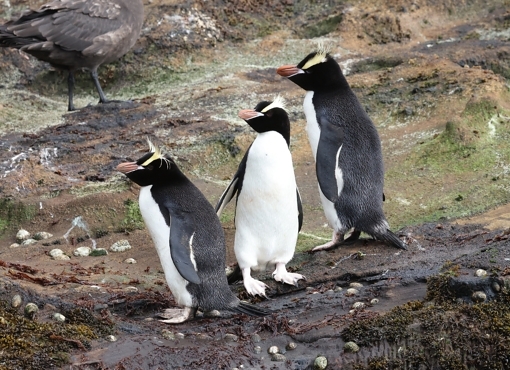
We stopped on the outskirts of Ancud for lunch which took rather longer than planned and then headed west to Punihuil where we took a boat out to the mixed penguin colony where Humboldt and Magellanic Penguins were both seen well along with Red-legged Cormorants, Kelp Geese and our first Blackish Oystercatchers of the trip. We saw our only Peruvian Pelicans of the trip as we waited for our boat.


We were also treated to fantastic views of at least six if not eight Marine Otters including a female with a cub that almost appeared joined at the hip as they swam alongside each other before clambering up the rocks to a small cave.


As we cruised the island a whale research boat came back in to the bay and we discovered that our failure to find whales in Golfo Corcovado was in line with other recent trips and that there appeared to be very few if any in Golfo Corcovado. By contrast they had seen 50+ whales offshore from NW Chiloe the previous day so after returning to the coach we headed to a viewpoint south of Punihuil where we saw 20+ whales blowing albeit at very long range and rarely showing any body as they did.


Pleased to have seen whales but yearning for more we headed north-east for Caulin Bay stopping east of Guabon where we encountered our first Snowy Egret, American Oystercatcher, Ruddy Turnstone, Red Knot and Grassland Yellow-Finch together with South American Snipe, Rufous-chested Dotterel, ‘Hudsonian’ Whimbrel along with some nice flocks of summer-plumaged Hudsonian Godwits.


We finally arrived at our base for the night as it was getting dark but the group still managed to add Black Skimmer to the trip list as Regina, Roberto and I organised the rooms, in fact spacious chalets.


After dropping off the bags we returned to the lodge restaurant for dinner and the group had their first encounter with the slightly eccentric owner of the lodge. After dinner Nick, Les, Patricio and I had a couple of games of pool, if you could call it that, to round off the day.


Having sourced a couple of boats we tried to arrange a trip out to look for whales the following day but were unfortunately unable to obtain the permits necessary to go out into the research area.


14th March


After an early breakfast with excellent Chiloen bread we headed for the Rio Butalcara at Chepu and headed out on a boat in foggy conditions to look for Southern River Otters. Our first and only Coypu quickly appeared and a Southern Sealion was seen shortly afterwards along with Plumbeous Rail and Black-crowned Night-Heron.


As we entered the lake we started to encounter a variety of wildfowl including our first Cinnamon and Silver Teal and shortly afterwards our first Cocoi Heron plus more Cinnamon Teal. We continued along one of the rivers flowing in to the lake where we had encountered an otter last year but only managed to find our only Rufous-tailed Hawk of the trip.


A stop at a research camp to stakeout a good area for otters was somewhat thwarted by the low water levels that made going ashore slightly difficult. Many of the group stayed on the boat and were clearly disappointed that those of us who went ashore didn’t fall in to the river as we returned to the boat. There seemed to be as many cameras waiting for me to fall in as there were when we found the first Pumas!


Retracing our route we entered the lake again and found our only Lake Duck of the trip before continuing back down the Rio Butalcara. We had virtually given up when, no more than 500 metres from the quay, Nick and Roberto almost simultaneously spotted a Southern River Otter close to the bank. For the next couple of minutes it played hide and seek with us around a fallen tree, briefly appearing to be joined by a second slightly larger individual. It then swam out and gave us good views swimming close to the bank before climbing the bank and disappearing from sight.


Well satisfied with the otters, a quick comfort stop added Variable Hawk to the trip list and we headed back to the quay for a boxed lunch. After lunch we returned to our lodge, via a brief shopping trip in Ancud, and checked out before spending time looking through the waders, terns and gulls along the shoreline in windy conditions and less than ideal light with the sun in our faces. However we still managed to find a couple of Black Skimmers among the gulls thronging the shoreline.


Heading east we stopped briefly at the bay just west of Chacao and we were treated to the stunning sight of large numbers of pink-flushed Franklin’s Gulls, Black-necked Swans, South American Terns and good numbers of waders including summer-plumaged Hudsonian Godwits and a large flock of at least 100 Rufous-chested Dotterel including some in almost full breeding plumage.


The ferry journey from Chacao to Pargua produced 20+ Southern Sealions but seabirds were generally in short supply with only vast numbers of Franklin’s Gulls, a single Chilean Skua and a few cormorants keeping us company for most of the time. A Green-backed Firecrown flew alongside the boat bringing back memories of the firecrown in Golfo Corcovado last year.


Arriving back on the mainland we drove east to Puerto Varas and checked in to our lakeside hotel before having an enjoyable final dinner at a nearby restaurant. Roberto and Patricio certainly enjoyed their complete cow on a plate.


15th March


After a rapid breakfast (for some) at the hotel we transferred to Puerto Montt airport where we said goodbye to Roberto and Patricio and checked in for our flights to London via Santiago and Madrid.


On arrival in Santiago we parted company with Regina who headed off for the delights of an airport hotel having failed to change her connecting flight to Sao Paulo. Most of the group then headed for the departure lounges, bars and restaurants or particularly in Luisa’s case the shops for some retail therapy prior to the flight. Fortunately I managed to find a bar in departures showing the England v Ireland Six Nations Rugby live much to my and Mark’s delight.


16th March


Arriving back at Madrid those with connections to Heathrow spent nearly an hour negotatiating the ridiculously convoluted immigration and security regulations at Barajas airport to connect with the return flight to London.


Les and Joan were even less fortunate. They were scheduled to collect their bags before checking-in for their flight to Gatwick but thanks to Iberia their bags did not arrive and they returned to Gatwick baggage-less. Fortunately their bags arrived back in Sussex two days later.


The main group arrived back in Heathrow slightly ahead of schedule and after the inevitable delays at the hands of the Heathrow baggage-handlers (they really need incentivising with productivity bonuses) finally got away from Terminal 2, an hour or so after landing after what everyone agreed was another highly successful trip.


www.wildwings.co.uk


WildWings, 577 Fishponds Road, Fishponds, Bristol. BS16 3AF.UK
| Tel: 0117 9658 333 | Fax: 0117 9375681 | Email: wildinfo@wildwings.co.uk |