|
WildWings, 577 Fishponds Road, Fishponds, Bristol. BS16 3AF.UK
|
|
The Atlantic Odyssey 2010
Wildlife summary by Simon Cook, Tour Leader.
From Ushuaia, Argentina to Cape Verde Islands, off West Africa
23rd March 29th April
The Atlantic Odyssey is one of the best ocean voyages in the world, as the ideally-suited expedition cruise ship Professor Molchanov repositions from Antarctica to Europe. There are outstanding opportunities to see over 40 species of tubenoses, plus many cetaceans and the chance of endemic landbirds on several of the remote islands visited too. This was the fourth Atlantic Odyssey for leader Simon Cook.
The avian stars were single Juan Fernandez and multiple Trinidade Petrels plus Swinhoe’s Storm-petrels whilst the marine mammal stars were Blue Whales, a single True’s Beaked Whale and several Shepherd’s Beaked Whales.
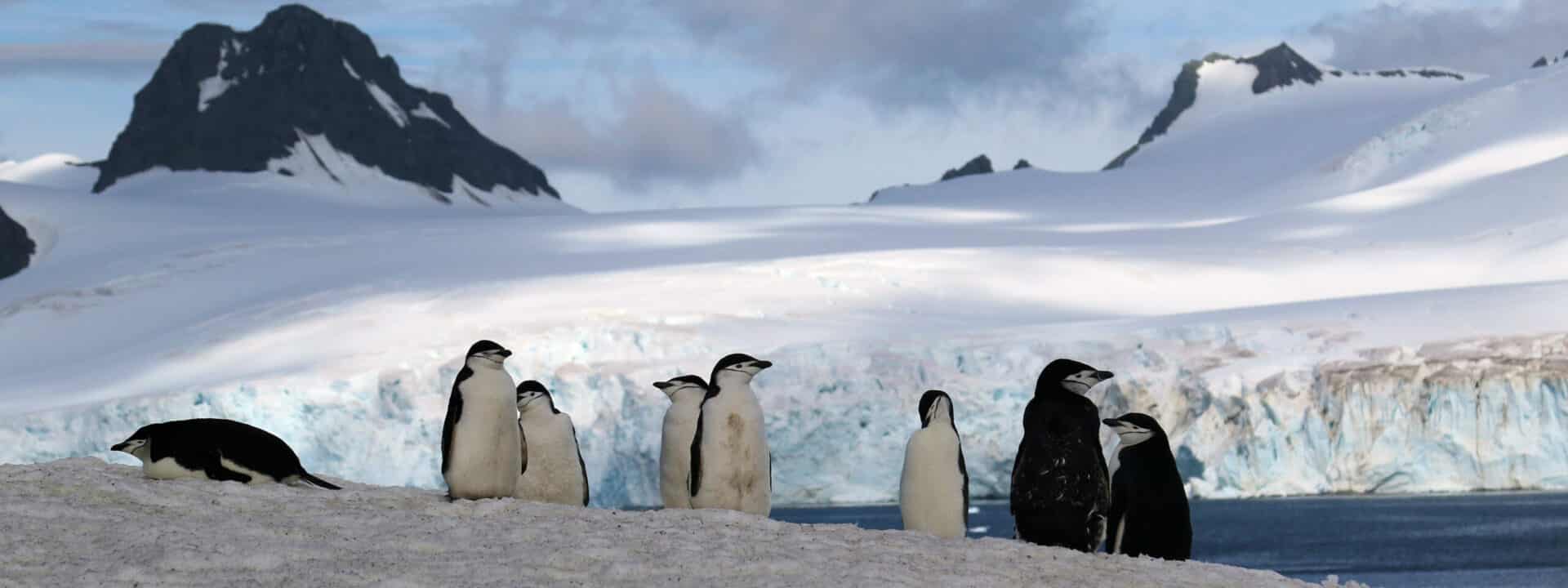
Pre-cruise birding around Ushuaia was very rewarding and provided encounters with Dark-bellied and Grey-flanked Cinclodes, White-throated Treerunner, White-throated Caracaras, Magellanic Penguins, Andean Condors, Black-chested Buzzard-Eagle and, beside our hotel, a flock of Rufous-chested Dotterel. The Drake Passage, between Tierra del Fuego and the Antarctic Peninsula, provided many good seabirds Soft-plumaged, Kerguelen, Antarctic and White-headed Petrels being among them. There were albatrosses too, including Black-browed, Grey-headed, Wandering, Southern Royal and Light-mantled Sooty. Fin Whales were seen very well but several beaked whales were not identifiable. In Antarctica, Gentoo, Adelie and Chinstrap Penguins were supplemented by Antarctic Minke Whales and some Snow Petrels.
En route to South Georgia we stopped unexpectedly at Elephant Island where we got close to several Macaroni Penguins. Spectacular South Georgia exceeded expectations, with dramatic land and icescapes providing a backdrop to countless King Penguins plus Gentoo Penguins, Fairy Prions and the (South Georgia) Pipit, Shag, Diving-Petrel and Pintail and a very close newly hatched Wandering Albatross chick. As we left the island we saw some Killer Whales and the first of many Grey-backed Storm-petrels.
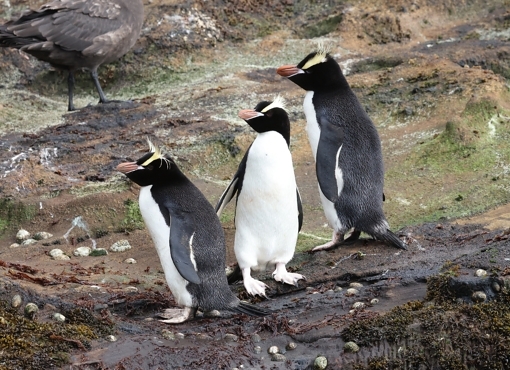
The following day (en route to Gough Island) brought our first Sooty Albatross plus two very close Blue Whales. Other interesting species included Black-bellied and White-bellied Storm-petrels, Great Shearwater, Sub-Antarctic Little Shearwater, Great-winged, Grey, Spectacled and Atlantic Petrels. The only cetaceans provided very close views - Hourglass Dolphins and four very rarely seen Shepherd’s Beaked Whales. The approach to Gough surprised us, with tens of thousands of Broad-billed Prions and other seabirds plus single Shy Albatross and a vagrant Juan Fernandez Petrel. Gough Island is very impressive and zodiac cruises enabled us to see both of the endemic species, Gough Moorhen and Gough Bunting, plus large numbers of the distinctive Sub-Antarctic Fur Seal and Northern Rockhopper Penguin. Some of the fresh-plumaged penguins were at eye level just a few feet away! At the same rock stack a vagrant, summer-plumaged Franklin’s Gull flew over one lucky zodiac. The seas around Gough and the Tristan group were alive with thousands of seabirds and Atlantic Yellow-nosed and Tristan Albatross were new. Sea conditions prevented any landings at Tristan but we did also see Short-beaked Common Dolphin and Short-finned Pilot Whale; both at close range.
On the way to St. Helena we saw several Trinidade Petrels (over two days) and our first Bulwer’s Petrel. Once ashore, we had excellent views of the endemic St. Helena Plover. Two trips on a local boat were excellent for seabirds such as Brown and Black Noddies, Madeiran Storm-petrels, Red-billed Tropicbirds, Masked Boobies and Sooty Terns. Other things that we had extremely close views of were Pantropical Spotted, Common Bottlenose and Rough-toothed Dolphins.
At Ascension Island, the offshore islet of Boatswain Bird Island was packed with seabirds. Thousands of endemic Ascension Frigatebirds were noted, along with large numbers of Masked and Brown Boobies and noddies, plus small numbers of White-tailed Tropicbirds and Red-footed Boobies. Atlantic Green Turtles were also seen and a visit was made to the large Sooty Tern colony.
Our time en route to the Cape Verde Islands included a transit over the Romanche Fracture Zone, an area that combined submarine seamounts (one rising to within 100 metres of the surface) and a trench that at its deepest point was 24,575’/7,728 metres below the surface! The wildlife on this leg was varied: Leatherback and Loggerhead Turtles; Arctic and Long-tailed Skuas; Leach’s, Madeiran, White-faced, Wilson’s, European and Swinhoe’s Storm-petrels; Cory’s, Cape Verde and Boyd’s Shearwaters and two Red-footed Boobies that, after catching flying fish, took up residence on the ship. There were cetaceans too, such as distant Sperm Whales, a very close, continuously breaching Kogia (almost certainly Pygmy Sperm Whale) and Short-finned Pilot and Bryde’s Whales.
The island of Fogo, a conical volcano rising from the sea, was our first stop in the Cape Verde Islands. The island tour added Cape Verde Swift, Grey-headed Kingfisher and Spanish Sparrow to our species list. On the nearby island of Santiago, where the cruise ended, the first (endemic) Iago Sparrows were seen before our bus even stopped at the site! Cape Verde Warbler and Spectacled Warblers were also seen here. The new (full) reservoir was also visited and produced Spoonbills, Western Reef Egret and a Purple Heron. Kentish Plovers and Black-crowned Sparrow-larks finished off the day and our trip.
By any standards the voyage was an outstanding success and it comes highly recommended from past participants to all potential future participants.
A separate, full species list is also available. www.wildwings.co.uk