WildWings, 577 Fishponds Road, Fishponds, Bristol. BS16 3AF.UK
| Tel: 0117 9658 333 | Fax: 0117 9375 681 | Email: wildinfo@wildwings.co.uk |

Wildlife summary by Simon Cook, Tour Leader.


From Ushuaia, Argentina to Cape Verde Islands, off West Africa

8th March – 15th April 2008


The Atlantic Odyssey is one of the best ocean voyages in the world, as the ideally-suited expedition cruise ship Professor Molchanov repositions from Antarctica to Europe.  There are outstanding opportunities to see well over 40 species of tubenoses, endemic landbirds on several of the islands visited plus many marine animals too.  This was the second Atlantic Odyssey for leader Simon Cook.


The 2008 trip encountered much windy weather at times and although this prevented us from getting ashore at Tristan da Cunha, overall the total number of species seen was not diminished.  One of the highlights was our time on the islands of Fogo and Santiago in the Cape Verde Islands, both new destinations for the Odyssey.


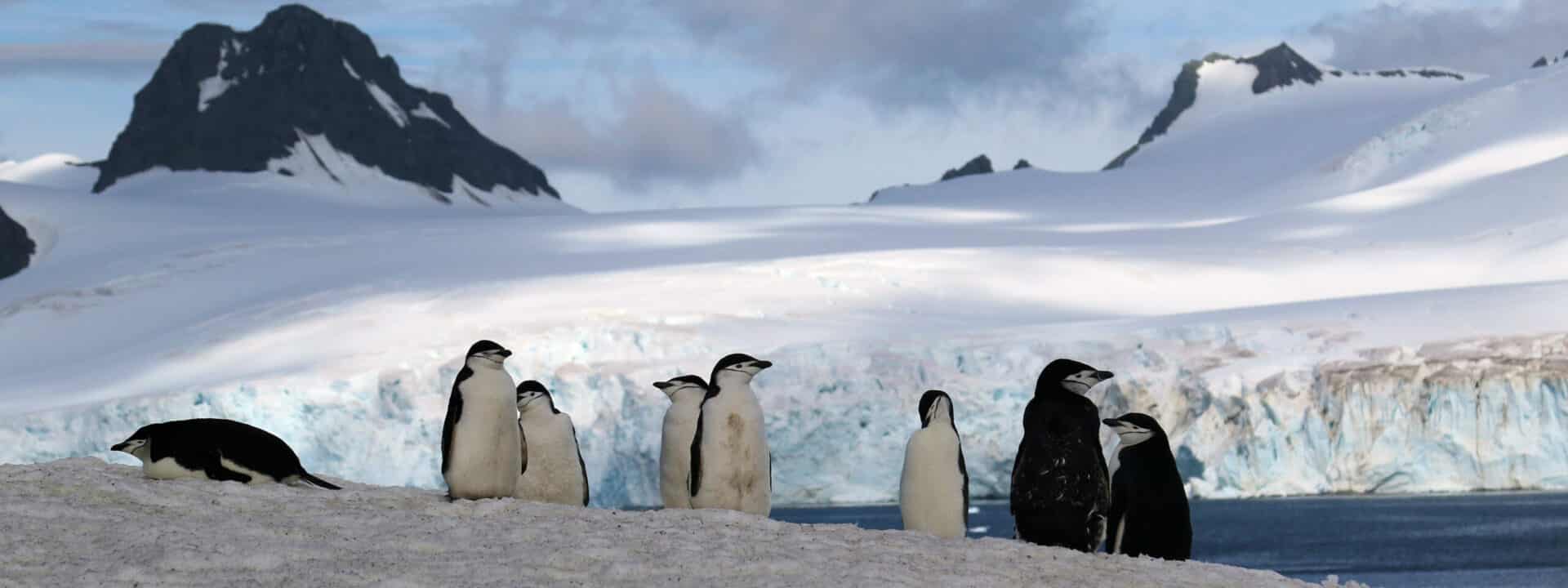
Pre-cruise birding around Ushuaia was very rewarding and provided encounters with Green-backed Firecrowns, Austral Parakeets, Magellanic Woodpeckers, White-throated Caracaras, Magellanic Diving-Petrel and Andean Condors. As the ship pulled away from the dock a Short-eared Owl was spotted hunting over the old airfield and soon afterwards a Beagle Channel rarity was seen - an Antarctic Minke Whale.  The Drake Passage, between Tierra del Fuego and the Antarctic Peninsula, provided a surprise too – a Mottled Petrel, which was in addition to Soft-plumaged Petrels and several species of albatross – Black-browed, Grey-headed, Wandering, Southern Royal and Light-mantled SootyHourglass Dolphins and Fin Whales were seen too.  In Antarctica an Antarctic Shag, several Cape Petrels and a Snow Petrel landed on the ship whilst from the ship we saw Antarctic Petrel and both Humpback and Killer Whales.


En route to South Georgia we had a very rotund Southern Right Whale beside the ship, a Southern Bottlenose Whale and Fairy Prions, which tried to hide amongst thousands of Antarctic Prions.  The island itself lived up to expectations, with dramatic landscapes providing home to countless King Penguins plus Macaroni Penguins, and the endemic South Georgia Pipit and Pintail, newly-hatched Wandering Albatross chicks and a vagrant Chilean Swallow!  The ship yet again played host to more birds – Common Diving-Petrel, Black-bellied Storm-petrel and Antarctic Prion.


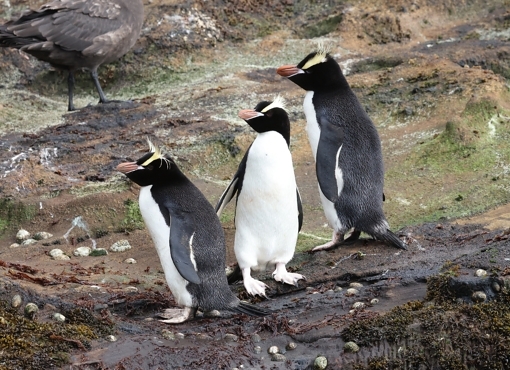
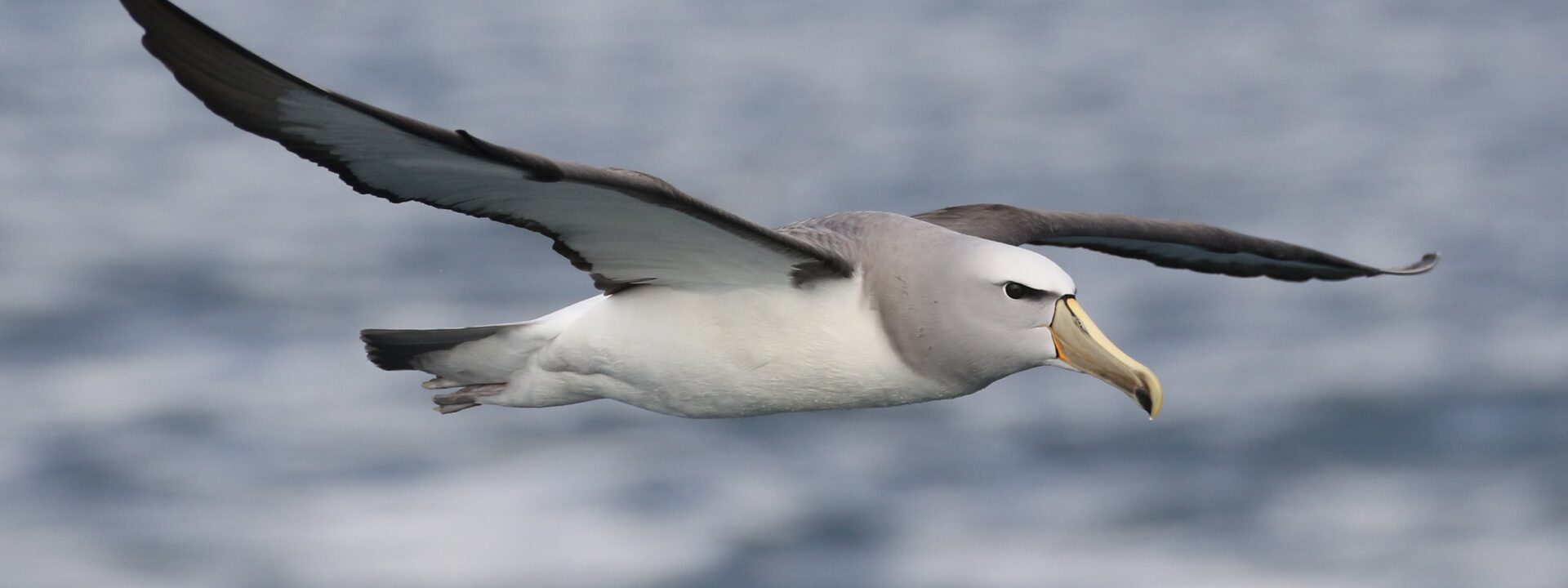
The journey to Gough Island took several days but was full of interest, with the most interesting species being Strap-toothed Whales, Grey and Kerguelan Petrels, Rockhopper Penguin, Subantarctic Little Shearwater, White-headed Petrels, Long-finned Pilot Whales, Cuvier’s Beaked Whales and an incredible 700 or so Southern Right Whale Dolphins.  Gough Island is very impressive and a zodiac cruise enabled us to see both of the endemic species, Gough Moorhen and Gough Bunting, plus large numbers of the distinctive Subantarctic Fur Seals.  The seas around Gough and Tristan were alive with thousands of birds, the most appreciated of which were Spectacled, Atlantic and Great-winged Petrels, Tristan, Salvin’s/White-capped, Sooty and Atlantic Yellow-nosed Albatrosses, Grey-backed Storm-petrel plus Northern Rockhopper Penguin.  A Brown Skua and two Antarctic Terns came aboard.


At St. Helena the ship was greeted by bow-riding Common Bottlenose and Rough-toothed Dolphins and, once ashore, we had excellent views of the endemic St. Helena Plover.  Two trips on a local boat were excellent for seabirds such as Brown and Black Noddies, Red-billed Tropicbirds and a single Sooty Tern.  Other wildlife that we had extremely close views of were Pantropical Spotted Dolphins and a large Whale Shark, which was around and under the boat for some time. 


Numerous Sperm Whales were encountered on the way to Ascension Island, including some that were breaching.  On the main island one of the stops was at a huge colony of Sooty Terns.  Later, at the offshore islet of Boatswain Bird Island, thousand of Masked Boobies and endemic Ascension Frigatebirds were noted, along with small numbers of White-tailed Tropicbirds.  There was also time to go ashore and watch Atlantic Green Turtles laying their eggs, an extraordinary event to witness.


Our time en route to the Cape Verde Islands included a transit over the Romanche Fracture Zone, an area that combined submarine seamounts (one rising to within 100 metres of the surface) and a trench that at its deepest point was 7,728 metres below the surface!  The wildlife on this leg was prolific: Leach’s, Madeiran and White-faced Storm-petrels, Audubon’s, Cory’s and Cape Verde Shearwaters, Red-billed Tropicbirds, Bulwer’s and Fea’s Petrels, Sabine’s Gulls, many dolphins such as Spinner, Risso’s and Clymene Dolphin, Short-finned Pilot, False Killer, Dwarf Sperm and Melon-headed Whales, beaked whales (including a probable ♀ Blainville’s), Leatherback Turtles and two more Whale Sharks.  


The island of Fogo, a conical volcano rising from the sea, was our first stop in the Cape Verde Islands.  Even before we had disembarked by zodiac from the ship the first Brown-necked Raven, Alexander’s form of Common Kestrel and Cape Verde Swift had all been seen.  The island tour added Black-crowned Finch-Larks, Grey-headed Kingfishers, Spectacled Warblers and Spanish Sparrows.  On the nearby island of Santiago, where the cruise ended, the first (endemic) Iago Sparrow was seen from the ship at the dock!  A birding tour was very successful and rewarded us with more swifts, kestrels and sparrows (including a male repeatedly attacking it’s own reflection in the bus mirror!), the local form of Buzzard, dozens of Blackcaps in a fruiting fig tree and, at the same place, several Cape Verde Warblers.  The new reservoir was also well worth a visit, producing as it did Spoonbills, the local form of Purple Heron and rarities in the shape of Glossy Ibis, Lesser Yellowlegs and a suspected Little Blue Heron, possibly the first for the islands.


By any standards the trip was an outstanding success and comes highly recommended from past participants to all potential future participants!


A separate full species list is also available.                           www.wildwings.co.uk

WILDWINGS LINKS

Welcome
Travel Agency
BirdWatching Introduction
BirdWatching Calendar
WildOceans Introduction
Trinidad & Tobago Introduction
Mammal tours
Wildlife Cruises
Wild Insights
DeepOcean Expeditions
Space Adventures
Tour Reports
Atlantic Odyssey tour page
Atlantic Odyssey Trip Report 2007
Atlantic Odyssey 2007 Species list