Adobe

ATLANTIC ODYSSEY 2006

ANTARCTICA LINKS
Antarctic Peninsula
Antarctica, The Falklands & S. Georgia
Atlantic Odyssey
Sub Antarctic Islands of NZ
Independant Travel to Antarctica
Antarctic Icebreakers
Trip Reports
Welcome
Travel Agency
BirdWatching Introduction
BirdWatching Calendar
Predatours
WildOceans Introduction
Wild Insights
DeepOcean Expeditions
Space Adventures

WILDWINGS ATLANTIC ODYSSEY     March 10th – April 8th , 2006


A voyage from Ushuaia in Argentina to Ascension Island via the Drake Passage, the Antarctic Peninsula, South Georgia, Prion Island, Gough Island, the Tristan da Cunha archipelago (including a visit to Inaccessible Island) , St Helena and Ascension Island.


Length of journey – 5,207 nautical miles,  9,644 kilometres, 6,028 miles


By Tim Cleeves.

Summary


March 8th – March 11th


We checked out the harbour at Ushaia on arrival; the waterfront contained a great range of birds – many species new to us. Among the waders, gulls and skuas we saw Southern Giant Petrels lazing around, and three species of caracara were recorded – Southern Crested, White–throated (fly over) and Chimango. The top of the beach contained birds looking like a cross between a dipper, a rock pipit and a babbler – they were in fact Dark-bellied Cincloides.


On March 9th we visited the Parque National de Tiera Del Fuego -  a huge area covering 150, 000 square miles. Good numbers of small passerines were evident with Thorn–tailed Rayaditos probably the most abundant small bird. At the other end of the scale all we were all very impressed with the huge Andean Condors, seen soaring over woods and mountains. Perhaps the strangest realisation was that the Park is bi-sected by long fjords and with woodland birds at our backs we had large flocks of Sooty Shearwaters and good numbers of Black-browed Albatrosses in view. Our first penguins – Magellanic Penguins were seen.  Eventually we tracked down three local specialities – Austral Pygmy Owl and Austral Parakeet - and had close views of male and female Magellanic Woodpecker.


On March 10th a special visit to the Ushuaia abattoir and rubbish tip was not to be missed. After checking the shoreline and watching Rufous-chested Dotterel, over 80 White-rumped Sandpipers and some Ashy-headed Geese we were among the Turkey Vultures and Caracaras, with over a dozen White-throated Caracaras in view at once. A Peregrine watched us watching the local pigs eating sheep’s heads. The sight must have pepped up it’s appetite as it then tried to catch a Kelp Goose!


At 17. 30 hours on March 11th we set sail on the MV Professor Molchanov down the Beagle Channel towards the open sea. A South American Sea Lion swam out to send us on our way and scores of Black-browed Albatrosses and thousands of Sooty Shearwaters were seen. All eyes were peeled for the diminutive Magellanic Diving Petrel – and eventually patience was rewarded.


March 12th – 20th


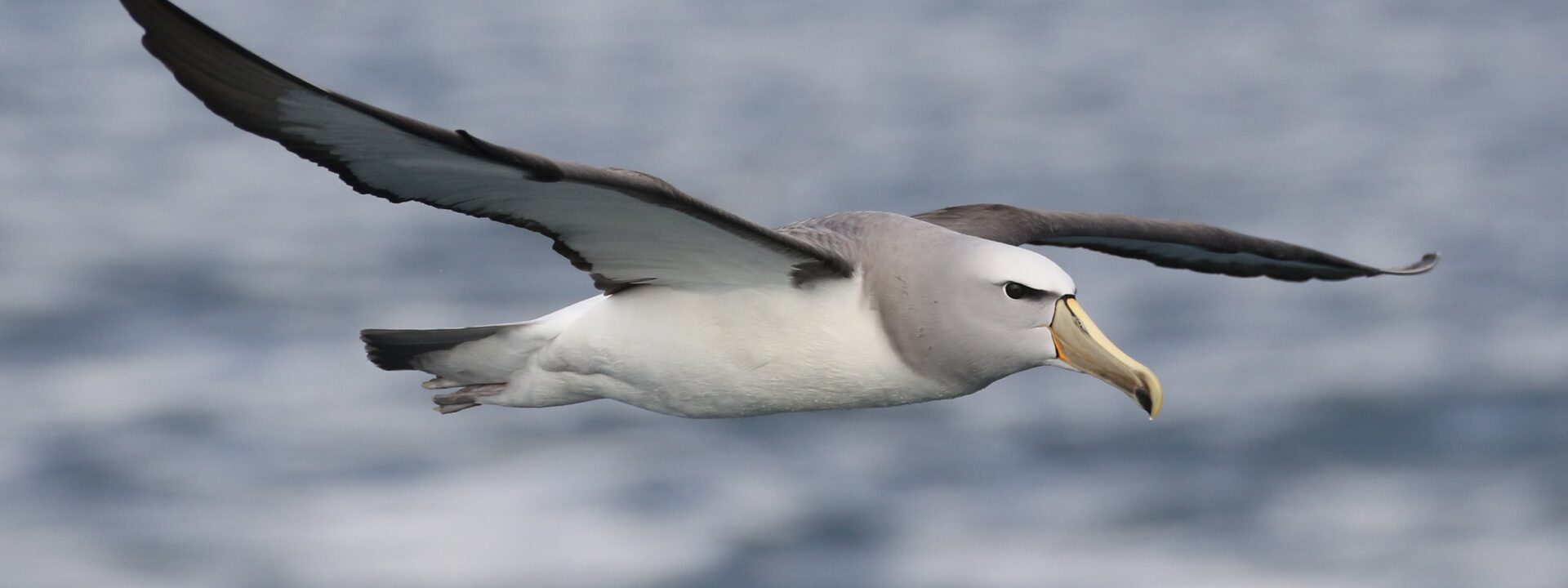
On March 12 sea watching from the ship produced our first Wandering Albatrosses and for good measure, and comparison, our first Southern Royal Albatrosses. Among a total of thirteen Soft–plumaged Petrels, a rare dark phase bird was seen.


An Antarctic Petrel was the undoubted highlight on March 13th – the bird cruised past at close range, making the photographers’ day.  Also recorded was an Atlantic Petrel, a high flying Kerguelen Petrel and our first serious brush with prions (on the starboard bow?) . Consensus was that most birds appeared to be Antarctic Prions, with two Slender- Billed Prions also being identified.  The most unexpected and bizarre sighting was a high flying passerine, looking like a species of pipit, heading north while we were some 50 kms from King George Island.


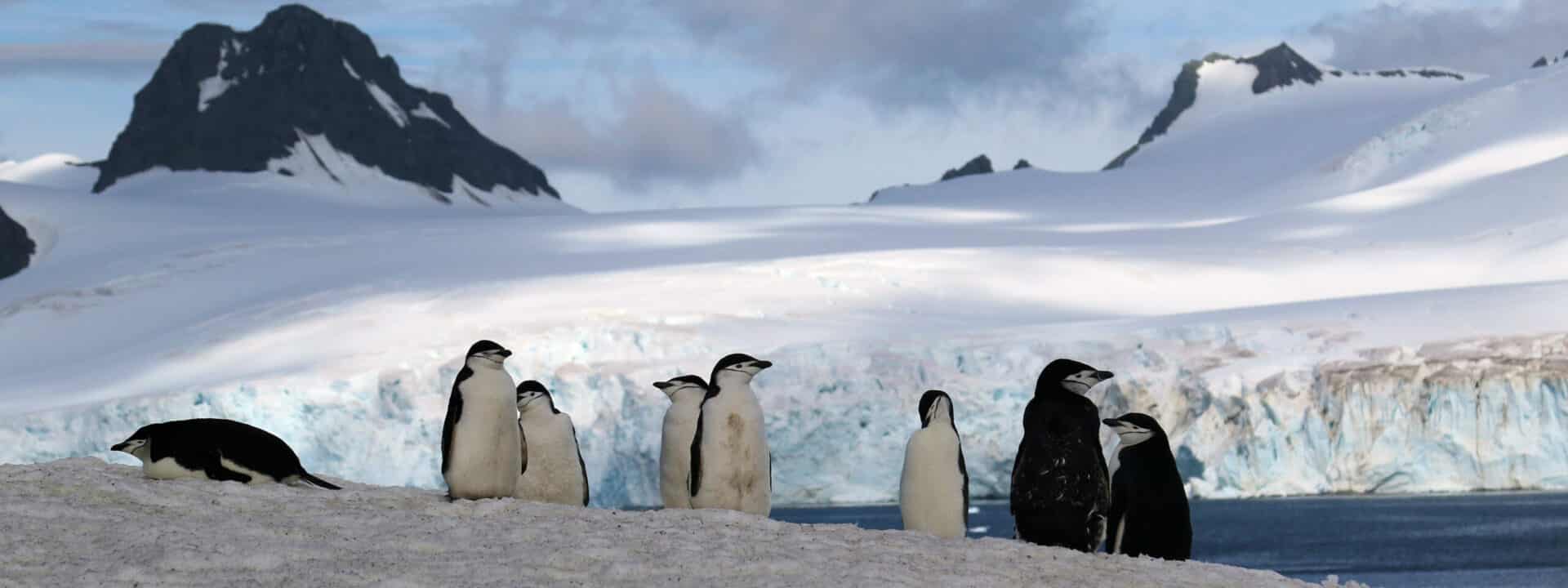
On March 14th we were in mammal mode as the browner, Antarctic, ‘Type B’ Orcas were seen, one group ranged ready for an attack on nearby Antarctic Minke Whales; digital images of a pod line abreast in the pack ice will stick in our minds forever. Other sea mammals included the pin-headed Weddell Seals, some Crabeater Seals and the ubiquitous Antarctic Fur Seals. Winds were strong to gale force as we marvelled at the twisting, gliding flight of Lesser Snow Petrels. Next day we went ashore – a whole new continent for most of us – setting foot on the Antarctic Peninsula at Brown Bluff. Without exaggeration we found ourselves playing a walk-on part in a wildlife documentary. All around us were Fur Seals, Gentoo Penguins, Snowy Sheathbills , flocks of Antarctic Shags, scores of Sub-Antarctic Skus and a South Polar Skua picking at a long dead Adelie Penguin. Snow began to fall and the scene was complete, a great experience. On the way back to the ‘Mother Ship’ we saw an innocent looking Weddell Seal, and what must be one of nature’s really evil characters – a hollow-eyed, leering  Leopard Seal hauled out on the ice. Two Antarctic Petrels were logged and we all watched our Captain organising the ice breaking as the bows of the ship crunched the encroaching ice and a route into the open water of the Bransfield Strait was hewn.


On March 18th we were treated to very close views of Sei Whales , some showing their fins close to the bows and giving us a chance to compare fin shapes with the Fin Whales seen a few days before.


En route to South Georgia we continued to see Antarctic Fulmars, Grey-headed, Black- browed and Wandering Albatrosses and some Light-mantled Sooty Albatrosses. Diving Petrels were seen regularly in small numbers in contrast to Antarctic Prions which had day totals over 500. The larger, white–tail tipped Blue Petrels started to be seen, as did White-chinned Petrels. Some sea fog limited observations during the journey. On March 18 some Fin Whales and a pod of Hourglass Dolpins were seen close to the ship. Big patches of Krill swarming close to the water’s surface in the late afternoon was interesting and among the White- chinned Petrels a Westland Petrel was seen; this the only one of the trip.


March 19th we went ashore on South Georgia, paying our respects at Sir Ernest Shackleton’s grave. We then visited the old Norwegian whaling station at nearby Grytviken, and the museum and shop. Looking almost identical to their South American counterparts – the Yellow–billed Pintail  (Anas georgica spinicauda) - we sought and saw the South Georgia Pintail ( Anas georgica georgica ). A potential future ‘armchair tick’. Some more energetic birders walked round the bay to King Edward Point and were rewarded when they found a South Georgia Pipit – the only passerine breeding within the limits of the Antarctic Convergence. In the afternoon we headed south–east towards Gold Harbour. If Brown Bluff had been like landing in a TV wildlife documentary, landing at the King Penguin rookery at Gold Harbour was a bigger and even better life experience. Sixty or more lumbering Elephant Seals were hauled out on the beach and to their left a rough estimate of over 10,000 King Penguins in all their yellow, grey, black and white glory. We felt very much the guests of these birds, the place was theirs. The penguins waddled up to you and seemed to be trying to make out what sort of alien life force we were – fish? fowl? penguin?


On March 20th we landed at Salisbury Plain and, in the afternoon, on Prion Island. The Salisbury Plain site was full of young Antarctic Fur Seals and an estimated 50,000 King Penguins – yes the smell of fish was everywhere!  Then we were on the passerine hunt as three South Georgia Pipits were found all giving excellent views in the tussock grass on the edge of the penguin rookery.  On Prion Island we made our way carefully up to the plateau and split up into small groups. Each group then settled down adjacent to an occupied Wandering Albatross nest, taking care to keep a respectful distance from the nests. The birds seemed remarkably confiding however, and over the next few hours Wandering Albatrosses came and went – overhead, walking casually by and then, in the late afternoon we witnessed younger, non- breeding Wanderers ‘gamming’ . This is the name given to the long selection process these huge birds go through to find a mate; it can take many years. Birds touched bills and gently rattled the bill tips together while they stretched out their mighty wings bending the tips forwards  almost in contortion.  It was interesting to note that most of us returned to the ship in silence afterwards. We had paid witness to an amazing natural spectacle.


March 21st – March 29th


We now settled down to four days sea watching as the MV Molchanov headed north-east for the 1,300 nautical mile journey to Gough Island. The ‘Tubenose Army’ increased in both numbers and species totals with Wandering Albatrosses and Giant Petrels (both species) constantly in our wake, over 200 Soft-plumaged Petrels on one day, Sooty Albatrosses took over from Light-mantled Sooty Albatrosses, Kerguelen Petrels soared over our  heads appearing like marine nightjars with their aerobatics, and prions continued to challenge. We had sorted out a few Slender-billed Prions back over the ice, but then thousands of Antarctic Prions became the usual fare. Paler, more delicate Fairy Prions were in smaller numbers and then we chanced upon some more distant but big numbers of prions over March 24th/25th.  One flock was estimated at over 6,000 birds . Examination of digital images in the evening helped secure our identification: these were Broad-billed Prions.


Cetaceans were appearing and on the first day of the new journey eight Fin Whales and a Humpback Whale were sighted, and – near a group of four Fin Whales another cetacean was captured by the on board Papparazi. The images of this whale were carefully scrutinised and a firm identification of a Blue Whale was secured -  fantastic!


Grey Petrels appeared as did our first Great Shearwaters, and the storm- petrels increased in numbers and variety. We had been watching Wilson’s Storm- Petrels from the beginning of the Odyssey  but now we had Black-bellied Storm-Petrels, then White-bellied, and finally tiny Grey-backed Storm-Petrels. On March 23th and 24th the first long-legged White-faced Storm-Petrels were seen. Digital images were running in thousands as the long lenses on the team were trained on seabirds, seabirds, seabirds. The birds took on the role of movie stars at a Hollywood Ball.   Little Shearwaters passed the ship, these were of the form Puffiinus assimilis elegans – with dark hoods to below eye-level and silvery feather edges in the wings. A white ‘wrap around’ the upper-tail coverts was also very conspicuous. Two White-headed Petrels were identified.


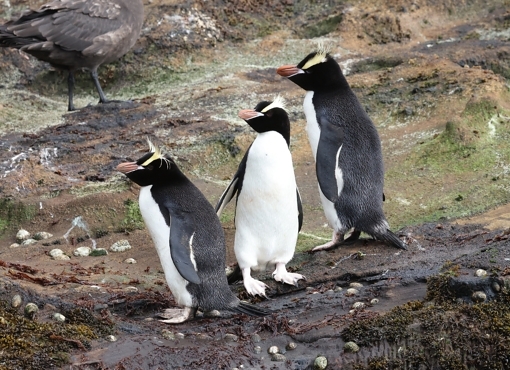
On March 25th we approached Gough Island, having covered the distance of 1,377 nautical miles (2,550 kms) from the last time we saw land at Prion Island, South Georgia. The journey had taken 118 hours. We moved round to the sheltered east side of the island, and at 16.00 hours we took a Zodiac cruise inshore. The prime objectives that afternoon were Gough  Moorhen and  Gough Bunting, and both species were seen well from the Zodiacs that evening. Early on March 26 another Zodiac cruise was taken close to the island resulting in sightings of over 30 Gough Buntings,  nesting Sooty Albatrosses, hundreds of Sub-Antarctic Fur Seals and some huge Southern Elephant Seals. Here, cruising past an area known as The Glen in Quest Bay, we approached a large group – perhaps over two thousand – of Northern Rockhopper Penguins, they did just what they are famous for and jumped energetically up and down the cliff sides and rocks waving their clown like yellow head plumes as they bounced.


Returning to the ship we lifted anchor and passed around the coast before starting to head north-north west towards Tristan da Cunha. Chum was prepared with fish guts and other fish remains, vegetable oil and some food left over from our meals. Onion bags were filled and towed behind the ship. Among the throng of seabirds following the stern very closely were two Shy Albatrosses, over a hundred Atlantic Yellow-nosed Albatrosses, our new form of Wandering Albatross – the ‘Tristan’ form in good numbers, the very impressive Spectacled Petrels, White-chinned, Grey-backed Storm Petrels and White-bellied Storm Petrels among other tubenoses.


On March 29th we actually set foot on Tristan da Cunha – poor weather, and particularly heavy swell, had prevented a landing on the previous two days. With the trusty Tristan islanders on board we headed towards Nightingale Island only to find the state of the sea was too dangerous to risk a landing. Fortunately an area of Inaccessible Island – along Waterfall Beach – was sheltered from the westerlies and a 45 minute Zodiac landing was carried out. Only the local knowledge and strength of the Tristan islanders – guiding in the Zodiacs and holding the boats for us to jump ashore – made this landing possible. Soon we were all in nirvana, with Tristan Thrushes literally hopping around our feet, Tristan Buntings calling and flying around us and – the ultimate prize – first two and then a third Inaccessible Island Rail. The tiny, black , fluffy gems looked almost like recently  hatched Moorhens with longer red bills or, perhaps, some hitherto undiscovered species of miniature Kiwi!  Albert – meanwhile – had been on Tristan – and added another flightless bird to the trip list – Tristan Moorhen -- Gallinula (nesiotis) nesiotis.


March 30th – April 8th


We  headed off in the evening of March 29th towards St.Helena , the distance to cover was 1,327 nautical miles ( 2,457 km). Bird numbers and species diversity began to reduce as we made our way north-north east.  This said we still had four albatross species  with us – Wandering, Sooty, Atlantic Yellow-nosed and the two Shy. Atlantic Petrels were still being seen , as were Great-winged, Soft-plumaged, White-chinned and the fabulous Spectacled Petrels. The first Bulwer’s Petrel was seen on March 30th. On April 1st everyone got a new bird – Inappropriate Island Legless Book Rail – but that, as they say, is another story! Seventeen faithful Spectacled Petrels remained in the wake and variety was maintained with Madeiran storm-petrel, Red-billed Tropicbird, and one of the biggest shocks of the trip – a Trindade ( or Trinidade) Petrel - Pterodroma (arminjoniana) arminjoniana – photographed off the stern but only seen poorly , and with un-tickable views,  from the bows.


On April 3rd St.Helena was in our sights and we headed up the west coast, past new trip species such as Black Noddies, Masked Boobies, Sooty Terns, and a very close Cory’s Shearwater. At mid-day the Zodiacs took us ashore and many people opted to go to Deadwood Plain to see the St.Helena Plovers (or Wirebirds) – a ‘must see’ endemic here. In-shore boat trips during our two day stay delivered amazing views of high-leaping Pantropical Spotted Dolphins and close encounters with Red-billed Tropicbirds, White and Sooty Terns, Brown and Black Noddies. Almost without realising we had severed our links with the southern oceanic birds – no more albatrosses, no more Giant Petrels and the last of the Spectacled Petrels had deserted us. Luckily there were still some avian treats in store. 


In the evening of April 4th the ship set off for Ascension Island , a distance of 680 nautical miles. En route we were lucky enough to encounter no fewer than eleven Sperm Whales on the first day at sea.  By April 6th observations were really thinning out and sun-bathing was more the vogue than sea-watching. Nine birds of five species all day but two Ascension Frigatebirds were excellent , one bird  preened  in flight and was dropping up and rising like a displaying Honey Buzzard. 


On April 7th we reached Ascension Island and photographers could take full advantage of some Bottlenose Dolphins which were very close to the Professor Molchanov. We arrived near  Botswainbird Island and took Zodiac cruises closer in to look at the nesting seabirds. Thousands of birds at close range and the familiar smell of guano greeted us. Red-billed and White-tailed (Yellow- billed) Tropicbirds were seen, Masked and Red-footed Boobies, with Brown Boobies off-shore, and hundreds and hundreds of the piratical Ascension Frigatebirds. In the evening we were the guests of the Ascension Island Conservation Office. After watching a short video on the Green  Sea Turtles we were escorted out to the beach at Georgetown. Some female turtles had come up the beach and were in the process of egg laying. About one hundred eggs can be produced per female, these are buried at a depth of one metre and after 6-10 weeks the tiny hatchlings emerge. We were thrilled to see some of these perfect , miniature sea turtles on the beach and several swimming past us as we waited at the pier to catch the Zodiac back to the ship.


On April 8th we took a tour, in small buses, around Ascension – visiting the Green Mountain National Park and the Bonetta Cemetry, in Comfortless Cove. The latter served as a reminder that world travel in past centuries held severe and often fatal consequences. Happily all our travel arrangements had gone well, and we had witnessed some truly amazing wildlife experiences. Before 15 of us took our flight back to the UK that evening we reminded ourselves of the  sights we had seen on this epic ‘Atlantic Odyssey’, of the great fun we had shared and  the help given by  the crew and the staff. As the great white (747) bird left Ascension that  hot night our minds recalled the Lesser Snow Petrels, the Leopard Seals, the displaying Wandering Alabtrosses, the line of Orcas in the ice and – of course- the Inaccessible Island Rails and the Northern Rockhopper Penguins. The only problem tired minds had was to stop the mental check –list – after all it was long, and it was very, very good.


A systematic list is also available (Compiled by Andy Roadhouse)


April 2006


WildWings


| home | introduction | news | late availability | media resources | brochure request | booking form & conditions | contact us |
WildWings, 577 Fishponds Road, Fishponds, Bristol. BS16 3AF.UK
| Tel: 0117 9658 333 | Fax: 0117 9375681 | Email: wildinfo@wildwings.co.uk |