WildWings, 577 Fishponds Road, Fishponds, Bristol. BS16 3AF.UK
| Tel: 0117 9658 333 | Fax: 0117 9375 681 | Email: wildinfo@wildwings.co.uk |

“I know people booked on the 2009 voyage and am sure they will enjoy it as much as I did”
MH April 2008


The Antarctic Peninsula, the Weddell Sea, the South Orkneys, South Georgia, Tristan da Cunha, Nightingale Island, St. Helena and Ascension Island - a roll call of some of the most remote and romantic places in the world. Add Gough Island and the legendary Inaccessible Island and you surely have one of the ultimate pelagics, pioneered by WildWings since 1998.


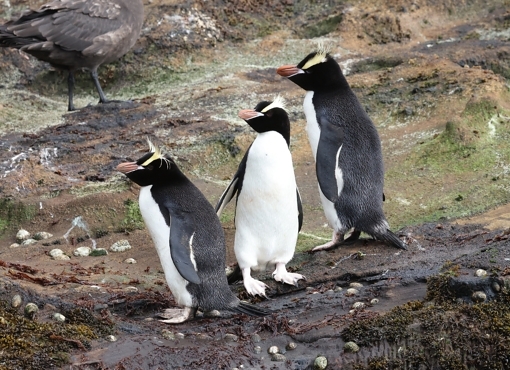
Most of these South Atlantic islands have enormous populations of seabirds and some have endemic landbirds.  The huge sea areas between them are home for much of the year to a great variety of albatrosses, petrels, shearwaters and prions, not to mention whales and dolphins.  Among the many highlights should be Lesser Snow, Antarctic and Spectacled Petrels, Northern Rockhopper Penguins and thousands of other penguins in Antarctica and its islands. The ultimate ocean travellers – Wandering Albatrosses – pass close to the ship and we may even get a chance to see the greeting ceremony of these massive seabirds on their nesting grounds. The many cetacean highlights have included Humpback Whales and Orcas next to the ship in the ice, the almost mythical Southern Rightwhale Dolphin (2005 and over 700 together in 2008!) plus Spectacled Porpoise, Southern Bottlenose Whale, Strap-toothed Whale, Arnoux’s Beaked Whale, two Blue Whales, and dolphins galore including Hourglass, Rough-toothed and Clymene (2008).


These are remote islands with colourful histories which few people get an opportunity to enjoy. In the last six years we visited and Zodiac-cruised Gough Island, seeing its two endemic land birds, the moorhen and the bunting, but even this has been eclipsed by landing on Inaccessible Island in 2003, 2004, 2006 & 2007 (heavy swell prevented landing in 2005 and 2008), yielding amazing views of the delightful and diminutive flightless Inaccessible Island Rail. The bunting on this island has now been split into a full species. Between forty and fifty species of ‘tubenose’ have been logged on every one of the past eight Odysseys. In four trips a total of thirteen Emperor Penguins were encountered on ice at close range, and hundreds of Lesser Snow and Antarctic Petrels have been seen over the drift ice. Successful landings have also been made in most years on Nightingale Island in the Tristan group, where the endemic Tristan Thrush, Nightingale Bunting and the endangered Wilkin’s (Grosbeak Bunting) are to be found.


The opportunity to do all this, at a price well within many people's reach, is thanks to the annual repositioning cruise of the comfortable, ice-strengthened Professor Molchanov (48 passengers).  In the spring she travels north from her expedition cruising in the Antarctic to her summer cruising in the Arctic. You will start this trip with parkas and boots and finish in shorts and T-shirts - from the freezer to the oven in just one month.


Simon Cook will lead the 2009 and 2010 expeditions, recently taking over from Tony Marr who pioneered this voyage for WildWings. Simon has many years of experience of working on expedition ships and has probably spent more time at sea in the last fifteen years than any other UK leader, He also drives Zodiacs and has a very keen personal interest in seabirds and cetaceans (with pretty impressive personal life-lists of both!) and the ability to share his enthusiasm with beginners and more experienced birders alike. On board ship Simon will be joined by the rest of the expedition team and you can be assured that the standard of sea-watching will be very high indeed. The opportunities for photography are excellent throughout this trip.


Now acknowledged as one of the pelagics which seabird enthusiasts cannot afford to miss, in March 2009 and 2010 the vessel will again be departing from Tierra del Fuego for this epic Atlantic journey, finally ending in the Cape Verde Islands in early April. The main WildWings group will disembark in Ascension, after a journey of nearly 6000 nautical miles (9600 kilometres), and fly home to the UK with the RAF to Brize Norton in Oxfordshire. For a supplement, you may stay on the vessel to the Cape Verde Islands which should yield the special seabirds and some of the land endemics of this archipelago too. Flights from the Cape Verdes are via Lisbon back to the UK.


Itinerary

Day 1: In the afternoon, we embark in Ushuaia and sail down the Beagle Channel where we hope to see Magellanic Penguin and Magellanic Diving Petrel. The expedition begins at the southern tip of Argentina and sails to the Antarctic Peninsula.

Days 2-3: At sea in the Drake Passage, an excellent selection of seabirds can be expected, including Kerguelen, Blue, Soft-plumaged and White-chinned Petrels, Wandering, Black-browed, Grey-headed and the elegant Light-mantled Sooty Albatrosses; Cape Petrels, Antarctic Fulmars plus Slender-billed and Antarctic Prions, to name but a few.  A number of cetaceans can also be expected in these wild oceans.

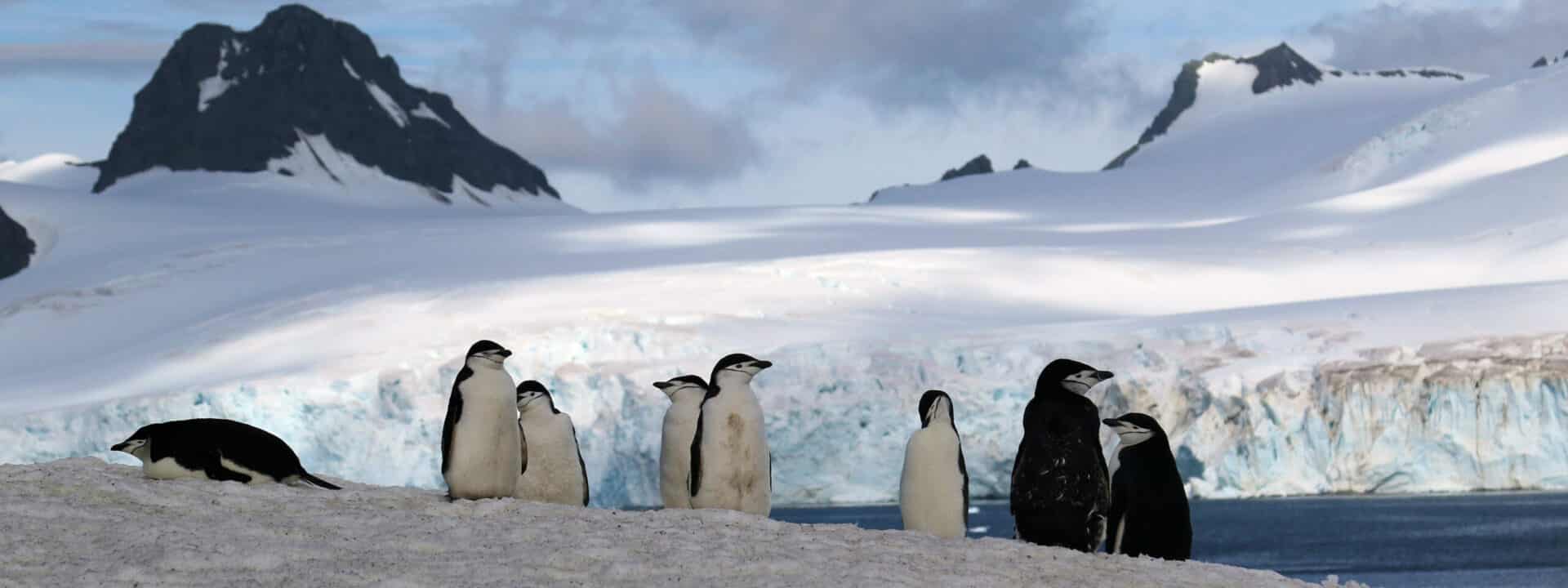
Day 4: We may land on the south side of the Bransfield Strait. After cruising through the Antarctic Strait, we plan to land at Hope Bay or Brown Bluff, to set foot on the Antarctic Continent itself. In this area chances are good for encounters with Gentoo and Chinstrap Penguins, Weddell and Leopard Seals plus Lesser Snow Petrels. Sei, Fin and Antarctic Minke Whales may be seen here too, as we sail through these forbidding ice-filled waters and into the Weddell Sea.

Day 5: In the morning we hope to slowly cruise the semi–frozen waters of the Weddell Sea, birthplace of huge tabular icebergs, and startling blue ice blocks. Among this icy wonderland we will search for Lesser Snow Petrels, Antarctic Terns and haul outs of Crabeater and other seals. This route covers areas Shackleton and his men saw, it truly is a privilege to be in such a historic and pristine wilderness. At Paulet Island we should find some late Adelie Penguins near the remains of the Nordenskjold Expedition’s hut, and an Antarctic Shag colony.  Our time here in Antarctica will be entirely dictated by weather and ice conditions.

Day 6: On our way north, we spend the day at sea, hopefully encountering drift ice which may hold the elusive Emperor Penguins, and where we should see hundreds of Antarctic Prions, our first Black-bellied Storm Petrels, more Cape Petrels and with luck, Lesser Snow and Antarctic Petrels. 

Day 7: We plan a landing at one of the islands in the South Orkneys, and we may be able to visit the staff of an Argentinian Base. In 2002 and 2003 we landed on Coronation Island and encountered the only two species of flowering plant to be found on the Antarctic continent.

Day 8: On our way to South Georgia, we should witness another multitude of seabirds and cetaceans in the Scotia Sea.

Days 9-11: In South Georgia we plan visits to the abandoned whaling settlements at Grytviken, the King Penguin colony on Salisbury Plain, and the breeding Wandering Albatrosses on Prion Island in the Bay of Isles.  We plan to Zodiac cruise Macaroni Penguin colonies, land at Cooper Bay and Gold Harbour and cruise into Drygalski Fjord, all with stunning snow-capped peaks above them. Some Southern Elephant Seals should still be present whilst Antarctic Fur Seals will have cute young pups here. We have three wonderful days on this beautiful Sub-Antarctic island where the endemic South Georgia Pintail and South Georgia Pipit can be expected too. 

Days 12-16: In the westerlies we should have a good tailwind, and on both sides of the Antarctic Convergence we will observe many species and great numbers of Antarctic and Sub-Antarctic seabirds.  Many of the seabirds previously seen will be encountered plus Fairy Prions, Grey-backed, Black-bellied and White-bellied Storm-Petrels, Atlantic, Grey and Great-winged Petrels, Great and Sooty Shearwaters, Common and South Georgian Diving Petrels, Southern and Northern Giant Petrels plus up to eight forms of albatross (Wandering, Tristan, Grey-headed, Black-browed, Sooty, Light-mantled Sooty, Shy and Atlantic Yellow-nosed). Our first of the handsome but seriously endangered Spectacled Petrels should be encountered along with Little Shearwaters of the silver-winged race ‘elegans’.

Day 17: We will head for Gough Island, a World Heritage Site, remote and spectacular home to millions of breeding seabirds. Landing is not permitted, but subject to weather conditions, we plan to Zodiac cruise close to the shore and look for the endemic Gough Moorhen and Gough Bunting.

Days 18-20: In the Tristan da Cunha archipelago we plan to call at the settlement of Edinburgh at the north-western corner of the main island. We allow a reserve day for bad weather, which is very common here.  Known as the remotest inhabited island in the world, Tristan has hardly any birds of its own left now, thanks to rats and cats, so we plan to visit nearby Nightingale Island where Great Shearwaters nest in their thousands, criss-crossing the island and emerging from the eight-foot high tussock grass. Tristan Thrushes and Tristan Buntings should be hopping around our feet and the much scarcer Grosbeak Bunting may be seen. We will also encounter Atlantic Yellow-nosed and Sooty Albatrosses plus Northern Rockhopper Penguins breeding. We hope to gain permission again to visit Inaccessible Island (weather and landing conditions permitting) with its amazing mouse-like Flightless Rail.

Days 21-24: At sea again, we now enter sub-tropical waters with their own brand of seabirds and dolphins, and with many of the participants (birds and passengers) changing from winter to summer plumage on this sector! We will leave many seabird friends behind now, most sadly the last of the albatrosses amongst them. Spectacled Petrels stay with us the longest usually. New species should include Madeiran Storm-Petrel and the bat-like Bulwer’s Petrel, whilst flying fish definitely add a tropical edge. Expect calm seas and balmy days.

Days 25–27: St. Helena has a good anchorage at Jamestown. This is another island with few birds owing to man’s activities.  Just 11 landbird species breed here, nine of which have been introduced.  The most important is the Wirebird, a small thin-legged plover breeding in fields in the centre, where we will find them holding territories in the local pastures. White Terns nest all along the coast and in town in the trees. Red-billed Tropicbirds and noddies fly around our vessel at anchor, whilst Pantropical Spotted Dolphins can often be seen in the distance, occasionally leaping several metres into the air, hanging motionless for a few seconds and then spinning back into the water. The WildWings group will enjoy a cruise in a local boat for the dolphins and breeding seabirds and a high chance of a Whale Shark too, as well as undertake an optional full-day tour, including endemic botany and some of the Napoleon sites (approx cost £20). Optional dinners ashore in local restaurants are highly recommended.

Days 28-29: At sea, the infamous ‘doldrums’, with more lazy balmy days. Cory’s Shearwaters and Sooty Terns should start to appear. We often encounter Sperm whales on this leg.

Days 30-31: Ascension Island is a dry volcanic island with a moist and richly vegetated top known as Green Mountain. The Sooty Tern (Wide-awake) colony can hold up to one million breeding pairs when the birds are present. We plan to Zodiac cruise Boatswain Bird Island, an offshore stack where the endemic Ascension Frigatebirds hang in the air in squadrons of thousands, and Masked, Red-footed and Brown Boobies and the beautiful White-tailed Tropicbirds also compete for space to breed. Some seabirds are now nesting on the adjacent main island again. In the evening we will witness egg-laying Atlantic Green Turtles coming ashore.

Day 31: RAF scheduled flight departs Ascension to Brize Norton in the evening, to arrive next morning (Day 32). Please note that the date this service will operate is subject to final confirmation for 2009 and 2010. The service can be also subject to operational delays, so passengers should be flexible at the end of the voyage. Full confirmation is normally expected in January for April of the same year. If the RAF change their operational dates, passengers will have to stay on Ascension until the next flight. We would be able to arrange accommodation for you at your own expense.

Or stay onboard the ship:

Days: 32-36: At sea (crossing the Equator with King Neptune!). Seabirds to look out for now include Cory’s Shearwater and White-faced Storm-Petrels plus tropical dolphins and the smaller whales eg Melon-headed and False Killer.  

Days: 37: Fogo, Cape Verde Islands, a landing for selected endemics and possible a Zodiac cruise for seabirds are planned. Fea’s Petrels, Audubon’s and Cape Verde Shearwaters can be expected in these waters.

Day 38: Sao Tiago, Cape Verdes. Disembark ship at Praia. Optional land-birding for some of the endemics may be offered.


NB: As applies to all expedition cruises, the exact sea itinerary and landings will be subject to weather, local conditions and government permissions.


Holiday Information

Tour Leader :  Simon Cook plus the ship’s Expedition Team

Dates:  19th March – 18th April (Ushuaia – Ascension), 19th March – 25th April (Ushuaia – Praia, Cape Verdes) 


Prices :  2009        Vessel: Prof. Molchanov

19th March – 25th April
Triple berths with washbasin £3749 £4245
Twin share with washbasin £4399 £4999
Twin share private facilities £4995 £5599
Twin share superior p.f.  £5549 £6199

Single cabins x 1.8 of twin share price (x2 for superior cabins and suites)

All prices per person.

Deposit 10%


NB Fuel surcharge £150.


Advance register for 2010, TBA March – TBA April for £100 per person (refundable).


Price includes: Voyage with accommodation as booked, including all meals, infinite tea and coffee, Zodiac cruises and landings, port taxes and landing fees, specified shore excursions, lectures and services of expedition team, daily sea watching sessions and evening log (at sea), services of WildWings leader (Ushuaia – Cape Verdes), pre-tour information pack and day by day bird and mammal checklist.


Price excludes: Flights (UK – Ushuaia from £529, Ascension – UK from £595, Praia – UK from £445), Ushuaia hotel for two nights from £50 per person per night B & B including transfers, gratuities (suggested US$10 a day on board ship), travel insurance, optional birding excursion in Ushuaia (The Tierra del Fuego National Park on the day prior to sailing, approx £55), other drinks and items of a personal nature.

Previous trip reports and species lists can be found here or are available from us.

Atlantic Odyssey tour page
Atlantic Odyssey Trip Report 2007
Atlantic Odyssey 2007 Species list
Atlantic Odyssey Trip Report 2008
Atlantic Odyssey 2008 Species list
Antarctic Peninsula
Anntarctica the Falkands and
S. Georgia
The Atlantic Odyssey
The Sub-Antarctic Islands of NZ
Antarctica Other voyages
Antarctic Icebreakers
Emperor Penguins
Tour Reports

WILDWINGS LINKS

Welcome
Travel Agency
BirdWatching Introduction
BirdWatching Calendar
WildOceans Introduction
Trinidad & Tobago Introduction
Mammal tours
Wildlife Cruises
Wild Insights
DeepOcean Expeditions
Space Adventures
The Atlantic Odyssey Printer friendly version