Adobe

Antarctica , The Falklands and South Georgia Trip Report

Go to Antarctica, Falklands and S. Georgia

WILDWINGS LINKS

Welcome
Travel Agency
BirdWatching Introduction
BirdWatching Calendar
Predatours
WildOceans Introduction
Wild Insights
DeepOcean Expeditions
Space Adventures

ATLAS

31st January – 23rd February 2004

Tour report by Tour Leader Dick Filby.

Day One: Departure from the UK to Buenos Aires by air.

Day Two: Arrival into Buenos Aires

Having left England the previous day, the group arrived in the morning and we transferred to the Hotel Bristol. After checking in and an informal lunch we headed to Costanera Sur reserve, but not long after walking in the gate we were told that they were closing the reserve early due to the torrential rain that had affected Buenos Aires and the continued threat of more storms, they had received 8” of rain yesterday. Undaunted we still saw many species (64 in total) including a Rufescent Tiger Heron, and, although it is normally closed on Mondays I negotiated a return for us for tomorrow (Monday) before we departed for Ushuaia. Back at the hotel we changed and headed to a local restaurant for a typical Argentinian dinner.

Day Three Buenos Aires

After enjoying the breakfast buffet we headed to Costanera again and managed to gain entry to the reserve and with a special guide to escort us we headed round the reserve. We had an excellent mornings birding, in very pleasant weather and saw several species that we did not see yesterday. Back to the hotel, for a shower, lunch and off to the domestic airport (Aeroparque) and the flight down to Ushuaia. A landing at Trelew en-route netted Rod and Chris views of some Elegant-crested Tinnamous by the runway.

At Ushuaia we were efficiently transferred to the hotel and were soon asleep.

Day Four Ushuaia

After our breakfast buffet we headed out to the Tierra del Fuego National Park, stopping occasionally en-route. We had a great selection of birds, including in addition to the woodland species such as Thorn-tailed Rayditos and White-throated Tree-Runner, we saw waterbirds too, including rare Spectacled Ducks, and many Black-browed Albatrosses and Sooty Shearwaters taking advantage of the wind in the Beagle Channel. After lunch, and a visit to the rubbish tip to see White-throated Caracara, all to soon it was time to bid farewell to our guide and board the Akademik Ioffe, our home for the next two and a half weeks. Introductions and formalities over it was time to sample the great fare from the kitchen and we were underway. The Beagle Channel slid by as we steamed eastwards into the night.


Day Five At Sea

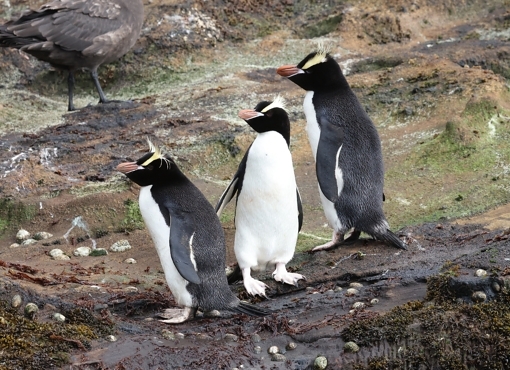
We enjoyed a great introduction to the southern ocean – just enough wind to keep the albatrosses flying and not so much that it was uncomfortable travelling. I often marvel at just how well the Akademik Ioffe handles the ocean – indeed she is so stable at sea that I have often woken up and wondered if we are not back in port tied up. A swift glance out the cabin window soon puts you straight. Birds included Rockhopper and Magellanic Penguins, 2 Wandering Albatross, 10 Southern Royal Albatross, many hundreds of Black-browed Albatross, a single Grey-headed Albatross, Northern and Southern Giant Petrels, scores of Cape Petrels, thousands of Slender-billed Prions, 8 White-chinned Petrels, 10 Great Shearwaters, thousands of Sooty Shearwaters and thousands of Wilson’s Storm Petrels, and 15 or more Grey-backed Storm Petrels, 1 Magellanic and several Common Diving Petrels. It was a great start to the seawatching, and it would be repeated, with variations, on several days to come

Day Six: West Falkland

Sure enough I awoke early and wondered if we were already at anchor – but, no, we were still steaming towards West Point Island, our first destination of the day. However it was with great excitement that I instantly noticed the Commerson’s Dolphins that were keeping pace with us below my window. Quickly gathering the rest of the group by dashing round and knocking on cabin doors we were soon all peering down at them over the ships bows where they were shortly joined by some Peale’s Dolphins and we thrilled to them bow riding for almost an hour, until we were very close to West Point Island. We popped inside for breakfast and soon afterwards were in the zodiacs and heading ashore. Roddy and Lily Napier, the island’s sole inhabitants and owners were there to greet us and offer Land Rover rides across the camp to the Black-browed Albatross and Rockhopper Penguin rookery on the other side of the island. Most of us chose the 40 minute walk instead, made slightly longer by the Striated Caracara that eyed us from close range. We spent an absorbing couple of hours watching the albatrosses with their huge fluffy chicks, the Rockhoppers with their nearly fledged chicks, and the Southern Skuas and Striated Caracaras that were trying in vain to predate. Heading back most of us found time to call in at the farmhous eand enjoy a nice cup of tea and some homemade cakes and scones.. Not that we were hungry – it was just to be hospitable of course! Back on board it was soon time for lunch as we headed to nearby Carcass Island.

We landed on a long white sand beach on a gentle sunny afternoon. At the top of the beach were the endemic small birds that we had specifically come here for. Unlike the Falkland mainland, and several other offshore islands in the group, Carcass Island is rat-free and does it show. From the moment that we got to the top of the beach there were Blackish Cinclodes, Cobb’s Wrens, Black-throated Finches and Austral Thrushes galore. Groups of Magellanic Penguins gathered, whilst others rested outside their nesting burrows. At a nearby pond we saw some Ruddy-headed Geese amongst the Upland Geese and a Paraguayan Snipe astounded us with great views and the photographers were again busy. Many of us chose to walk the mile to the farmhouse, seeing many birds en-route and taking plenty of photographs, whilst others rode by zodiac. Another Falkland welcome awaited us, with more tea and cakes keeping the table firmly fixed in the middle of the dining room, whilst we circulated, sampling and chatting. We headed back to the ship for another great dinner, preceded by drinks at the bar. The usual evening WildWings log-call followed and we headed to bed.

Day Seven East Falkland

Another nearly calm day as we sailed into the Outer Harbour at Port Stanley, and thence via The Narrows to our anchorage just in front of the town. Whilst many of the passengers chose to spend the day in town, shopping, visiting the museum, pubs and Post Office, most of our group decided to head out of town and we took a minibus and set off to see “the camp” (local dialect for countryside). The famous stone runs intrigued us – surely of glacial origin insisted Chris – certainly they are quite unique to the Falklands. Great views of Red-backed Hawks, another Paraguayan Snipe, several White-rumped Sandpipers, Magellanic Oystercatchers and plenty of Black-throated Finches made for a decent birdlist too. Even though we had seen all the Falkland specialities yesterday, indeed it was only the Red-backed Hawks that were new for the trip list, everyone thoroughly enjoyed our excursion. We had kept a few minutes aside to be able to explore the small museum afterwards, and spend a few more minutes in the shops, before we boarded the Ioffe again late afternoon and set sail for South Georgia.

Days Eight & Nine: At Sea

The weather was fair and we again enjoyed many great sightings of seabirds, most notable some Grey Petrels – only the second time that I have seen this species on these trips. Better still were several Southern Right Whales as we approached South Georgia. They were just before dinner but thanks to my announcement most folks got out on deck to see them as they passed by our starboard side, showing distinctive “v-shaped” blows and tail flukes.

Day 10: South Georgia – Elsehul, Welcome Islands & Salisbury Plain

What a day! Starting out early in thick fog we boarded the zodiacs in the mouth of Elshul Fjord and headed in to explore. Thousands of Antarctic Prions were on the water and skimming low over the sea, accompanied by Grey-headed Albatrosses and Cape Petrels. The fog cleared rapidly revealing the cliffs and beaches, King Penguins, Macaroni Penguins, Antarctic Fur Seals, Northern and Southern Giant Petrels squabbling over a dead seal pup in the water, icebergs dotted around the bay… back on board then passing yet more icebergs and dramatic scenery, breakfast, off onto the zodiacs again at the Welcome Islands – fortunate indeed that it is so calm and we get great views of Macaroni Penguins and the only passerine – the endemic South Georgia Pipit, then back on board again, lunch and into the Bay of Isles where we disembarked at Salisbury Plain where the spectacle of the huge King Penguin rookery awaited. Many year old youngsters, almost at fledging – some still in their brown down, others nearly fully moulted, whilst some adults moulted, others were tending eggs or newly fledged chicks.. So much to see.. and photograph.. It was the best day of the trip so far and everyone quite lost for words..

Day 11: South Georgia – Fortuna Bay, Stromness Bay & Grytviken

A very early start for the hikers who went ashore to follow in the footsteps of Shackleton and retrace the last part of his walk into Stromness. The rest of us remained on board and sailed round into Stromness Bay where we saw the whaling station and we picked up the hikers who told us of the magnificent walk they had. Breakfast and we continued by ship to Grytviken where we landed and paid respects to Shackletons grave before exploring the area. Some walked up on high to gain a great view of the bay and whaling station, others hiked over the pass to Myviken, and most of our group headed to Horse Head where we had magnificent views and a picnic lunch. Several South Georgia Pintail were in the pools below us, whilst in the river that flowed from the glacier there were moulting King Penguins with several Elephant Seal wallows nearby. Loud, guttaral noises from the elephant seals punctuated the silence. Back near the landing site we skirted the abandoned whaling station (disused for some forty years) and went to the museum where some of the group were convinced they had found a photograph of me in a former life (as a whaler!) Honestly! On board we dined with many of the temporary residents of this isolated spot, before we bade them good night and set sail eastwards along the island.

Day 12: South Georgia Gold Harbour, Royal Bay & Cooper Island

We awoke surrounded by icebergs and in a howling gale. Well more than a howling gale actually – the wind was hurricane force and the captain had the ship positioned in the lee of a large tabular iceberg whilst the wind tortured the sea and whipped great clouds of mist from its surface. As we admired the scene from the comfort of the bridge, and revelled in the fact that the ship was scarcely rolling or pitching at all, we thrilled to the frequent sightings of Snow Petrels. Landing was out of the question so we headed for the bird rich waters around Cooper Island and marvelled at the sight of so many icebergs due to the exceptional presence of two large pieces of ice shelf just to the north of us. Each large berg was tens of miles long and many across. Combined they were larger than the entire island of South Georgia! The day closed as we headed southwest towards Elephant Island – the northernmost of the South Shetlands. Out in the open sea by nightfall. Adrian was later to declare this day the best of the entire trip – due in main to the Snow Petrels and the incredible iceberg scenery.

Days 13 & 14: At sea

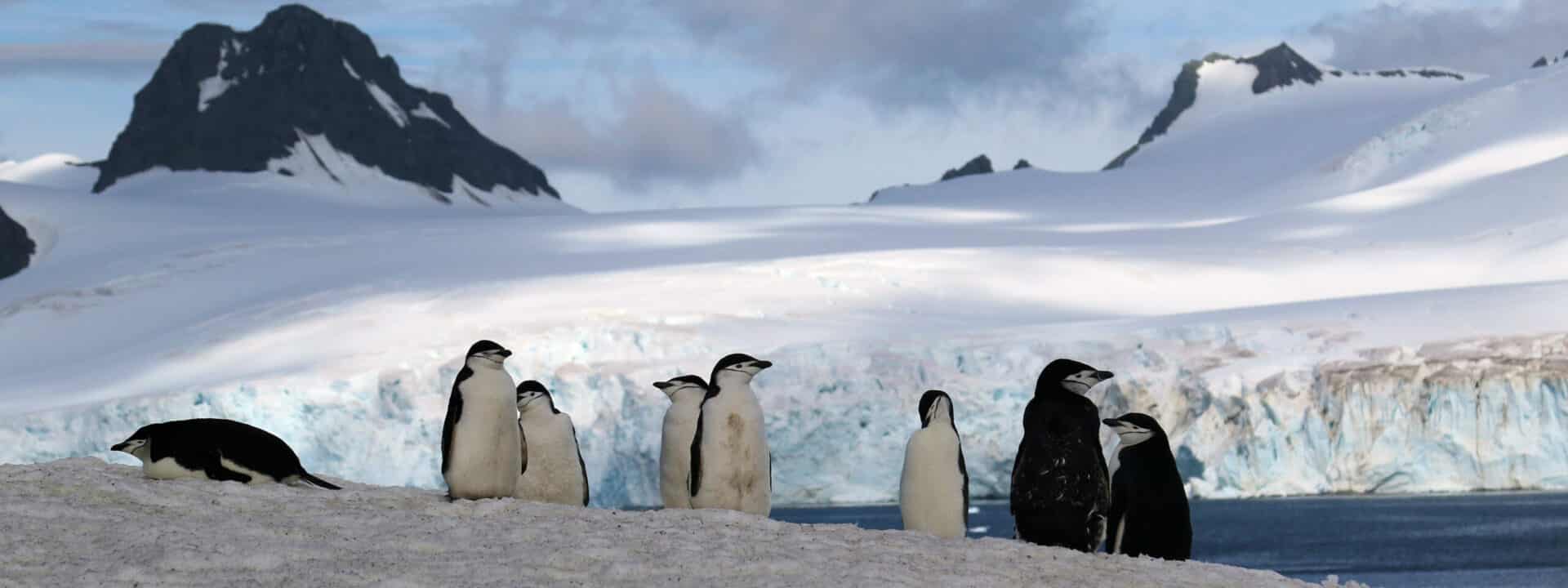
As we headed towards the South Shetland we encountered a gentle sea and frequent icebergs – mostly on our port side where they were drifting in the Weddell Sea gyr, carrying them northeastwards and away from the ice shelves where they had broken from. Plenty of birds including our first Chinstrap Penguins and Antarctic Fulmars

Day 15: Elephant Island

The date was February 14th and by some uncanny coincidence we awoke off Cape Valentine which is the northeast headland of Elephant Island. We sailed along the north shore to Point Wild where the Shackleton Party waited for the Boss to pick them up. Weather was kind and instead of the usual gales the wind was moderate enough to allow us into the zodiacs and we went inshore for a closer look. In the afternoon we sailed for the Antarctic Peninsula.

Day 16: Antarctic Sound: Brown Bluff, Antarctic Peninsula, and Madder Cliffs, Joinville Island

Adelie Penguins were the main feature of today. We awoke in the Antarctic Sound threading our way through multitudes of large tabular icebergs before landing at Brown Bluff. Here the Gentoo and Adelies provided great photo opportunities. Then we crossed the sound to visit Madder Cliffs on Joinville Island. The zodiac crusie before we landed was spectacular with great atmospheric views of three Adelies on a blue iceberg.


Day 17: Half Moon Island, and Deception Island
Morning saw us at Half Moon island and we were soon ashore enjoying the Chinstrap Penguin rookery. Antarctic Shags with youngsters provided extra enjoyment, as well as nesting Antarctic terns and Kelp Gulls. Afterwards we sailed for Deception island, pausing to enjoy several Humpback Whales en-route. After lunch we landed at Whalers Bay and visited the abandoned whaling station as well as walking up to Neptunes Bellows to enjoy the view. As we left we passed more Humpback Whales.


Days 18 Gerlache Strait, Cuverville Island, Wilhemina Bay

In the morning we were close to the Antarctic Peninsula again, and Humpback Whales seemed to be everywhere. We headed for Cuverville Island where we landed on the freshly snow covered beach after a terrific zodiac cruise that had us first near to a Humpback Whale briefly, then lingering close to a Leopard Seal on an ice floe that I thought was going to be the most photographed mammal of the trip – and it probably was as we spent half an hour with it. The Gentoo Penguins on shore had plenty of small chicks and it was great to watch them being fed, whilst the backdrops of the mountains were breathtaking in the sun. We had a barbecue lunch on deck before a great afternoon at Wilhemina Bay with more Gentoo and Chinstrap Penguins as well as three Crabeater Seals on ice floes, a couple of Antarctic Minke Whales and some great views of Humpback Whales from the zodiacs.


Day 19: Paradise Harbour and Neko Harbour.

Cruising into Paradise Harbour on an idyllic glassy calm morning is dreamlike and so it was. Getting into the zodiacs we went ashore and climbed a low hill for a better view of the bay. Below we could see Antarctic Minke Whales cruising beneath the mirror calm water, and so, after taking a few photos, and for some a toboggan-like slide down the hill, we got back into the zodiacs and went for an explore. Soon the Antarctic Minke Whales were right next to us, with one right under the side of the zodiac looking up at us from just a few feet as it swam by. Sheer magic! As we cruised amongst the ice a South Polar Skua came and harassed us, and we saw many more Crabeater Seals hauled out on the floes, before we lingered near the ice cliff of a mighty glacier. Back on board we thrilled to the three Antarctic Minke Whales which by now were toying with the wake of the zodiacs that were still in the water waiting to be lifted back onboard. At lunchtime we cruised past the sister ship of the Akademik Ioffe, the Akademik Sergei Vavilov, before we made our way towards Neko Harbour on yet more mirror-like seas. Several Antarctic Minke Whales swam in front of us and a delighted crowd gathered on the bows to watch them swim just yards away. At Neko we took a zodiac cruise whilst some others chose to land or do both. Several seals were on the ice floes, but fittingly enough for our last Antarctic excursion of the voyage, a Snow Petrel wheeled over our zodiac – bidding us farewell. Back on board we cruised up the Gerlache Strait and the WildWings group gathered on the foredeck and enjoyed a celebratory party. Several Antarctic Minke Whales and Humpback Whales joined in, and sunset lit the mountains a glowing pink. Passing the Melchior Islands at sunset as we headed for the open sea, there were thousands of Antarctic Fulmars gathered on the sea.

Days 20 & 21: Drake Passage

The famed Drake Passage, but those wishing for a rough crossing were to be disappointed (as is often the case!) and it wasn’t until we approached Cape Horn that the seas turned at all choppy. Apart from the numerous seabirds – by now familiar friends, one of the highlights of the crossing was a sizeable school of about 50 Long-finned Pilot Whales that lingered long enough for almost everyone to enjoy at leisure.


Day 22: Ushuaia

Having warned our guide on the way down that we may be interested in returning to the National Park, he had tried to contact the ship but failed, so he turned up anyway and the whole group opted to go with him. Good choice as we saw Magellanic Woodpecker and Andean Condor, as well as Rufous-chested Dotterel and many other species!


Day 23: Buenos Aires

Everyone opted to go back to Costanera Sur for a mornings birding, so after breakfast at 7am we took taxis and headed down to the reserve where we had an excellent morning birding, extended as I had been able to arrange a late checkout for 1pm. Highlights included Brazilian Duck, great views of Roseate Spoonbills and several waders including Pectoral Sandpiper, Lesser Yellowlegs and Collared Plover. Later we set off for the airport as the trip was now drawing to a close.


Day 24 Arrival back home home to the UK – finally time to relax and look over the pictures and savour the memories of another wonderful trip.

| home | introduction | news | late availability | media resources | brochure request | booking form & conditions | contact us |
WildWings, 577 Fishponds Road, Fishponds, Bristol. BS16 3AF.UK
| Tel: 0117 9658 333 | Fax: 0117 9375681 | Email: wildinfo@wildwings.co.uk |