WildWings, 577 Fishponds Road, Fishponds, Bristol. BS16 3AF.UK
| Tel: 0117 9658 333 | Fax: 0117 9375 681 | Email: wildinfo@wildwings.co.uk |

WildWings group departure report by Christine Skinner and Jim Glover


Monday 2nd November: Costenera Sur, Buenos Aires

It had taken us over 24 hours to get to Buenos Aires from Heathrow, only to discover that Costenera Sur Ecological Reserve was closed on Mondays. And we were in the thick of a thunderstorm, with gale force winds. There was however, a very handy promenade and parapet wall running along the length of the Reserve. This gave us a good vantage point, so when wind and rain allowed, we set up our telescopes. Beneath us, hundreds of frogs/toads were singing in the rain – most of them looked like our Natterjacks, only larger, with a yellow line down their backs, and we guessed that this was spawning time. In the deeper water, Red-gartered, White-winged and Red-fronted Coots were swimming with Brown Pintails and a pair of Cascoroba Swans. Most of the water was covered with emergent vegetation but careful scanning revealed White-faced Tree-ducks, Speckled and Cinnamon Teal, Brasilian Ducks and Rosy-billed Pochards. Monk Parakeets made almost as much noise as the Guira Cuckoos and we watched a pair of Rufous Horneros coming and going from their mud-oven nest on top of a street lamp. Yellow-winged Blackbirds sang from the reeds, with Shiny Cowbirds in close attendance. By the end of the day, we had seen 47 bird species from the parapet wall and looked forward to actually entering the Reserve the next day.


Tuesday 3rd November: Costenera Sur, Buenos Aires

A bright sunny day. Joggers pounded the tracks, but that didn’t stop Glittering Emerald and Gilded Sapphire Hummingbirds feeding from shrubs that lined the path, or prevent a male Spectacled Tyrant and a Solitary Cacique joining European Starlings in their search for grubs in the short grass. A Crested Caracara obligingly perched on an aerial, a Bay-winged Hawk soared overhead and a Giant Wood-rail crossed our path. We were disappointed to discover that most of the lagoons were largely overgrown, with very little open water. Ducks, herons and even egrets were hard to see through the scrub and the only hide we found (or had it been a viewpoint?) had either been partially dismantled, or simply allowed to collapse. This was frustrating; for we felt that our birdwatching was not as good as it could have been, judging by the trip reports we had read. We managed however to find another 24 bird species to add to our list and as evening approached, enjoyed watching the Cavies (Guinea Pigs) emerging from their runs to graze by the sides of the path. No wonder the grass was so short.


Wednesday 4th November: Ushuaia

We dropped through the cloud around lunchtime to see the Beagle Channel lined with snow-capped mountains as far as the eye could see. Ashy-headed Geese were grazing by the side of the airport road, Dolphin and Kelp Gulls flew overhead and Magellanic Oystercatchers probed for food in roadside pools. We picked up a hired car and drove east, looking down on the sea. Chiloe Wigeon and Crested Ducks were feeding in the shallows and both Magellanic Flightless and Flying Steamer-ducks rested on a sand bank. Chimango Caracaras appeared slender and graceful, compared to the Chilean Skuas that loafed on the sand. To our left, the Martial Range, tail end of the Andes – wow! Snowy peaks vied for our attention with forested slopes and braided rivers. We didn’t know which way to look.


Our drive took us out towards the Garibaldi Pass, but not quite, for we spent some time watching the introduced American Beavers replenishing their dams. Drowned trees, Beaver-sharpened stumps and felled trunks filled the landscape. Austral Thrushes flew among the tangle of dead wood and Rufous-backed Negritos and Dark-faced Ground Tyrants perched on it. The Rufous-collared sparrows looked different here from the ones we had seen in Costanera Sur; this was the southern race. Time to return, but on our way back we spotted a White-throated Caracara walking on a roadside pasture, presumably searching for invertebrates.


Thursday 5th November: Ushuaia

This morning we took a boat trip along the Beagle Channel. There appeared to be a constant stream of Black-browed Albatrosses, Southern Fulmars and Giant Petrels, although it was difficult to determine which species from the boat. We saw a few White-chinned Petrels and some Olivaceous Cormorants, but many more Imperial Shags. We were rewarded with splendid views of a mixed colony of South American Sea Lions and South American Fur Seals on top of some steep rocks in the middle of the Channel. It seemed strange to watch them whilst the snow fell, but presumably they were used to it. A nearby colony of Rock Shags occupied another islet and we were able to compare them with the Imperial Shags that were nesting nearby. Later, we drew up to a gravelly beach and watched Magellenic Penguins coming and going, the water so clear that we could see them fly through it as they circled the boat.


In the afternoon, we returned to the airport road. A Rufous-chested Dotterel and a White-rumped Sandpiper joined a pair of Ashy-headed Geese at the pools and a Red-backed Hawk was plucking a bird on top of a street lamp, apparently oblivious of our car parked beneath. We explored west of the town, driving as far as the entrance to Tierra del Fuego National Park. Magellanic and Blackish Oystercatchers were roosting at the Channel’s edge, together with both kinds of Steamer-ducks, Crested Ducks and Chiloe Wigeon. A Black-faced Ibis was looking for food in the wet grass and we saw another Rufous-chested Dotterel. South American Terns joined the Kelp and Dolphin Gulls to roost on the gravelly shore. Long-tailed Meadowlarks flew over the grassland, passing Dark-faced Ground-tyrants. Austral Thrushes and Blackbirds fed on the verges by the side of the Fuegean forest, which here was fast-disappearing under housing plots.


Friday 6th November: Tierra del Fuego National Park

We joined the “Wildwings Group” – Brian & Eileen from California, John & Diane from Manchester and Kevin from Ipswich - for an excellent day’s birding in the scenic (and very snowy!) Tierra del Fuego National Park. Our guide, Esteban Daniels, had perfect English, so we learnt a lot about the ecology of the Park, in addition to seeing an excellent range of birds, including a magnificent Andean Condor, a flock of Austral Parakeets, White-throated Treerunners and extensive and close views of an obliging male Magellanic Woodpecker. Mammals were also seen: a Colpeo Fox trotted by as we watched a pair of Great Grebes; European Rabbits had excavated their burrows from ancient seashell mounds left by the local Yahgan people (now sadly extinct) and evidence of the introduced American Beaver was found along every watercourse.


We then boarded our ship, the Akademik Sergey Vavilov, in the Port of Ushuaia and sailed at 6:00pm. Crested Ducks, Chiloe Wigeons and Flightless Steamer-ducks were seen at the water’s edge, along with Magellanic and Blackish Oystercatchers. Ashy-headed, Kelp and Upland Geese grazed unconcernedly as we sailed by, with an escort of Kelp and Dolphin Gulls. The Beagle Channel seemed to be full of Southern Fulmars and Giant Petrels (Northern and Southern) and by the end of the day we had seen over 150 Black-browed Albatrosses. Small fishing parties of Magellanic Penguins swam by the ship and solitary South American Fur Seals were seen; bobbing like corks or tumble-diving back to the depths.


Saturday 7th November: At Sea to the Falklands

This was a “Sea Day”- we were en route to the Falklands and by 5:30 am we were up on deck watching for anything that moved. Brian soon joined us, ‘scope at the ready and we were rewarded with the amazing spectacle of over 2,000 Sooty Shearwaters streaming along the coast behind us - before breakfast! A full programme of briefings, talks and workshops had been provided for us, but after the obligatory briefings we opted to stay on deck, scanning the sea and the sky. We were fortunate that Tony Crocker, the Expedition Naturalist, was also on hand to provide another pair of eyes and point us in the right direction.


Kevin joined us and our vigilance was rewarded; seabirds were everywhere. We quickly got to grips with White-chinned Petrels and we saw hundreds of Wilson’s Storm Petrels, but what were those grey birds that shot by with the twisting, flickering flight? Prions! But which species? Viewing from the stern, where many seabirds tend to fly more slowly, enabled us to take a longer look – they were Slender-billed. Cape Petrels were much easier to identify, for they were slower in flight, distinctively marked and never left us – we saw over 500 on that day. 


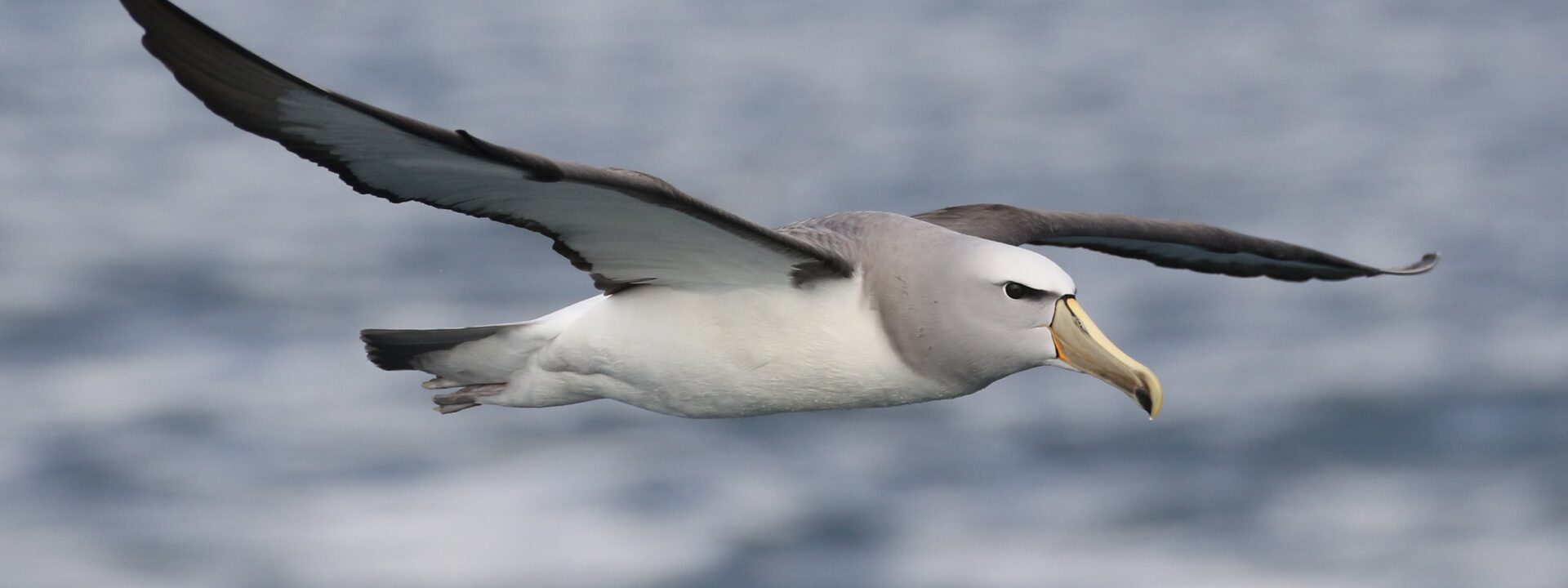
We saw our first Black-bellied Storm Petrel of the trip and then there were those icons of the Southern Ocean – Albatrosses. Grey-headeds joined the 500+ Black-broweds that swung past us, but both species were eclipsed by the giants – we saw Northern and Southern Royals and six Wandering Albatrosses glided past the ship, often in stately loops which took them out and back again around us. We were fortunate in having Graham Roberts, the internationally-renowned Albatross researcher, on board, and looked forward to discussing the birds we had seen with him. Brett Jarrett, wildlife artist and illustrator of Hadoram Shirihai’s excellent book The Complete Guide to Antarctic Wildlife, was also with us, busily sketching and taking reference photographs of these magnificent birds. Three Peale’s Dolphins were seen and we found two long-finned Pilot Whales some way off, the only mammals on a day full of birds.


Monday 8th November: West Point and Carcass Islands

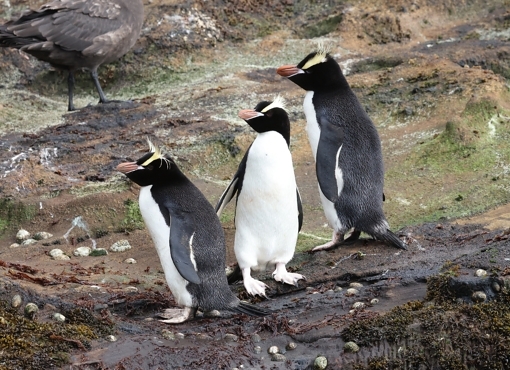
Monday dawned and there was Brian, first on deck and first on watch. Imperial Shags flew by in lines and our first Common Diving Petrel of the trip whirred by, apparently crashing full tilt into the waves. We were heading for West Point Island, which lies off the most north-westerly point of West Falkland. Here we were able to creep up to a mixed colony of Black-browed Albatrosses and Rockhopper Penguins and watch them from the shelter of the Tussac Grass. The grace and elegance of the Albatrosses, as they dropped in to greet partners and replenish their pedestal nests, offered a marked contrast to the determined stoicism of the stocky Rockhoppers that climbed the slopes to get to their nests – theirs was a long and laborious walk from the sea. Still, handsome is as handsome does, and many photographs of both species were taken that morning.


Over lunch we sailed further north and west and landed on Carcass Island in the afternoon. The white beach and turquoise water would have done justice to the tropics - but there were Penguins and Sheathbills on the shore. A short walk inland brought us to a Gentoo colony: this was the beginning of the breeding season and pairs were in the throes of nest building. Magellanic Penguins were also nearby, standing by their burrows. Ruddy-headed and Upland Geese roamed over the short turf; Turkey Vultures and a Red-backed Hawk soared overhead. Skuas (Chilean and Antarctic) were never far away. Carcass Island is rat-free and small birds are thus able to thrive; good views were had of Black-throated Finches, Dark-faced Ground Tyrants and Long-tailed Meadowlarks, with their vibrant crimson breasts. Blackish Cinclodes, also known as “Tussac Birds”, were at our feet, Austral Thrushes were abundant and Black-chinned Siskins were spotted in the trees surrounding the settlement.  A splendid afternoon tea, with abundant cakes and buns, awaited us there. What could be better than to bask in the sun in the sheltered garden, attended by a Striated Caracara screeching for crumbs?


Tuesday 9th November: Steeple Jason

Eighty per cent of the World’s Black-browed Albatrosses breed on the Falklands and we sailed towards the largest colony, which lies on Steeple Jason. This rocky islet is further north and west of Carcass Island. Few ships visit, for the sea is often too rough to allow a closer look. Today we are lucky and actually set foot on this magical place. Swarms of Albatrosses fly high above sitting birds and from a distance, their close-packed bodies resemble a high tide-line; we were told that approximately 113,000 pairs of Black-browed Albatrosses nest here in a mass that stretches around the lower slopes for over three miles. Approximately 65,000 Rockhopper Penguins and Imperial Shags were also nesting, against a dramatic backdrop of surf and spray and we watch entranced for the whole morning. Correndera Pipits are nesting in the Tussac Grass and Falkland Thrushes fed on the shorter turf. Striated Caracaras are in abundance and at last we get to grips with Cobb’s Wren.


We return to the zodiacs, passing nesting Falkland Skuas and Gentoo and Magellanic Penguins. We watch Falkland Flightless Steamer-ducks in the surf, with Flying Steamer-ducks nearby, providing a handy comparison. Back on board, we set off for Port Stanley, and are lucky enough to see both Peale’s and Commerson’s dolphins on the way, with distant views of a probable Fin Whale. By the end of the day we had seen hundreds of Common Diving Petrels and an estimated three thousand Slender-billed Prions.


Wednesday 10th November: Port Stanley

We arrived in Port Stanley, climbed into local buses and sett off for Gypsy Cove. Access to the beautiful beach was forbidden, for land mines were still there, following the 1982 conflict. No such rules applied to the birds, and we watched Two-banded Plovers run along the sand, followed by a Rufous-chested Dotterel. A flock of 30 Brown-hooded Gulls joined some Kelp Gulls and further along the path, we looked down on cliff-nesting Rock Shags and Night Herons. The wind strengthened, the sun disappeared and we walked back to Port Stanley in the teeth of a blizzard. By the time we reached the outskirts of the town, the sun was shining again and we were able to watch a grass wren investigating some roadside vegetation. Magellanic Oystercatchers fed along the grass verge by the side of the bay and Blackish Oystercatchers roosted on rocks at the water’s edge.


The afternoon was spent in Stanley, and we returned to the ship, to head for Bleaker Island. Peale’s and Commerson’s Dolphins were again seen en route, and we had our first sighting of an Antarctic Minke Whale.


Thursday 11th November: Bleaker Island

Bleaker Island lies off the southeast coast of East Falkland. Another white sandy beach greeted us, with hundreds of South American Terns, Dolphin and Kelp Gulls forming a noisy welcoming committee.


We left the beach and walked across the turf to the Big Pond, a lagoon on the other side of the island that provided excellent views of Silvery and White-Tufted Grebes. A Silver Teal flashed by without landing, but we spotted two pairs of Black-Necked Swans swimming in the bay and a closer approach revealed four cygnets perched on one of the bird’s backs.  Another walk across the turf took us to the site of a former Imperial shag colony. Just why the birds had abandoned these nests was a mystery, but their absence enabled us to see how regularly-spaced their nests were; each being just out of peck-range from the next.  The birds were still there, however – they had just moved round the corner and we were enthralled by the sights and sounds of 9,000 pairs of Imperial Shags busily nest-building, mating and incubating their eggs, closely attended by Snowy Sheathbills and egg-thieving Southern (Falklands) Skuas.  


We turned back towards the beach, passing a Rockhopper Penguin colony situated on the top of a cliff.  Approximately 750 pairs were nesting here, with a colony of Rock Shags nesting on the cliff-face below; another opportunity for close views and portrait shots.


We eventually returned to the beach and the Zodiacs, to discover a pair of South American Sea Lions hauled out on the rocks. This was likely to be the last chance we would have of seeing this species, and Shelli, our Zodiac driver, obligingly made several passes in front of the rocks to ensure that we were all able to get good views.  

We hoped to visit Sea Lion Island after Bleaker, but the wind and waves were against us, so we headed for the open sea. Once again sea-watching proved productive; we were rewarded with our first Blue Petrel of the trip and our only views of Grey-backed Petrels, about 50 in total. Wandering, Southern and Northern Royal and Black-browed Albatrosses were also seen. A few Commerson’s Dolphins swam to meet us and more than 50 Peale’s Dolphins were recorded by the end of the day. Others saw Hourglass Dolphins further away from land and another probable Fin Whale was seen in the distance.


Thursday 12th November: At Sea to South Georgia

A “Sea Day”, full of possibilities. The “usual suspects” put on a fine display: Ten Wandering Albatrosses; Southern and Northern Royals, plus Black-browed and Grey-headed; lots of Cape and Wilson’s Petrels; Northern and Southern Giant Petrels; Southern Fumars; White-chinned and Common Diving Petrels. New species were added to our list: we saw seven Light-Mantled Sooty Albatrosses, two of which were performing their elegant parallel courtship flight, and our first Antarctic Petrel of the trip. We also saw our only Atlantic Petrels (2) and our first Kerguelen Petrel. Antarctic Prions gradually replaced the Slender-billed Prions that we had become accustomed to, and Black-bellied Petrels were regularly seen throughout the day. A winter-plumaged Arctic Tern made us marvel at the effort required to fly from Pole to Pole and back again each year, and to wonder why it did so. I finally got good views of three Hourglass Dolphins and we had a distant view of a probable Humpback Whale.


Our Expedition Leader, Dave “Woody” Wood, gave us a briefing on South Georgia, which served to remind us of the fragility of this unique habitat and to whet our appetites for the wildlife encounters to come.


Friday 13th November: At Sea to South Georgia

Another exciting sea day, which revealed the first iceberg of the trip – a massive tabular berg that had probably calved from an ice shelf in the Weddell Sea. Banks of mist came rolling in, heralding our approach to the Antarctic Convergence. The numbers of birds seen indicated that these waters were teeming with life. Our very first King Penguins were spotted, hunting for fish, and hundreds of Blue Petrels and Antarctic Prions flew around us, the Prions picking krill from the surface of the water with their beaks. Kerguelen Petrels towered above us, circling like Peregrines, and we saw around ten Wandering Albatrosses, hundreds of Black-browed Albatrosses, some 20 or so Grey-headed and approximately ten Light-mantled Sooties.  A mature male Risso’s Dolphin, accompanied by a smaller, darker individual, swam close to the ship, indicating that the edge of the convergence was further South than in previous years, for this species usually favours more Northern waters.


By five o’clock, we could see land. We were heading for King Haakon Bay, on the western end of the south coast of South Georgia.


Saturday 14th November: King Haakon Bay

The sea charts for this area are largely theoretical, so some of the crew led the way in a tender, literally plumbing the depths to ensure that our approach to Pegotty Bluff would be clear. Flurries of snow obscured the view, but we managed to see a Snow Petrel as it flew past the ship. By the time we landed, the snow had stopped and the sun shone. We saw our first South Georgia Pintails, and found Southern Elephant and Antarctic Fur seals – all competed with the stunning scenery for our attention as we wandered along the beach, trying to maintain the regulation 5-metre distance from the abundant and amazing wildlife. This proved difficult; curious King Penguins walked towards us and our attempts to give male Fur Seals a wide berth sometimes resulted in near collisions with sleeping Elephant Seals, looking like large rocks on the pebble-strewn shore. Giant Petrels were clustered around the carcass of an Elephant Seal pup and their extravagant posturing provided compulsive viewing: with tails cocked, wings drooped and heads slowly wagging from side to side, they resembled a cross between a Dodo and a Vulture. They were making short work of the pup, and their blood-covered heads made a gory sight. We were not the only ones that were impressed, for Brown Skuas also kept a respectable distance.


We returned to the Vavilov and cruised past Cave Cove, leaving King Haakon Bay to travel around the western tip of South Georgia en route to the Bay of Isles. An estimated 22 million pairs of Antarctic Prions nest on South Georgia, and we saw thousands of them at sea. Hundreds of Blue and White-chinned Petrels flew by, plus a minimum of fifty Light-mantled Sooty Albatrosses and our very first South Georgia Shags. Diving Petrels were also numerous; Some of these must have been South Georgian, but Common Diving Petrels also breed here and therefore couldn’t be ruled out, it being impossible to distinguish between them at sea.


Sunday 15th November: Salisbury Plain and Prion Island.

Another Snow Petrel flew past the ship as we approached Salisbury Plain, indicating that this was to be a day of quality, as well as quantity, for up to 250,000 King Penguins have been recorded here, on the southern shore of the Bay of Isles. We were early in the season, so they were relatively thin on the ground (our guides estimated that numbers were down by 60% on previous years), yet thousands of them covered the gravelly Plain, spreading up snow-covered slopes like tourists at a popular ski resort. Super-fluffy chicks crowded together, forming chestnut-coloured shag-pile islands in a sea of black, white and orange. Penguins were everywhere, coming and going, preening, moulting or feeding chicks. The noise was amazing; the raucous braying displays of the adults punctuated by the chicks’ piercing whistles, yet some of the adults actually slept. Southern Elephant Seals were here; the Beachmasters roared, other males belched back, females snorted and pups and weaners bleated. Male Antarctic Fur Seals challenged each other with high-pitched “oof oofs”. This was a time to stand and stare, to watch and wonder, and we came away entranced by the intensity of the experience and the assault on our senses.    


Wandering Albatrosses breed on rat-free Prion Island, which lies close to Salisbury Plain, and we were fortunately able to land there after lunch. A boardwalk leading to a couple of viewing platforms had been constructed to minimise human impact on the island, for as the name suggests, Antarctic Prions also nest here, in burrows underneath the Tussac Grass. An Antarctic Fur Seal was on the boardwalk when we arrived and it took some effort and a lot of patience to encourage him to step aside. That being done, we accessed the higher platform and gained excellent views of Wandering Albatross chicks, waiting on their nests to be fed. An adult visited the nearest chick whilst we were there, providing even better bird watching.  We were told that Wandering Albatrosses routinely fly to the seas off Brazil in search of food for their chicks; this adult could have made a round journey of 5,000 miles and taken eight days to do so. Both chick and adult unfolded and extended their wings; seeing them outstretched over the Tussac gave us a better understanding of their record-breaking length than any view at sea. (It was only later that we learnt that Southern Royals have even longer wing spans)  Other adult Wanderers were seen from the platforms, their nests and young largely hidden from view by the Tussac. South Georgia Pipits were abundant, with up to 20 individuals singing from or flying over the grass. On our return, a dead Antarctic Prion was found by the side of the boardwalk, offering an opportunity to marvel at the subtle plumage and the intricate construction of its beak.  We encountered young Elephant Seals as we neared the beach, also sheltering in the Tussac; clearly this was an important plant for a wide range of Antarctic wildlife.


Monday 16th November: Fortuna Bay, Stromness and Prince Olav Harbour, South Georgia.

A pre-breakfast trip in the zodiacs to Fortuna Bay. Many groups have tried to land here and failed, but today we are lucky. Once more we watch huge Beachmasters jealously guarding their females, whilst King Penguins congregated in thousands on the black sandy beach, walking between the massive beasts on their way to and from the sea. We are fortunate that the breeding season has not yet started for Fur Seals, so there is space enough for us to pass by without incurring a challenge. Reindeer graze the mossy slopes, descendants of the seven that were released at Husvik in 1925.


After breakfast, we were to attempt part of the route taken by Shackleton from Fortuna Bay up and over the pass to Stromness, but the snow was far too deep for us. Instead, we take the easy way round, in the Vavilov, passing the old Whaling Station at Leith Harbour and landing at Stromness Bay. Stromness was also a whaling station; the decaying structures a grim testament to the greed that killed so many of the whales that swam in these seas. The derelict station has since been reclaimed by wildlife; Gentoo Penguins appeared oblivious of their surroundings and I watched them eating snow against a backdrop of rust and ruin, presumably to quench their thirst. Some of us set off to find the end of Shackleton’s epic walk, whilst others went in search of pictures.  


The weather closed in and the wind was against us in the afternoon, so we retraced our route westwards and headed for Possession Bay, spotting our first Macaroni Penguins, porpoising past the ship. The sun was shining by the time we arrived, and we were able to embark in the zodiacs for a cruise around Prince Olav Harbour. This sheltered spot was the site of yet another whaling station, but it was gratifying to note how vegetation was gradually concealing the scars of such a barbaric industry. Grass covered much of the station and grew over the wreck of the Brutus; shags and terns were perched on the spars, and a Fur Seal slept on what remained of the deck.


Tuesday 17th November: Grytviken, South Georgia.

We sailed southwest for Cumberland Bay during the night and by morning had moored in King Edward Cove, a peaceful anchorage encircled by spectacular snow-covered mountains. A short zodiac trip brought us to Grytviken, home of Shackleton’s grave, and we congregated by the imposing memorial to drink a toast to “The Boss”. The rest of the morning was spent in exploring the bay, with its derelict whaling station, fascinating museum and restored Norwegian church. Elephant Seals slept surrounded by wreckage, Antarctic Terns fished in the bay and South Georgia Pintails dabbled in the shallows.


After lunch, we climbed the snowy slopes in search of Light-mantled Sooty Albatrosses. They used to nest on the cliff ledges that faced us, but had not been seen for a while – had they left the area for good? Elephant Seals rolled in the surf far below us and both King and Gentoo Penguins patrolled the beach. Giant Petrels flew by. Just as we were beginning to lose heart, a Light-mantled Sooty flew beneath our feet and disappeared around a corner, to be followed by another. It started snowing heavily and we were on the point of leaving our exposed position, when someone spotted movement on one of the ledges. Telescopes revealed two birds sitting on pedestal nests, approximately one metre apart from each other. Their plumage blended perfectly with the grey rocky background, but their white eye-rings gave the game away. Another two sitting birds were found on a neighbouring ledge and as we turned to leave, we realised that a fifth bird had been sitting on a nest directly below us. The Sooties were back, and we had excellent views of them.   


Wednesday 18th November: St Andrews Bay, South Georgia.

South Georgia’s largest King Penguin rookery is located on the shores of St Andrews Bay (150,000 breeding pairs in 2002), and the beach supports one of the largest breeding colonies of Elephant Seals on the island, with over 6,000 breeding females recorded. We boarded the Zodiacs with high expectations, which were soon realised. This was like Salisbury Plain, only more so. An easy landing brought us face to face with an estimated 200,000 King Penguins and so many Elephant Seals we forgot to count them. Reindeer grazed the higher slopes at the back of the beach and Bull Fur Seals had staked out their territories, waiting for the females to arrive. All this wildlife at our feet and we could walk amongst it.  We were privileged to be able to do so and we spent the morning in a happy state of awe and respect, mixed with a certain amount of humility, as we explored this fabulous place.  


The weather worsened as the morning advanced, making heavy going of our return to the Vavilov.  In search of calmer waters, we sailed south-eastwards out of St Andrews Bay, around the point and into Royal Bay. Here the seas were still against us, so we continued southeast, sailing round Cape Charlotte and headed for Gold Harbour. The windy weather made excellent sea-watching and we saw over a thousand White-chinned Petrels. Black-browed and Light-mantled Sooty Albatrosses rode the wind with graceful ease, along with Cape Petrels and Antarctic Prions. Black-bellied and Wilson’s Storm Petrels flew low over the waves and once again we were delighted to watch Common Diving Petrels whizz by, to crash into the waves.  


Thursday 19th November: Cumberland Bay East, South Georgia

The strong easterly wind resulted in a swell too high for Zodiac use, so we left Gold Harbour and sailed northwest once more, to return to the shelter of Cumberland Bay. Here the scenic Eastern arm of the Bay protected us from the wind and after lunch we were able to stretch our legs to explore the shoreline at Coral Cove. Here we found yet more Fur and Elephant Seals, King Penguins and Reindeer, Antarctic Terns and South Georgia Pintails. We rejoined the ship and cruised to the head of the bay, with its spectacular views of the Nordenskjold Glacier tumbling down to the sea. As the day drew to a close, we left the glacier and anchored in the bay, to meet on the stern deck for a barbeque. Fortified by copious amounts of mulled wine, we then made our way out of Cumberland Bay and headed for Cooper Bay, at the south-eastern tip of South Georgia. Once again, strong winds provided good sea watching and we added Grey-headed Albatross and three Humpbacked Whales to our list.


Friday 20th November: Cooper Bay, Larsen Harbour and Drygalski Fjord

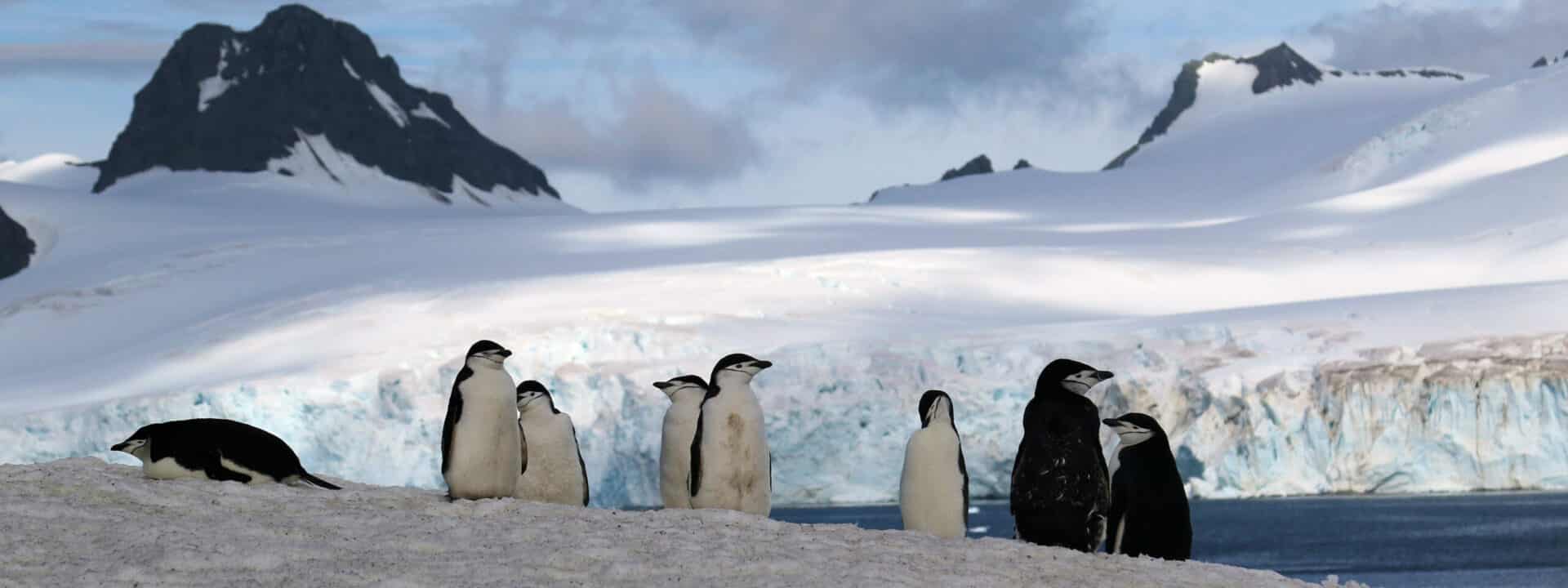
This morning we cruised in the Zodiacs past the largest Chinstrap Penguin colony on South Georgia, with over 10,000 breeding pairs recorded. As if this wasn’t enough, we then cruised past a huge Macaroni colony. Both colonies were on exposed rocks high above the sea and we marvelled at the determined attempts of the birds to visit their nests and return, for the slopes were very steep and there was a long way to go. All this was in brilliant sunshine – perfect for photography, despite the swell.


After lunch, we sailed westwards from Cooper Bay to scenic Larsen Harbour, a narrow, steep-sided inlet in the mouth of the Drygalski Fjord. As we left the ship, high peaks towered above our Zodiacs and the sea was so calm and clear we could see fronds of kelp waving to and fro beneath us. Sheets of icicles glistened in the sun, hanging like curtains over fissures in the rocks. We watched Weddell Seals hauled up at the water’s edge – this species normally nests on ice and this is the only ice-free colony in the world. Further on, the sound of fighting Fur Seals attracted our attention; one of the males is a creamy-beige colour. This is a “honey-blond morph”, and as only 1% of the population are this colour, we consider ourselves very lucky to have seen it.


On returning to the Vavilov, we venture further into Drygalski Fijord, as far as the ice will let us. As we near the Risting Glacier, Snowy Sheathbills and Antarctic Terns fly above us, and at last we see a Snow Petrel. Eventually it is time for us to retrace our track through the cracking pack ice; a solitary group of four King Penguins at the end of the fjord appearing to watch us as we leave.


Saturday 21st November: At Sea to Antarctica

We love Sea Days – anything could turn up, as long as weather conditions allowed us to see it. A misty morning made watching difficult, but we managed to add an amazing 20 Kerguelen’s Petrels and a Soft-plumaged Petrel to our list. We saw our last Common Diving Petrels of the trip and the female Elephant Seal we spotted bottling in the waves was also to be our last sighting of the species. Cetaceans seen included an Hourglass Dolphin, two Fin Whales and a Humpback.


Sunday 22nd November: At Sea to Antarctica

Eight Snowy Sheathbills settled on the ship for a while, probably hitching a lift to Antarctica. 25 Antarctic Petrels circled the ship and a Grey-headed Albatross joined the five Light-mantled Sooties and c.20 Black-broweds that followed in our wake and occasionally overtook us. Wilson’s and Black-bellied Storm Petrels were seen throughout the day, as were Antarctic Prions and another Kerguelen Petrel was spotted. A family group of 4-6 Southern Bottlenose Whales surfaced alongside the ship, offering close views to those lucky enough to be looking in the right direction. Two Hourglass Dolphins and a minimum of three Fin Whales were also seen by the end of the day.   


Monday 23rd November: Point Wild, Elephant Island.

The Vavilov pushed slowly through the ice up close to Elephant Island in an icy sea, the snowy weather too rough for a Zodiac landing. We could just make out Historic Point Wild, where Shackleton and his crew landed after the Endurance sank in the Weddell Sea, as it loomed out of the mist as we slowly passed by. Although we couldn’t see much of Elephant Island, we had good views of some of the birds that nested there: Cape Petrels (although we had seen these lovely birds on virtually every day of our trip), Southern Fulmars, Brown (Subantarctic) Skuas, Wilson’s and Black-bellied Storm Petrels. We passed a group of Chinstrap Penguins, standing on a floe and later saw our first Adelie Penguin, standing on a small berg.


We continued southwest and entered the Bransfield Strait, en route for Deception Island, at the western end of the South Shetland Archipelago. The Antarctic Petrels were still with us, as were Black-browed and Light-mantled Sooty Albatrosses, Antarctic Prions and Southern Giant Petrels. A South Polar Skua also made an appearance and by the end of the day we had seen a minimum of 50 Fin Whales.


Tuesday 24th November: Whaler’s Bay and Baily Head, Deception Island Deception Island is named after its crater lake, accessed via a narrow passage through the crater wall known as Neptune’s Bellows. The lake provided shelter from everything except volcanic eruptions and was used as a well-hidden harbour by early sealers and whalers. The Vavilov took us through the Bellows to Whaler’s Bay, site of yet another derelict whaling station, and we were able to explore the black cindery beach. Two 19th century wooden water boats were slowly decaying here; their cargo of water barrels nearby now a jumble of staves and hoops used by Antarctic Terns as a nesting ground. Cooked Krill littered the water’s edge, for the water here is too hot for these prawn-like creatures. Some of the most foolhardy of our group decide it is warm enough to take a Polar Plunge, whilst we climbed up to the viewpoint known as Neptune’s Window.  Here we watched Cape Petrels on their nesting ledges and looked down on our first Antarctic Shags. Brown Skuas were abundant, feeding on dead and dying Krill, and we saw that two of them had been ringed. A South Polar Skua was spotted feeding among them.


We returned to the ship to pass through Neptune’s Bellows once more, and cruised around the outside of the caldera to Baily Head, on the south-eastern extremity of the island.  Baily Head is home to a huge Chinstrap Penguin colony and we embarked on a Zodiac cruise past thousands of the black and white birds, coming and going on a black and white beach.  Flurries of snow enhanced the monochrome effect as we watched a leopard seal hunting for Chinstraps in the water, apparently without success. We returned to the ship and headed further west, passing four more Leopard Seals and our first Crabeater Seals, all hauled out on the ice. A Humpback Whale was seen in the distance, as we approached the entrance to the Gerlache Strait.


Wednesday 25th November: Foyn Harbour and Cuverville Island, Antarctica

The Gerlache Strait is renowned for whale sightings and sure enough, early in the morning, we were rewarded with telescope views of a group of 5-7 Antarctic Orcas (classified by some as “Type B” or Orca glacialis) chasing a seal, porpoising out of the water, presumably attempting to escape. Some of the Orcas also appeared to interact with one or more Antarctic Minke Whales, which were seen to roll repeatedly, displaying their pale undersides.  


The morning was spent in a Zodiac cruise around Foyn Harbour, marvelling at the fantastic shapes that ice can make when sculpted by wind and water. Leopard and Weddell Seals were hauled out on floes and Antarctic Terns perched on lumps of brash ice not much bigger than our hands.  The iron-plated wreck of the Gouvenoren, an old whaler abandoned in 1915, struck a jarring note in an otherwise pristine environment, but even here, wildlife was bouncing back: terns were perched on the rails and rope ports, presenting mates with fish.


We returned to the ship and set off for the Errera Channel. By the time we got to Cuverville Island, the weather had closed in and we had a very snowy excursion to the Gentoo Colony. 4,800 breeding pairs have been recorded here, but we were early in the season. Hundreds of Gentoos stoically huddled together with their backs to the blizzard, or waddled over icy slopes to visit neighbours. The least we could do was wander over too, even though we sank to our knees in the snow. Some of the penguins, apparently unbothered by the blizzard actually slept on their bellies, and were soon covered. Thank goodness we had hot drinks and fresh-baked cookies awaiting us on the Vavilov.


Thursday 26th November: Neko and Paradise Harbours, Antarctica

Morning found us off the eastern shore of Andvord Bay. Zodiacs took us into Neko Harbour and we scrabbled ashore over a cobbled beach littered with ice pebbles. Steps had been cut for us out of the ice by Woody and his team and we climbed up onto the beach, to be met with a fierce wind and driving snow. Gentoo Penguins huddled nearby and a Weddell Seal slept on, apparently oblivious of us and the weather. A few hardy souls climbed the ridge to gain a view of the Bay, whilst we were content to watch the penguins. The colony was divided into two groups and we spent our time between them. The weather closed in, but not before we had seen an Adelie Penguin wander by, so we returned to the beach, to watch Gentoos in the brash ice and small groups of Snow Petrels fly along the shore.


After lunch the weather improved, and as we entered Paradise Harbour we could see the sun. The Zodiacs landed at the uninhabited Argentinean Station Almirante Brown and we watched Gentoo Penguins nesting among the foundation columns of derelict buildings. The penguins were nesting on black gravel and this, when mixed with mud and penguin droppings, made the colony look like a small coal mine – no wonder the Gentoos made frequent trips to the sea to clean up. Snowy Sheathbills wandered through the colony, their plumage immaculately white, as always.


We then cruised in the Zodiacs to Skontorp Cove. By now the wind had dropped and the sea was calm, providing excellent conditions for viewing Antarctic Shags on their cliff-face nesting ledges. More Leopard Seals were spotted lying on ice floes and both Brown and South Polar Skuas were seen. The calm weather continued and Paradise Bay provided a perfect backdrop for another ship’s barbeque.


Friday 27th November: Port Charcot, the Lemaire Channel and Petermann Island, Antarctica.

The morning was grey and cloudy, but the sea smooth enough for a Zodiac cruise around Port Charcot, on the north side of Booth Island. Bergs of all shapes and sizes studded the water and we were able to view their variety of form and the amazing shades of blue, from neon to turquoise, displayed by some of them. The weather continued to improve and the wind to drop; Gentoo Penguins porpoised by and three Antarctic Minke Whales surfaced close to us, providing excellent views in waters that were now mirror-smooth.


Booth Island lies at the northern entrance to the Lemaire Channel, which fortunately for us was ice-free. The Channel is seven miles long and only a few hundred meters wide at its narrowest, bordered on both sides by towering peaks. Sun sparkled on rock and snow, and the sky was a brilliant blue – all this reflected in glassy waters. It was hard to imagine a more beautiful sight as we drifted slowly along, watching Minke Whales swim before us towards the open sea.


Once through the Channel, we sailed on to Petermann Island. The air was still and the sea so calm that we could hear the crackling of air bubbles as they were released from melting ice. By now we were in brilliant sunshine and wearing sunglasses. We landed and walked up a smooth snowy slope, to be met with an animated display in black and white – a mixed colony of Adelie and Gentoo Penguins, right next to a breeding colony of Antarctic Shags. We sat in the snow, watching the birds on the cliff edge with the sea below us. The water was crystal clear; shags dived to the bottom of the bay, to grab beakfuls of seaweed, fly back and replenish their nests. Gentoos climbed the slope, stole pebbles from neighbours and presented them to mates. Displaying pairs reared up, beaks pointing to the sky, to bray like donkeys. Adelies slid by on their bellies, their chunky bodies propelled by black-soled feet. Snowy mountains encircled the bay, providing a stunning backdrop to the ceaseless activity before us. This was our very last excursion and Antarctica had pulled out all the stops for us. It was a real effort to tear ourselves away and return to the Vavilov.


But Antarctica had not finished with us yet. The way was still clear and we returned through the beautiful Lemaire Channel, to gaze again at the spectacular peaks and watch their reflections as we sailed by.  A group of Orcas were spotted a couple of kilometres away in the distance: this time, we were able to get so close that they actually swam around the ship, which by then had stopped (well done Vavilov!). At least 15 individuals were seen – adult males with their long dorsal spikes, females and young – swimming in crystal clear water. Some of them swam upside down, whilst others were spy-hopping and lob-tailing. It was amazing to see them swim alongside; we could look down on them and clearly see their grey saddles and white patches stained orange by diatoms. These were without doubt “Type B” Orcas. Most of them swam by in threes and fours, but a group of nine also passed, clearly visible under the water and we watched their flukes lazily moving up and down. Two Antarctic Minkes appeared to be involved with the group and we watched them surface and dive, and occasionally roll, exposing their white undersides. Were they being herded by the Orcas, or was this some other kind of association? All of the animals were swimming so slowly that it was hard to imagine that the Orcas were in hunting mode. Eventually, they decided to leave us; we had been watching them (since that first distant sighting) for over an hour and a half.


Half an hour later, as the light began to fade, two Humpbacks, with a third in the distance, surfaced right by the side of the ship. They dived, their flukes waving farewell, and we headed for the Drake Passage.


Saturday 28th November: At Sea in the Drake Passage

Despite its fearsome reputation, the Drake Passage provided easy sailing for us. We renewed our acquaintance with Black-Browed and Grey-headed Albatrosses and five Light-Mantled Sooties circled the ship for ages, offering photographic opportunities for those patient enough to wait. Antarctic and Snow Petrels reminded us that the ice was not far away and a couple of Black-bellied Storm Petrels joined the many Wilson’s Storm Petrels we saw that day. Only two White-chinned Petrels were seen, but there were good numbers of Northern and Southern Giant Petrels, Southern Fulmars, Blue and Cape Petrels and Antarctic Prions. Two Humpbacks were also spotted. Brett held a viewing of some of his excellent paintings and many of us took time out to watch some archive footage of the tall ship Peking, taken as it rounded the Horn; a mass of sails and rigging, decks covered with water, and a curiously cheerful crew. Hopefully, ours would be a smoother passage tomorrow…


Sunday 29th November: Cape Horn and the Beagle Channel

The easy, calm seas continued and Timor, our multilingual and smooth-tongued Expedition Doctor, managed to persuade the Chilean Authorities to let us come to within three miles of Cape Horn. We thus had excellent views of stark peaks and rocky shores in sparkling sunshine and could clearly see the Albatross Monument to drowned sailors through our telescopes. Amazingly, we actually watched a Condor circle above one of the peaks – unmistakable, even if it was three miles away. How’s that for the ship list?


The sea-watching was superb: Wandering, Northern and Southern Royal Albatrosses stayed with us for most of the day, as did Black-broweds, Grey-headeds and Light-mantled Sooties. Northern and Southern Giant Petrels added to the mix and Sooty Shearwaters were with us once again, allowing us to compare their silhouettes with the White-chinned Petrels that flew by. Southern Fulmars, Blue and Cape Petrels were still with us, but the Prions were Slender-billed, the Diving Petrels were Magellanic and so were the Penguins. Chilean Skuas reappeared, as did Imperial Shags. We watched a group of Peale’s Dolphins bow-riding for ages and we saw South American Fur Seals and Sea Lions. It was as if everything had come to bid us farewell.


Monday 30th November: En Route to Rio Grande

With the Vavilov in port, all that remained was to bid farewell and safe journey to our fellow passengers and to offer heartfelt thanks to Woody and his team for making such a fabulous trip possible. Our hired car was supposed to be waiting for us on the quayside, but it was no hardship to renew our acquaintance with Dolphin Gulls, or to watch a Magellanic Penguin diving for fish in the harbour, and Northern and Southern Giant Petrels squabbling by the sewage outfall, while we waited.


The car eventually arrived and we set off for Rio Grande.  We stopped to check out the Beaver Lodges we discovered on our first day in Ushuaia. No beavers this time, but Rufous-tailed Negritos and Chilean Swallows were still there, and we saw two Condors, flying high over the snowy peaks. Once over the Garibaldi Pass, the landscape changed to low-lying grassland, with patches of steppe vegetation. Flocks of Black-faced Ibis fed in the wetter pastures and Guanacos, elegant, tawny Llama-like creatures, but with shorter fur and dark faces, mingled with the sheep. Chiloe Wigeon, Speckled Teal and Red Shovelers fed in roadside lagoons, and a pair of Coscaroba Swans patrolled a distant lake. An American Kestrel flew over the road, and we passed a large group of 30+ Crested Caracaras feeding on invertebrates in a field. Chimangos were common, and we saw a White-throated Caracara. Flocks of White-rumped Sandpipers fed in shallow grassland pools, with Southern Lapwings on the drier margins. Ashy-headed Geese were in large flocks on the outskirts of Rio Grande, but the water’s edge appeared too disturbed to support much birdlife, or perhaps we were there at the wrong time of year. Flying Steamer-ducks roosted with Brown Pintails and Imperial Shags on a sandbank, and Kelp and Brown-hooded Gulls flew along the shore, passing a group of Magellanic Oystercatchers. Great Grebes fished offshore alongside South American Terns, whilst House Sparrows dustbathed in the residential areas. 


Tuesday 1st December: Back to Ushuaia

We left Rio Grande, to drive northeast along a minor road to Lago de la Suerta. A small group of Chilean Flamingos were feeding in a lagoon, accompanied by Black-necked Swans. Two-banded Plovers ran along the salt-crusted edge of another lagoon, White-winged Coots occupied stretches of fresh water and a Cascoroba Swan fed by a roadside stream, to be joined by a South American Snipe. We retraced our route to Rio Grande and on the outskirts discovered a family of Colpeo Foxes. The cubs were a delight to watch as they tumbled in the grass and ran to greet the vixen, returning with a gosling in her jaws.


Passing Rio Grande, we watched more Guanacos, wondering if sheep fencing provided an obstacle to them. We were answered by an individual leaping a fence like a horse – no problem there then. Two males twitched their ears forwards at each other, before rearing on hind legs to vigorously box before they then ran off, leaving the rest of the herd to continue grazing.


Once over the Garibaldi Pass, we spotted a pair of Black-chested Buzzard Eagles. A Condor flew low over our heads and we passed another fox as we neared Ushuaia.


Wednesday 2nd December: Tierra del Fuego National Park

We decided to spend the last whole day of our trip in the National Park. We didn’t find any Magellanic Woodpeckers this time, but instead found Esteban Daniels, leading a group that had just seen a Horned Owl eating a Chimango Caracara. We missed the owl, although we could see the remains of the Chimango. We joined the group in watching a very noisy Austral Pygmy Owl, when a humming-bird was spotted – a Green-backed Firecrown, which is apparently very rarely seen here. We left Esteban and the group to continue our exploration and were rewarded with another sighting of a White-throated Caracara.  The Great Grebes, which were nest-building when we last saw them, were incubating this time, and we saw a probable South American Sealion in the Beagle Channel.


Thursday 3rd December: Ushuaia

We were to fly to Buenos Aires at mid-day, so spent the morning at Ushuaia’s Rubbish Tip, where we had excellent views of White-throated, Chimango and Crested Caracaras. We drove out towards the Garibaldi Pass for a scenic lunch and watched two Condors circle over a distant peak as we ate. All too soon, we had to return to Ushuaia, and start the long journey home. It had been a wonderful trip.


With thanks to John Brodie-Good and the Team at Wildwings,


Antarctica the Falkands
and S. Georgia
The Atlantic Odyssey
The Sub-Antarctic Islands of NZ
Antarctica for the Independent traveller
Antarctic Peninsula
Antarctic Peninsula & The Polar Circle
Antarctic Peninsula & The Weddell Sea
Antarctica, The Falklands & S. Georgia
Antarctic Icebreakers
Emperor Penguins
Welcome
Travel Agency
BirdWatching Introduction
BirdWatching Calendar
WIldOceans Introduction
Trinidad & Tobago Introduction
Mammal tours
Wildlife Cruises
Wild Insights
DeepOcean Expeditions
Space Adventures
Tour Reports